 Apple Podcasts
 Spotify
 Castro
 RSS Feed
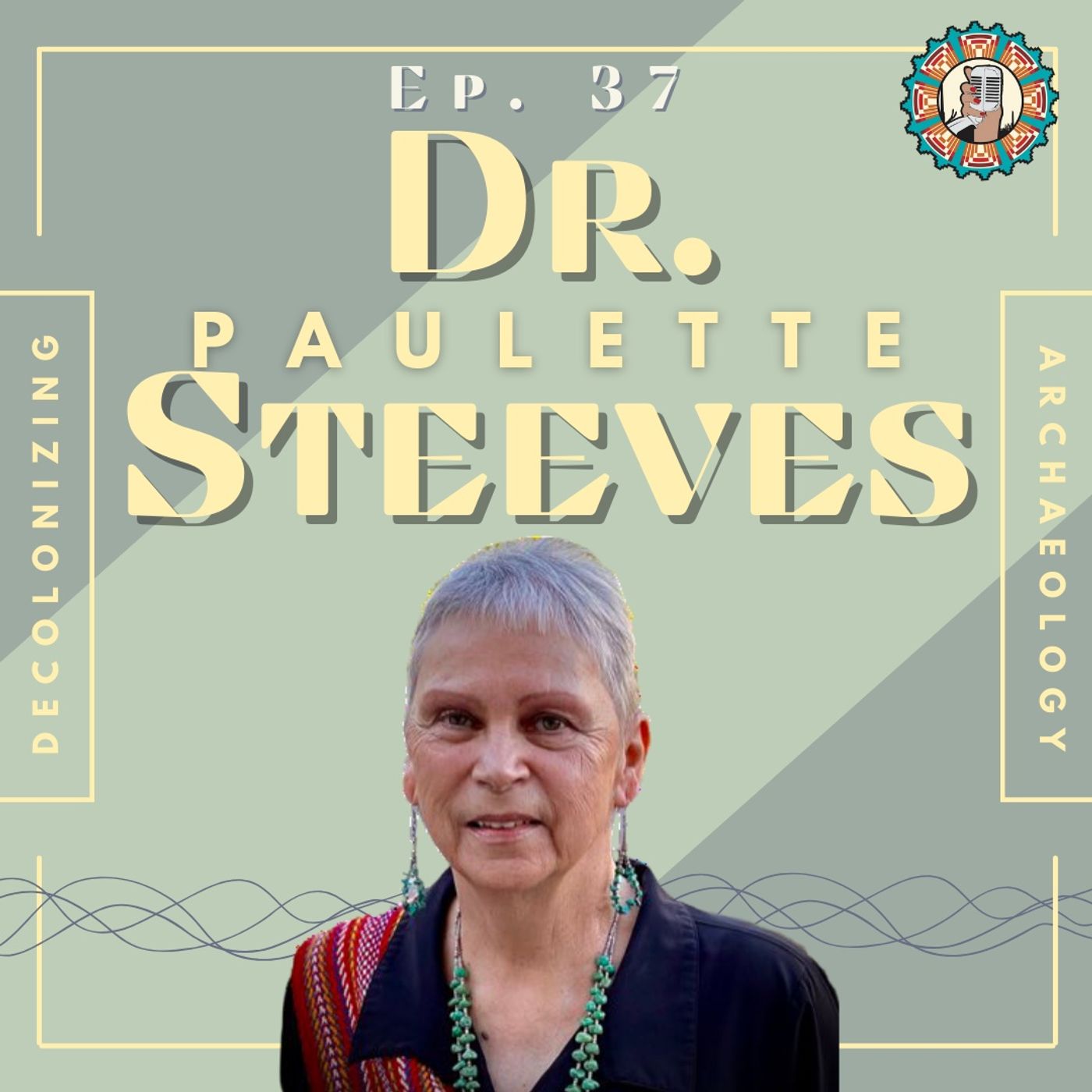
In this episode host Tina Andrew is joined by two strong, educated, indigenous women who both work in the field of archaeology. https://paulettesteeves22.wixsite.com/drpaulettesteeves (Cree-Métis) is a renowned indigenous archaeologist who's work is...


In this episode host Tina Andrew is joined by two strong, educated, indigenous women who both work in the field of archaeology. Dr. Paulette Steeves (Cree-Métis) is a renowned indigenous archaeologist who's work is groundbreaking for all indigenous/native communities. In her research, Steeves argues that, "Indigenous peoples were present in the Western Hemisphere as early as 100,000 years ago, and possibly much earlier. She has created a database of hundreds of archaeology sites in both North and South America that date from 250,000 to 12,000 years before present, which challenges the Clovis First dogma of a post 12,000 year before present initial migrations to the Americas." Her book, "The Indigenous Paleolithic of the Western Hemisphere," focuses on reclaiming the history of the deep past of Indigenous people in North and South America during the Paleolithic.Our second guest is a former team member of the podcast, Genesis, a Yoeme anthropologist, Entrepreneur, and Land Defender, works as a field archaeologist in Arizona. She shares her experiences and the challenges she's faced with in academia, and field work.
Backgroung music by: Ambre Jaune "Chant for Quisqueyat" and Matt Large "Llevame Lejos de Aqui"
Recorded: October 2023
0:00 For full disclosure. The views and opinions expressed in this podcast are those are the guests in the host. The content here is for informational purposes only. I'm Tina and we have our guest, Hennessy's right here, who is the one who actually introduced your work and you to us the podcast and really encouraged us to, you know, look into your research and your work and showed us some of your story. And I want to give her an opportunity to also introduce herself to Oh my God, my hands are setting, doctor Pillett Steves, because I'm a huge fan Sam Shaw Get Malaya insta. Nice to meet you, Doctor Pellette Steves. I will say that I will probably cry throughout this interview because I'm very excited to meet you, and also because the work that you are doing is so important and it has impacted me so deeply, both as a human being and as someone who is in the archaeology world.
1:33 And it's when I first met you in your work, I was like, in this, in this place, like it'd be so amazing to be able to be in the same space with you. And so now we're here and I you know, I you know, manifested that, and I know ancestors are here for a reason and pushing me to reach out. And it was just a conversation that I had with Tina and another member of a podcast and now we're he so I just I don't even know what to say, but I'm just so excited to have a conversation with you and go further. And I'm actually about to be done with your book. I've been reading in and I'm about like a little bit less than a chapter away from finishing it.
2:16 So I'm just excited about our conversation today. So thank you so much for coming here and sharing the space with us today. We rich thank you for sharing all of that with me. It's really important for me to hear back from people, you know, in our indigenous communities. I don't get a real strong reading back on how my work is impacting people unless people reach out. And so I have had students and classes and faculty and people like you reach out, and it's always so so uplifting to hear from you and how it is positively impacting our community these it is. I mean, I it's just I can't I don't know if I have I'm able to articulate what it's done. You know. I I'm actually being an organizer and land defender for over a decade now, and it's just reading your book just like validates and confirms a lot of a lot of things, like things that I that I knew, things that I read and I intuitively just felt. And it's another thing to actually have numbers and evidence, and not because I don't believe it, but it's it's it's just the like a ceremony that you're creating by exposing all of this in a tangible form that can be read upon wherever you're
3:51 at, you know, and it's accessible to not just indigenous people but also non indigenous people, which is like super super important. And you know it might be controversial, but I will say it. I truly believe the indigenous peoples of the Americas were in another level when it comes to human human civilization and human history. And we do not get the credit that is due to us. And I'm not here to be like, oh, we I want you to see me like the systems or whatever, like I don't I don't need that, but but it's still important to uplift and to shed a light on the amazing contributions that we have had and continuously have in our societies.
4:34 And one thing that I always talk to people about, especially like because I like, you know, specialize in like Southwestern indigenous histories. It's like, whereas indigenous peoples in your head when you think about history, you know, in like a time time frame we think about people. There's like this TikTok trend about people being asked like how often or like white men being as how often they think about the Roman Empire. I don't know if you guys have seen it. It's hilarious, but reading like, it's just our people and our histories and this land is kind of like an afterthought. It's kind of like, oh, you can't even remember, you know, getting his Khan and you know Julius Caesar and all of these people, but like nobody really has an idea of the people we're here, like in Mexico, and you know, he was an emperor and he was also a poet and all of this stuff. So this book really does put a big, big like shed light to how we've this is not a new world. It's always been part of the world. It's not new. So there's no such thing as an old world in a new world. That's all the part of colonization to create our civilizations as not uncivilized and infantile. And you're right, you know, non indigenous people don't have an awareness that's a part of colonization. That's been
6:09 an intentional erasure of our intellectualism and our humanity within education as a part of colonization. It's still ongoing, so I'm really working to try to bring more attention to that as well. I think that, you know, before we get into more further conversation, I would just like for you, doctor Pollitt Steves, to do it just an introduction of who you are and your homelands and your work, and then as well as you Hennessys, and then we can definitely move forward from there. Okay, well, Tansy, thank you for inviting me to your podcast today. I'm very honored to be here.
6:50 My name is doctor Poullitt Steve's. I'm an Indigenous archaeologist. I teach at Algoma University in Saint Marie, Ontario in sociology, anthropology, geography, geology and land Stewardship. I am a Canada Research Chair, which means that the federal government granting agency in Canada approved my grant application. They believed my evidence for early peoples in the Americas, and they've supported me for five years of research. So I only have to teach two classes a year and the rest of my time is research and I'm just working on renewing that grant for another five years. So I'm really I was really excited. Was definitely a sign from creator that three grant reviewers believed me, because it's been so denied that we've been here more than twelve thousand years, but they believed me to the tune of a huge amount of grant funds to do this research. So I think, you know, letting indigenous students particularly know if you have an idea of research ever, never fear going forward with it because your ancestors got your back. That's amazing. Absolutely, thank you so much for sharing that.
8:09 We also have Hennesis who is here with us as archaeology in the fields individual who introduced herself as well. Yo, sim Chinela, everybody Insteak. First of all, Atome, I am from predominantly northern Sonora. That's where I'm from, and first and am when I acknowledge the land that I'm in right now, which is odam Quapa and Quatan Land and here in the in the mighty birthplace of the Colorado River. Yes. So I graduated from the University of Arizona in twenty seventeen with a bachelor's in anthropology and another bachelor's in linguistics.
8:54 I did a research on figurines on my own culture down in Lower Door Belief. And after I graduated, I mainly been working as a field tech. So I've been doing field work now since twenty eighteen, so it's been a few years. I have diverted from archaeology and academia in general, both for political and personal reasons. When I was in college, I went through this whole you know, shift and transformation. In twenty fourteen, there was a human like just a terrible, just tragedy in Mexico where forty two students were disappeared and kidnapped by the Mexican government. And when that happened, I was involved in organizing. But when that happened and really seeing how students were being targeted by, you know, by all of these systems because they were protesting for the rights to be sovereign as indigenous peoples. There were indigenous people's students in Mexico who were trying to do autonomous education in Guerrero, and that really shifted me the way that I was thinking about how I was doing life in general, and the desire to reconnect to my own ancestral roots and what that means in my life, both politically and personally, and that has taken me to a beautiful but difficult path to say the least. And soon I
10:28 realized, when I was doing more archaeology, is how political archaeology is. Even I don't care if people say that it's not. It is because I could see from my own perspective beings only some of the few brown people in classes, and I only had one two professors who were I think they were both from China, and everybody else I had white professors and in the anthropology department at Univa, like it's really it was hard for me to feel that I could identify. And then the way that allow a lot of those classes were portraying talking about indigenous peoples made me feel very like disconnected from it. So academia in and of itself, I noticed it wasn't a place for me that I was going to thrive in. I didn't feel like it was a space that was meant for me to succeed and thrive in, and I was I was applying for a PhD. I decided that it was no longer something I was aligned with because I don't agree with the way academia is structured, and I was in a mental health situation that I knew that graduate school was not going to help, like that's not going to help me, And you know, I felt very isolated in academia many, many, many times, so I decided not to but been doing field tech work and I see archaeology for me personally, when I asked myself, what do I see it as as my person? And I just see it as my ceremony in many ways as I go on to the land and really recognizing whose land I'm in and
11:58 the stories that are there, and I see the ceremony as you know, I'm paying tribute to them as I'm working, And in many ways, I'm only the only Indigenous person in those spaces who has that consciousness of being aware and intentional about where I'm stepping, the thoughts that are going in my head as I'm step in in dis places, even though it can be a little controversions of the archaeology where you know, I do leave off offerings, you know, especially if I know that we're close to a burial. I don't get myself involved in that. It's really hard to kind of paint that line between like being what indigenous and an archaeologist and mebeing I get pushed to do certain things that I'm like uncomfortable with. So yeah, that's where I'm at right now in the archaeology world. I am an entrepreneur and I'm actually doing financial education primarily now, but I do still go out into the into the field and because it's something I'm passionate about. Yeah, I should have mentioned too. I'm Cremaiti. All four of my grandparents had Indigenous parents and mixed blood parents, but I primarily associate with being CREMATEI. I grew up in Canada and this is where most of my relations are from, from Manitoba and Northern Quebec and Red River, so that's a little bit of my cultural background.
13:20 I did grow up with around the Salish people in British Columbia and I'm still very connected to those communities. Thank you so much, both of you for being here. With us to our listeners. They get the privilege of hearing from two amazing women to talk about their work, their perspectives, their ideas, their thoughts. And Doctor poulad Steves, you know you've done You've done this for many, many years, and you've compiled so much data and information to share with us younger folks who find interest in your work, to research to apply to teach others. And I'm just curious when you were a young person, what were your first thoughts, like, did you ever imagine you'd be where you're at today? Oh, my gosh, no, so I didn't. I never even went to high school. I never finished high school. I didn't get to have that kind of life where you dream about becoming, you know, a pilot and astronaut and archaeologist. I had to go out and work at a very young age. But when I was in my early thirties, I was getting divorced, you know, going through the messy stuff. And I went to speak with a Sailish elder, Leonard Samson, in my home community in Litlow atte British Columbia. He knew my family really well and he said, you know what you're going through at the time is really hard, but it's a lesson to learn to deal with difficult situations.
14:50 He said, this is training. And then he said, you know, the elders and I have watched you grow up, and we know you're going to have a really important job to do that's really going to help Indian people, he said, not just us, he said, Indians everywhere. He said, you know, we're not sure what it is, but it's going to be a lot harder than what you're going through at the time. And I couldn't imagine at the time anything more difficult. I was just becoming a single parent. I had three kids, one was terminally ill. I had a truck on twenty six cent. I'm like, what could be more difficult? I have to leave my community. But I never forgot his words, and you know, I learned to listen. I learned to listen to what the elders told me. I learned to listen to the dreams and the thoughts that our ancestors bring. And that's really important because we grew up in a white world, a lot of us, and we're taught not to listen.
15:43 If you listen to your thoughts while you're crazy, But we need to learn how to reincorporate our cultural practices into our lives. So for me, listening to those thoughts and dreams, those intuitions became very important. And when I was an undergraduate student, I did my undergrad at the University of Arkansas and Fayetteville, very close to Oklahoma. And while I was there, the Coopa tribe came and they asked me could I help them. They were trying to reclaim five hundred sets of their ancestors' remains from museums using nagpra, and the museums were withholding them, claiming they couldn't prove they were their ancestors.
16:26 Well, my goodness, these remains were taken from well known Coopa villages. You know, what more evidence do you want? So the Kapa asked me could I do some kind of genetic work. And we didn't have a genetics lab and I was just an undergraduate student, but I was listening, so I said, of course I can, and I applied for a grant, an undergraduate honors research grant. I got in the honors program, I got the grant. I got one of the top geneticists in the US at UC Davis in California to work with me. They extracted might und DNA for modern quop Pie elders here as soon as we had those results. While the museums and institutions knew it would be a match, they knew they would be really embarrassed for not returning those remains. And two weeks later, the Quapi reburied five hundred ancestors. And that told me, right there, I needed to be an archaeologist. I had been planning to go to med school, but I realized that archaeology was a science that we can use to support our communities, you know, And as Genesis was saying, it's not easy to be an indigenous person in a white academia. It's very difficult. We will never feel totally welcome, we will never feel like we fit. But it's up to us. We've been given the job to go in there and make those changes. You do have to be really strong, you do have to really listen to ancestors and have an understanding of your path through life. So when
17:59 I was grand graduating that my PhD in twenty fifteen, I think I was in my fifties, and all day thought the things that Elder Samson told me were going through my head and I'm like, oh, I just have to rewrite world history to include the Americas. I got this right, And you know that work is a lot of it has now been done. It's got a really good start. My first book is out, and I'm absolutely amazed at how quick change in the archaeological world is now happening. Like back in grad school, I swear my brain almost melted. I almost gave up a number of times. I kept listening to those ancestors and words and I could not leave. You know, he told me I had a job to do.
18:45 But this last week, the Smithsonian Institution sent me their new, beautiful, great big book on the Atlas of North American History. They are now stating we've been here at least fifty thousand years and citing my research. So they've changed their I like forty thousand years. Canadian Geographic just did a mapping special. They paid a photographer to map my data of almost six hundred sites that date from eleven thousand, two hundred to two hundred thousand years or three hundred thousand years in North America. So they are supporting that we've been here two to three hundred thousand years before present. Oh my god, the change is happening so fast that I'm just amazed. And a lot of faculty have told me they're now using my book as a textbook in their classes. Generation of students is learning the truth, you know, and they're learning about racism and bias in archaeology and how it has historically negatively impacted indigenous communities and colonized the minds of all the settler communities to erase Indigenous presence on this land at an early date from their minds. And so the changes happen so fast.
20:00 I'm just absolutely amazed. But you know, this is Creator's work, and when there's a door that needs to be open, he'll just go right in there and knock it down. And yeah, it's a blessing. I mean, I still face a lot of difficult situations. I don't work in a big university with a big archaeology department because none of them will hire me, because he's going to hire what I've been called Keisha Super not called me writing in the vein of Vine Deloria Junior. So I'm being compared to the next Vine Deloria Junior. What archaeology department would hire him. But you know, I wrote in Vineloria Junior for another book this year, and I called it, I think I called it something like stomp stomp dancing or around dancing in academic circles with Vine Doloria Junior. So you're right, it's a ceremony and we're in there, and even though they're all in our way, we're just in there stump dancing, and we're just taking our presence. No, just get out of our and let us do this work. So in grad school I had no mentors, nobody in the world, not indigenous or non indigenous archaeologists. Tests of gathering this data and showing this view of the indigenous paleolithics of the Western hemisphere. Why should there only be one archaeologist in the world, me that did this Because it was made to be a very dangerous, scary place for all archaeologists. This was an area called an area of academic
21:33 suicide. If you discussed they're published on earlier than Clovid sites, your career was over. I didn't pay any attention to any of that because Creators got my career, and he's just you know, pushing all those other things out of the way. So It's really important if you're going into academia for students to realize you will be in a vacuum. You will be in a bubble, but your ancestors and relations are going to be their stump dancing with you. And so you just take comfort in that and you trust. You know. I came back to Canada in twenty sixteen after being in the States for twenty years, and I took a one year position for a faculty that was going away for a year. And I thought, well, if I get a job, fine, if not, I'll just get you ice and I'll write my book. And did I get a job. I got a job with a Canada research chair within one year of coming back. Coldly smokes.
22:29 That's like six hundred thousand dollars over five years, teaching only two classes and doing whatever you need to do. And that's Creator's message to me, I got you back, you know, And we have to link this to understanding our life past. So my mom used to always tell me this story every year on my birthday. She said, you know, I was born in Whitehorse, Yukon, in November in the middle of a huge snowstorm and my mom came home on the hospital on a dog sled with her neighbors. Her name was Steamboat Mary, and they wrapped me in a big old fur coat and my mom got on the dog sled and away they went in the storm. And all of a sudden, the dogs stopped and Mary got off and she was checking the dogs. The dogs were fine, the sled was fine.
23:12 Didn't she notice my mom had passed out cold and dropped me. She had hemorrhaged and passed out and I wasn't there. And so Mary trudged back in the snow and found me face down on a corner in the snow, brand new baby. And that's my message from Creator. You know you're going to be challenged from day one, but I got you back. And I don't know why. My mom told me that same story every year on my birthday, but it lets me know that I was given a path where I would need to be independent. I grew up extremely independent, running around communities and cities by myself from the time I was three years old. That's how Creator raised me. And you know, listening to Elder Samson and putting it all together. You know, when I was getting my PhD, I was like, oh, this is what they were telling me to do. And now I understand. And I didn't need a big, strong committee for my dissertation. I needed my ancestors and creator and they were there. And there were a lot of settler or white archaeologists who had published on archaeology sites that were older than Clovis. Some of them were fired, they were called crazy, they were called lunatics, they were called bad archaeologists. They were none of those things. What they were was truth tellers. They didn't want to lie to support the status quo of American archaeology. They wanted to tell the truth. And if it wasn't for them, I wouldn't have had anything to go on. So they stuck their necks out and published what they knew was
24:44 the truth. Right now, I'm writing a book to honor sixty of those archaeologists that did that work, you know, supporting our communities and who told the truth. So there's a lot of there's a lot of ways to get through academia. And you know, I never had a single Indigenous faculty or instructor. I had one faculty on my committee who was from Caribbean and Native American studies, and she was Latino and it was great to have her on my committee. But I wasn't given one paper or book by an Indigenous or Aboriginal scholar to read. Now there are a lot. So I only graduated what seven years ago, twenty fifteen, right, and when I was a graduate student, there were very few papers by Indigenous scholars besides Vine Deloria Junior, Linda Twali Smith, Devin Mahutier. I found them all on my own, thank god, because they really gave me a strong foundation. Now there are literally thousands of papers by thousands of Indigenous scholars in such a short time.
25:56 It's absolutely amazing. So I want to let students know, Oh, if you're in a program in academia and you're not given papers or articles or books by Indigenous scholars, find them on your own. Email me. You find one, you read it, you find ten more, you read them, you find twenty more. So there are ways to get through that academic arena, and we really need a lot of Indigenous students to push through that because the more of us there are in academia, the quicker that we make those changes for the future generations. You know, we need people in field work, we need people in government work, We need people in academic work and it's not easy. And you may be in a bubble in the Southwest.
26:44 You probably have a lot more Indigenous scholars to reach out to in your local area, which is awesome. I know there are a lot in California and a lot in New Mexico. I was just in New Mexico this year giving the keynote lecture for the Native American Bar Association. So this was awesome. There was a room full of over two hundred Native American judges, lawyers, and politicians and they got what I was saying. It was so awesome to speak to a group of people who really understood, you know, what my research was doing. And so there are big communities that you can reach out to whatever academic field you're in and never be afraid to email even if you don't know them, and in any Indigenous scholar and tell them who you are and ask them if you have needs, if you have questions. That's what we're here for. That was amazing, doctor, but Thieves, thank you for sharing all of that. I really resonate with everything that you were saying. When it comes to like one we don't know, like the certain paths that we're taking and how we find ourselves in certain places environments for a reason. I've been in that situation many, many times, and I've been very blessed to be close to a lot of just amazing elders and mentors who are Indigenous and doing a lot of political work, who have taught me to listen, because that's a really key important thing, listening to our communities and
28:15 listening to mostly ourselves, because it's through, like you said, through our dreams, through our thoughts, and that we get communicated and through And I didn't understand that until I was older. And I do remember when I was younger, and I would have certain dreams or certain thoughts or certain ways of like inttally like wanting to do something, but I didn't know why I wanted to or why I wanted to give myself that chance to move to a certain place. And I remember I thought I was like a little crazy. I was like, maybe it's just like my ADHD and I just like don't have a sense of risk, and I like to put myself in situations. Now I really going to reflect, I'm like, no, it's just I've just been I've been very blessed to have a spirit like I have. And I think when you mentioned about how all these changes are happening, I really do think, doctor PELVSTI. It's also like the generations that are coming, I think we I'm twenty eight, so I'm not like a full gen zer, you know, but I'm a younger millennial, I would say. And from what I see from my friends and my communities, people around my age and younger. I hang out with a lot of younger people because I have a lot of nephews who are like really tiny, and I see them. I see them every day. And how like our youth are really ready to be able to receive a lot more messages than the other generations. I feel like we have a lot more tools. Our hearts are more open. You know.
29:42 My friends and I are talking about intimacy and vulnerability, and I think that's such a key part when able to be able to receive those messages, because it takes a really deep part of us to be able to receive it, because it does trigger, it does trigger a lot of us inside, like all this trauma that we have to go through and then getting all this new information, it takes emotional capacity and emotional resilience to be able to hold it. And I really do think that the youth, I include myself in there, we're excited, We're enthusiastic. We're like, we want this, we want to be able to receive this knowledge, and we want to take it and transform it. We want to make it in a way that it's gonna last. And we're ready to shift the world. And there's a lot of stuff that's happening in the world right now, but I think at the same time, younger generations are really just are really pushing the world in a direction that I'm that makes me very hopeful. And I really do believe that your research is part of that. And I think that's why there's such a shift, because I think people are ready for this, Like we're past like just talking about racism, Like it's not that it's not important, but we're like we're ready, Like we understand racism, Like what's the next step?
30:56 How do we go from understanding racism so now being practicing being anti racist? Right? And And archaeology for me is such an it's a it's a tool that people can use art and this is for me, for the archaeologists out there, it is a tool for change that you can create. And we see this with doctor Paula Steves, change that wee's necessary from the field up to academia. So I really agree with that. And you know, you were talking about school in academia. I'm like, oh, doctor Pellet Steves is just academia. Oh my god. It's just I don't vibe with it.
31:37 It's just like, yo, like I'm here just like vibing and want to chill and just create communities and like can we just like all work together. Why is it so hard? And academia is like, nah, you gotta do it on your own. It's just my spirit doesn't vibe with with academia many times. But I hear what you're saying and I'm listening and I'm taking it in. I promise. I don't know. Like when you talk about what it's creator trying to tell me, I'm like, I don't know. Well, there's a lot of people now that are working with communities. So this whole community centered archaeology thing, so some settler archaeologists have you know, they're trying to do the right thing, they're trying to be politically correct, they're trying to heal the field. You know, there's a few, like in Washington State they've done really good work with the Five Tribes of the Round, And in British Columbia there's a program at University of Victoria where the elders teach the classes with the faculty. So there are some spaces where that's working really good for communities, and communities have the resources and the knowledge holders to step up and become the leaders in creating what it's taught about their history, so that's really really important. Those are not that many spaces, but they're starting to open up, which is really good. It is a lot, it's a lot of work to work with elders and community and to make
33:08 safe spaces for them in academia. But one thing is for sure, to continue making these good changes, to continue decolonizing all these minds, we have to lead the work. So I do need. I need archaeologists students who are going to take over my work. I know I'm going to work till be one hundred and twenty six, that's fine, but I need a group of archaeologists that are going to continue this work. You know, I thought originally, well, I'll do this piece of work and it'll be there. No creator says, you'll do this piece of work, and you'll keep doing this piece of work, and you'll train others, you know, a big group of others to continue this work when you need to put down your pens and when you need to put down your weapons. Right, But you know, going into academia. The book chapter I was working on today talks about what's called an ulteriity or other ing, the history of other ing. Well, that's all about colonization and how we were othered as being non intellectuals.
34:12 But I had to write a story that related to my own experience, but without naming people. So I wrote a story about an ant in the department of elephants who was critiquing the elephant's history, and the elephants kept stepping on them. But the one thing the elephants forgot is that the ant has the biggest brain mass of any being on the universe brain mass per body size, you know, And there's no stopping that. And so the ants just kept going and going and going. And so I need now all my archaeologists to come and take up my work. In many areas, when you look at the Americas and you look at you know, North America, you look at Mexico, you look at Central America. You need all the areas of South America. We need indigenous archaeologists in all those areas. And let me tell you we have come together. Wow, that is one army. You are not going to stop. And so we do need that army as scholars.
35:09 It is a difficult place, but you can make it your own place. But it's really great to see other archaeologists, both indigenous and settler, who are actually working with communities and creating spaces where elders and knowledge molders come in and co teach those classes on their own history. Right. So those are the kinds of changes we see taking place and the spaces we need to make. Yeah, there's really good non indigenous archaeologists doing a lot of work. One of my mentors is Jill McCormick. I don't know if you remember her. I think she has reached out to you several times. So I was working with her with the Quatan tribe here in Uma County, and she was one of the people who introduced me to your work. I just want to give her a shout out. I'm gonna send her this episode and be like Jill because she really admires your work. But she has been an example of me as first and foremost just being what a good archaeologist like is, you know, from being in the field and what we're looking at in the field.
36:20 And she has a powerful connection with the with the tribes in the Yuma area, and so she's an example of how she prioritizes the tribes needs as an archaeologist, even when she is not you know, she's she's not an indigenous, but she's adopted by the tribes over there. She is but an example how you you create a space when using what you have and really looking out for the community and using archaeology as a way to do that. So I've had really good examples. I've been very fortunate to have really good mentors in that way. But definitely like for me, when it comes to not just academia and our college, in this world, it is just like it's so highly political, doctor politicis oh my loud. I used to work for an environmental company and Uma Proving Grounds. So Yuma Proving Grounds is one of the largest military bases here in the United States. So this is the area the Sonoran desert is the area where the US military tests its weapons, so you'd imagine, but that land is sacred land to the Quatsam people. That's where their birth is from. So it's a very very sacred, sacred, sacred place. And now was very blessed and privileged to be able to work there alongside the tribes. But it was so difficult from working as a contractor working for the government and dealing with all the bullshit and I'm not gonna say any other word because it is and the discrimination I had to go through.
37:54 And at that point, I was like, where do I go? Do I go like private? Do I go in the government? Do the academia? And and just feel like every space that I had been because I've been in every in every of those spaces, even working in the tribes, it's like wow, Like the politics here is so overbearing and overwhelming and trying to get people together, and it's just how archaeology just really triggers something in people, right, because archaeology brings upon fourth conversations about land, right, who gets who details first of all, what's important to preserve or not right? Who has the right to say like this is mine and that's yours, who has the right to decide what gets developed or not get developed? And archaeologists just kind of find themselves kind of in the middle of all those conversations and we're kind of like, wait, you know, we're trying to do at work, but it's a difficult place to be at. And when you add on top of that be an indigenous. Oh man, I've had I have stories. I have stories, and it's like very it's just so overwhelming, you know. I still love the work so much. It's really great.
39:06 Like I said, like, I see that as a ceremony to me, but it's so difficult, and I admire you so much to be able to hold that space, doctor parlets do, because I just can't imagine what it felt like because now, like I mean, you did graduate in twenty fifteen, and things have changed a lot since then. And I have to give credit to the Black Lives Matter movement, you know, with really just putting forth that awareness and people united, you know, for a cause, and the feminist movement in Latin America has been a very big influence on me. But in general, it's like highly political and overbearing and it sometimes just feels very powerless, like I feel very powerless because it's like it's just me, one person out here trying to do all this stuff. And I talk to my archaeologists coworkers especially too. I always bring them forward this, and this is something you talk about in your book too, where you know, like how many people doing archaeology in the Americas actually even take one class, just even one class of indigenous histories? And it's so true. I remember when I was in college. I had to be I was so intentional about the classes that I was taking because I wasn't a path of decolonizing and reindigenizing the way I was thinking of being. But it had to be so intentional because it was not something that was given to me. I had to like go and seek it and ask and do all this stuff because it wasn't that it
40:42 wasn't part of the curriculum. And I even got questioned by my what's her name forgot but she was the person who was getting me in my classes. And I would take certain classes and she would question and it's like, why are you taking Like I wanted to take like a political class around like political histories, and she was like, but why are you taking that that has nothing to do with archaeology, and I was like no, but for me it was important. I was like, no, I know it's not archaeology, but it's important for me to understand the political side because this has influenced the way that I'm doing archaeology. But I got questioned a lot about the reasons. I was like, I was taking Mexican American classes, I was taking classes on aim and they were like, what does that have to do with, like you doing archaeology, And I'm like it is though it is important. But that was just me like, again, I'm blessed to have this mind and the spirit who understood them at such a young age, But I just can't, you know, I think about my colleagues who don't necessarily think, you know, the way that I do, or don't necessarily prioritize the same things that I do, and then they're out into the field and how that does get reflected on the type of research that gets grants for example, right the final all like, you know, finance is also important, They're like, who what research matters to be invested in? So it's just like a lot of layers, a lot a lot of layers that we have to move through and and for me personally, like it can be very isolating.
42:16 It it can be very isolating. Fortunately though, like recently I went into the field and I met a friend. Now she's my friend, and she's from South Africa, and so we also have conversations about it. And I told her, like, if I want to go to South Africa, girl, I will take a class. So you better take a class too. You can't do archaeology if you're not taking an indigenous class. But with her, you know that her being a black woman and she understanding a lot of stuff that I don't have to explain. She gets it. You know, I don't have to over explain myself or like start certain commentaries from certain people and why I'm upset, I don't have to explain it to her. So it's really cool to have someone like that in the field. And her and I, you know, maybe we're problematic, but we're always calling people out and we don't I mean, I don't care, Like if you don't like me, I'm like, I'm gonna call you out. Yeah. Truth
44:07 telling is important, and that's how you push back on colonization. And you know, when you go to do this work, creator gives you this really nice, beautiful ball of energy to do the work right, and you're going to have all kinds of politics and negative people and racism and buying bias. They're flying at your ball of energy like you know, space drivis trying to knock chunks off, and you got to protect that ball of energy. You don't let those things take your energy. Your energy is given to you to focus on the work you've been given to do. So Number one, listen about the work you've been given to do. Number Two, protect your ball of energy and all that stuff outside of it that doesn't reflect on your research and your work and the work you're doing for the next seven generations. You just let it go. I passed you. You just dodged that. I walked through academic dodging left and right, and I learned that if I was to respond to all of the politics and racism and bias that was going on, I would never get my work done. So I learned to just let it go. Let it go, Let it go. This work was so interesting when I figured out that. You know, I emailed doctor Steve Land at the Denver Museum when I was a graduate student. I said, you know, I'm wondering about sites that are older than Clovis. I've heard you've worked on a few, and he said. He emailed me back, he said, here's a list of ten sites. Don't tell anyone what you're studying.
45:36 They're just gonna call you crazy. Well, if it's your dissertation, you've got to tell some a lot of somebody's. But I took those ten sites and I read about them, and every site I read about, I learned about other sites. And in two weeks I had a list of over five hundred sites that were older than Clovis. And I said, Okay, now I understand my life's path. I got so interested in finding all of the data on all those and every time I looked at a site, I found another site. Now I know of over five thousand sites. Now I have a database of over six hundred solid sites. And do you know that in what we call the grey literature. So I worked in cultural resource management field work for five years. I got fired off my last three jobs because I wouldn't lie about there being an archaeological site where they wanted to put a drilling pad. And I didn't care. Go ahead and fire me. I'm off to graduate school. But I learned, you know, to study the artifacts, to study the collections, to study the dates. I learned to focus that energy on what it was I needed to do, and I created that database. And it took thirteen years, but I wrote that book, and now that has completely changed how the majority of archaeologists see our history.
46:46 So I did a big survey earlier this year. I haven't published it yet, and I asked ten basic questions. How long do you think you know indigenous people have been in Americas? Do you believe that rock art and oral t actually hold documented history? And what about these sites? Do you think these sites are legitimate? Well, let me tell you I was blown away. Over seventy percent of the archaeologist and there was about one hundred and sixty of them or sixty eight agreed that people have been here over twenty five thousand years, so before the last glacial maximum started. Over seventy percent now stated they believe there is documented historical events and histories in rock art and oral traditions.
47:30 That is a huge change from just a few years ago. So I can see now that you know, I learned to focus my energy on that one specific thing and just deflect all that other junk that I didn't need to waste my time on, you know, as an undergrad student and a graduate student. Yeah, I did some protests, I did some work that I haven't written about that supported Indigenous communities. But my energy has been focused on this research since my book has come out. I can see how it's going to change everything for the next seven generations, how people see their history when you push back on racism and discrimination and misunderstanding, when you inform that, you push back on it, and you change it. And so I've had a number of settlers email me, and one lady emailed me. She said, my dad's ninety seven years old and he read your book and he just cried and cried and cried because he knew that story about Clovis first wasn't right, but he didn't know what was right. And now he knows. And so there are a lot of people in both indigenous and the settler worlds who never believed and who never thought that that you know, Western archaeological story that we've only been here, you know, twelve thousand years or so, and you know, one small group walked across a huge you know, hundreds of miles of ice to get here. They knew that wasn't right, but they didn't know what was Now they do, and so to me, that's awesome
49:01 because that whole generation of people that is learning will pass it on to the next generation. And every generation that learns and it comes in forms becomes a less racist, less discriminatory generation of people, and that will change, you know, the future for the next seven generations. So it's really only this year I can see how that work will change the path for the next seven generations, will positively impact education, politics, policies, everything, government, government policies. When people go to work on new government policies for protecting the land, they're going to now have it in their mind that, oh, wait, these people have been here a few hundred thousand years, not just where Asians from Asia that came here twelve thousand years ago. So some archaeologists still make that statement, and right away I tell them, excuse me, Asia and Asians didn't ext twelve thousand years ago. Could you correct this to be scientifically data that's correct, and say indigenous people And so you know, you have to challenge these continued norms of violence every time you see them and I can't keep up to all the writing. And here's another thing, here's a signal that you know, Creator has brought me that just blows me away.
50:23 I continually hear other academics and faculty say, oh I put it out to four publications. Oh it was turned down. Oh I can't get published. I've never sent one paper out to any publication. I've never been turned down. Everything I've written has been requested. So Creator went and poked people in Australia, indigenous and other settler academics, and they asked me to write papers on Vine Deloria Junior, on the Indigenous Paleolithic, on you know, indigenous method and theory. They could have asked all kinds of other scholars, but they asked me. And so I'm writing Borning Tonight almost every day and doing research and trying to catch up on all these seven book chapters coming out this year. They were all requested. So I don't have any issue getting published because Creators got my back right. And I'll be going to a big convention in Hawaii in November, and it's a group of Indigenous and settler scholars from Australia who asked me to be in this session, you know, and they've asked me to write many papers. So I'm really looking forward to going there and thanking them, you know for all the support they they've given me.
51:32 But I was an unknown person in twenty fifteen, and they were asking me to write book chapters, you know, because they heard one or two lectures or something I gave. And so that's a signal that you know, your ancestors and creator open all those doors and they take care of things. So that's another thing that you don't have to take that energy from your ball of energy to worry about publishing because creators got your back on that. So I think this one thing I really want students to remember is like, listen to your ancestors, Listen to your dreams, listen to your communities and elders. Look at what other Indigenous people are doing and how they're working to decolonize all of academia because and it has changed so fast in the last five to ten years. It's just absolutely astonishing how quick this change is taking place.
52:27 And yes, groups like AIM and Black Lives Matters had a big part in this, you know, for decades making these changes. But just focus on the work you've been given to do and the change you've been given to make and kind of rejoice in that. So now that my book is out and I can I hear from students, and I hear from communities, and I hear from archaeologists about how happy they are they have this book, I'm like, Yay, it's going to actually make change. And so now all of that really negative stuff I went through in grad school I had. I had students in grad school and classes shake their fists at me and jump up and shake their fists and tell me I better watch what I'm saying. And the faculty said nothing to them. Right, they should have been charged and kicked out of school, but I let that go and I just kept doing my work. And so that's what you got to do. Just move forward with what it is you've been given to do. I hear what you're saying, doctor Phillip Steeves. I yeah, I And I'm glad that you're you're you're talking about this particular aspect, especially like you know with this podcast. I actually used to work for for Tina in this podcast for a little bit for a little bit over a year, and we really wanted to we want to keep reaching out to the youth in the communities, and especially with this one, you know, with the Too communities in Tucson, but I think in general, Indigenous youth and I think you bring upon you know, this light and hope when it comes to like if youth want to continue academia and being
54:00 like, it is possible for you, right, and that you don't have to separate who you are as an Indigenous person to be able to adapt into this space. That, on the contrary, and your voice matters, your story matters, and that that story and that culture and that identity of who you are is actually the one that's going to inform you and guide you when you are in those spaces. And that's a big lesson I was learning because it's somehow academia kind of you know, the way that that you know, Western science kind of push it pushes onto you is like, oh, well, no science is neutral. You know, science is just fat space. You know, it shouldn't be biased. And we know that that's not true, right, We know that that's not true. But when it comes to like our identities, like Western science and academia, like I think pushes this this narrative of like, well you have to separate who you are as a person from the research that you're doing. Right, But it's just this list colonizer lens of like somehow being an observer, like you're better than everything else, so you have the power to observe instead of being in relationship with the research that you're doing and understanding that it's energy that's flowing in and now and how like indigenous people's you, and like it's a relationship, and that you don't have to separate who you are to create factor based research. It's not a separate thing. On the contrary, right, Like your perspective is what brings upon fourth a new story when it comes to the research. And that
55:32 is a big lesson I learned to because I really thought like I didn't have a place to do that, that I had to separate who I was, and that never aligned well with me, you know. But when I was in academia, when I was doing my grad my undergraduate, I don't think these conversations were as common. I remember just thinking about this and being just like I don't want to do this, Like it's just like this is I don't feel like it aligns to me. But I don't really know how to align it. I don't have anybody to tell me like if this is okay or not? You know, But at that time, when I was younger, you know, I was looking for validation. I was looking for someone to tell me, like what I'm doing is okay and what I'm doing if I have to do something that's controversial, something that pushes the boundaries, you know, I'm gonna be protected. And at that time, I never felt like I had that safetiness and that protection because I didn't have that connection to my ancestors as strongly as I do now. Because it definitely can feel very isolating. But I think what you're saying is really important. So if anybody out there is like listening to her episode, who you know has been thinking about academia, who's been thinking about doing research, and who might be getting interested in archaeology, Like just like doctor budzif we need more of y'all out there and actually speaking out as who you are in this spaceis non You don't have to separate if you're too if you're m if, if you're lucky, go that, like, you don't have to separate who you are in this bas and the country. Like For me, my work is centered around who
57:06 I as, my um at work, as an indigenous person, like and everything around kind of circulation circulates with my work, even my personal life, my political work, even my business now that I'm growing, everything's around it. Because I have understood that I don't have to separate who I am to be able to thrive and create something that's going to be for the seven generations. Like that's not true. I can be who I am. Yeah, And it's it's important for students to one of one of the first things you should learn about is indigenous method and theory. So there's a lot of books and a lot of papers now, and that will teach you how to center your research in your own communities and in the communities that you work for, and to not worry about the so called western method and theories because you can do indigenous method and theory. That's a part of decolonizing all of the spaces in academia. And everyone has a full right now, there's been enough done in indigenous method and theory. My dissertation was written in indigenous method and theory.
58:15 There's some scholars who have actually done their dissertations in their own languages in Migma on Blackfoot, and so you fully have every right to use your own language, use your own communities, ways of understanding, and indigenous method and theory in all of the research and all of the work you do to earn your degrees. Yeah, I mean, that's definitely something I wanted to get to was the book, you know, the Indigenous Paleolithic of the Western Hemisphere. And you know, I had never thought I wasn't thinking about any of this topic until Hennessy's brought it up in our conversations, and it was so interesting to me that I felt like, you know, what, how do you feel about talking about this on the podcast? And you know, for me, with the work that I do, not only am I in podcasting, but I'm also in radio. I've been in radio for several years now, since twenty nineteen. I've worked for the tribal radio stations on my res and now I'm currently working for the community radio station here in Tucson, Arizona.
59:29 But it's always about like, you know, you just shoot your shot, you know, you never know, you know, and just send an email, send a message and you never know they might respond. That's just something that I was really happy that you did respond, doctor Pollett, and to talk about your work and this book, and just to hear more about your publications and things you're currently working on is amazing. But when she brought up the book, I started to read more and and research your work and your website and the book itself, and certain terminologies that I wasn't familiar with, but you know, educating myself and the terminology such as like when you talk about Clovis And for folks who aren't too familiar with the terminology or the idea of decolonizing archaeology, let's go ahead and get into that type of conversation right now with your book and what does that all mean and the message behind it? Well, Western archaeologists, I'll go back in time a little bit.
1:00:39 So back in the early twenties, Alex Chrlisko was the head archaeologist for the Smithsonian Museum. He argued indigenous people had only been here three thousand years. That really wasn't based on any you know, huge amount of scientific data. That was more or less conjecture. Jesse Jennings then, who was from the Denver Museum of Nature and Science, excavated a site near Clovis, New Mexico, and he found this beautiful stone tool in the rib of an extinct bison, so in the fossil of an extinct bison, and he said, wow, people had to be here since these bison went extinct. That's ten thousand years ago. So he had to argue with Hrlishka and others for a couple of years, but he finally got it accepted that, oh, indigenous people have been here ten thousand years. Well, it's kind of been stuck between ten and fourteen thousand years for one hundred years of history. You'll notice that in the rest of the world because of advancements in science and more excavations and our understanding that our whole understanding of human evolution on a global scale has changed greatly, especially in the last ten years, everywhere except the western hemisphere of the Americas. Right. So, now that I've pulled together all of this data that shows like Clovis is a tool. It's a tool with a beautiful what we call a flute out the middle of it. It's a beautiful stone tool. But archaeologists created the Clovis culture and the Clovis people, which was false. There was no such thing as the Clovis people. There was a stone tool called Clovis. They were found all over North America. So
1:02:14 when archaeologists say the Clovis people, you know, North America, what they're doing is they're erasing the diversity of you know, hundreds and hundreds of groups of indigenous people. So the Glovist tool we know from doing archaeological work. The oldest Clovis tools are around eleven thousand, two hundred years. So if you find an archaeological site and those carbon dates come back older than eleven thousand, two hundred years, that's called older than Clovis. So archaeologists have denied for one hundred years there was anything older than Clovis, but other archaeologists have kept publishing on sites with dates older than Clovis dates from eleven thousand, two hundred to two hundred thousand years before present. So that's really important. So what I did was I gathered all of the published articles with solid scientific data, with dates, with stratigraphy, with artifacts, and I put it all together in a database and I mapped it on a big map, and it showed that people were in the Americas all the way from northern Alaska to southern Patagonia and from the east coast to the west coast. You know, over twenty five to forty thousand years ago, people were all over the place, and in areas like central Mexico and southern California, we have signs of people being there two hundred thousand years. In the South East States we have signs of people being there three hundred thousand years. So this shows that a lot more research needs to be done. If it was a few sites, you
1:03:46 could dismiss it twenty or thirty or forty, but it's not. It's hundreds. I have almost six hundred published reports of archaeological sites on my database. When we look in what's called the Great Literature, that's sites that have been done when they built a road or a bridge and a cultural resource management firm has come in and documented that site. They've dated it, they've got the tools, they've got the artifacts, they've written a report. They file that report with the state archaeological agency. So I found out this year, just in Arizona alone, there are over fourteen hundred sites in the state repository that predate Clovis. Fourteen hundred in one state. So imagine now, if I do this, I think that research and I get all of those documented sites from state offices and provincial offices, I would have thousands and thousands of sites that predate Clovis. This is a solid, strong body of evidence we need to gather and data and continue research on. That's why we need a whole army of indigenous archaeologists and our archaeology peers who are not indigenous, who but who are open minded and want to understand and know the truth about the human history of the western hemisphere of the Americas. And with like Watina was asking, like like decolonizing and all of that, like one thing that's important to
1:05:16 notice, like how much still like there's backlash on all this research I when I bring it forth your work, like you know, we're in a campfire and I'm bringing up your work of course, you know, And I see my colleagues and they're like, well, no, that's like too impossible. And I was like, but why why is it so difficult for your brain to accept that other possibilities if because in my head, like you know, like when when I think about being in academia and doing research and understanding and understanding biases, I always tell people like, do you do you see how biased Western science and all this research has been, right, and they're like nope, yeah, yeah, so why wouldn't not be Why would it be impossible for you for you to think that there's more possibilities? And that for me is like that that those first questions are like that process of decolonizing both being indigenous and non indigenous, because we have been accepting some of this work in our education as truths, like we accept them, and unfortunately, you know how just stuff goes on in our education. We a lot of people haven't been taught like critical thinking, right, that's not something that education focuses on, and a lot of people just accept it as it is, not because that's that's the truth, right, And I tell them, like, as academics and people who are in research, you always emphasize, right, like that we have to question things. We can take things as they are.
1:06:50 But yet when I bring upon this topic about indigenous peoples being here even I would say one hundred thousand, it's like that's just too much. I accept maybe thirty, but one hundred or more than that, that's just too much. You know. Yeah, you have to constantly remind people of the data on human evolution on a global scale that exists. So that people were in the area we call today in northern Asia two million years ago. So early humans were very capable. They walked fourteen thousand miles from Africa to northern Asia two million years ago. Now you want to tell me that they didn't go a little bit further and cross that fifty seven miles to get into the Americas until twelve thousand years ago. We know that mammals were coming and going that whole time. We know there was many times there was a land bridge.
1:07:44 And by the way, that's not the only way that people came and went from the eastern into the western hemisphere, right, Yeah, And so people don't have this information because they haven't been taught it. They've been intentionally not taught it. So yeah, our education is based on agontology, that is meaning the teaching of ignorance, not by what you teach, but what you intentionally do not teach. And so students have not been taught the full history of human evolution. That early horminids or humans were in Asia two million years ago, in the northern parts of Asia, and that's not that far from North America, and you know that early humans were very capable. They were using some form of water transport over one hundred thousand years ago. There was many things to come and go. So students don't have that information because they're given an education, specifically in archaeology that keeps them intentionally ignorant. And you're right, not thinking critically. Yeah, and a lot of us are not aware fully about how we live in this colonial imaginary, and like decolonizing is trying to question this colonial imaginary that limits are even the way that we imagine our ancestors. I think there's a lot of conversations when we talk about, you know, our pedolithic ancestors that they were like just like cave people who didn't know anything, and they're like, wait, no, Like our ancestors were traveling, they knew the land so well. They were extremely intelligent beings. They even people that are relatives who weren't Homo seepiens, they were
1:09:16 extremely intelligent. And I think the colonial imaginary really limits our ancestors' capacities. So why wouldn't it be impossible for them to go to another place on vote? As if like they didn't have that intelligence to find a way to move around the bodies of water when we know that that's not true. But I think the colonial imaginary just like keeps people very limited about how we view ourselves in the present and how we view the past. And people in academia, especially in archaeology, I don't think a lot of people have that self awareness to understand how their colonial imaginary is influencing even the questions they're bringing up on forth in the resol. Yep, they do. I have another meeting at too, Tina. Did did you have any other questions? Yeah? Why don't we go ahead and wrap the everything up here again? We just we just want to thank you doctor paul It Staves for this conversation, for you being here with us. You know, if you had any last comments, anything you wanted to add, any shout outs, definitely felt free to do that. Yeah, shout out to all those archaeologists that got viciously bashed for publishing on earlier than Clovid sites. Man, shout out to all the archaeologists working to decobnize academia and make safe spaces for indigenous voices and which thank you
1:10:46 all so much for inviting me here to talk with you all today. And doctor Carlie Steves for having this conversation and oh my god, I'm just being fan girly. It's so great to meet you. And I want to shout out to my elders Manny and Ernie, who I have been working with them for a long time at the Qatan tribe here in Yuma, and these elders have really taught be the ones who taught me how I can create ceremony as I do archaeology as an indigenous persons, and how I can look out for our ancestors in the land, and the type of a way I can approach this differently than just how I've been trained in academia and archaeology, and how I can create a ceremony, a daily ceremony with them and in the land as I'm doing this work. So I shout out to them for teaching me this and for opening their hearts so that they know that I could proceed with archaeology without having to separate who I am as a person as a um a person in this work. Thank you listeners for tuning in to today's episode on then Autum Young Voices. Make sure to go check out the other episodes you
1:12:17 can find us on Spotify, iHeartRadio, Apple Podcasts, or wherever you listen to your podcast.