 Apple Podcasts
 Spotify
 Castro
 RSS Feed
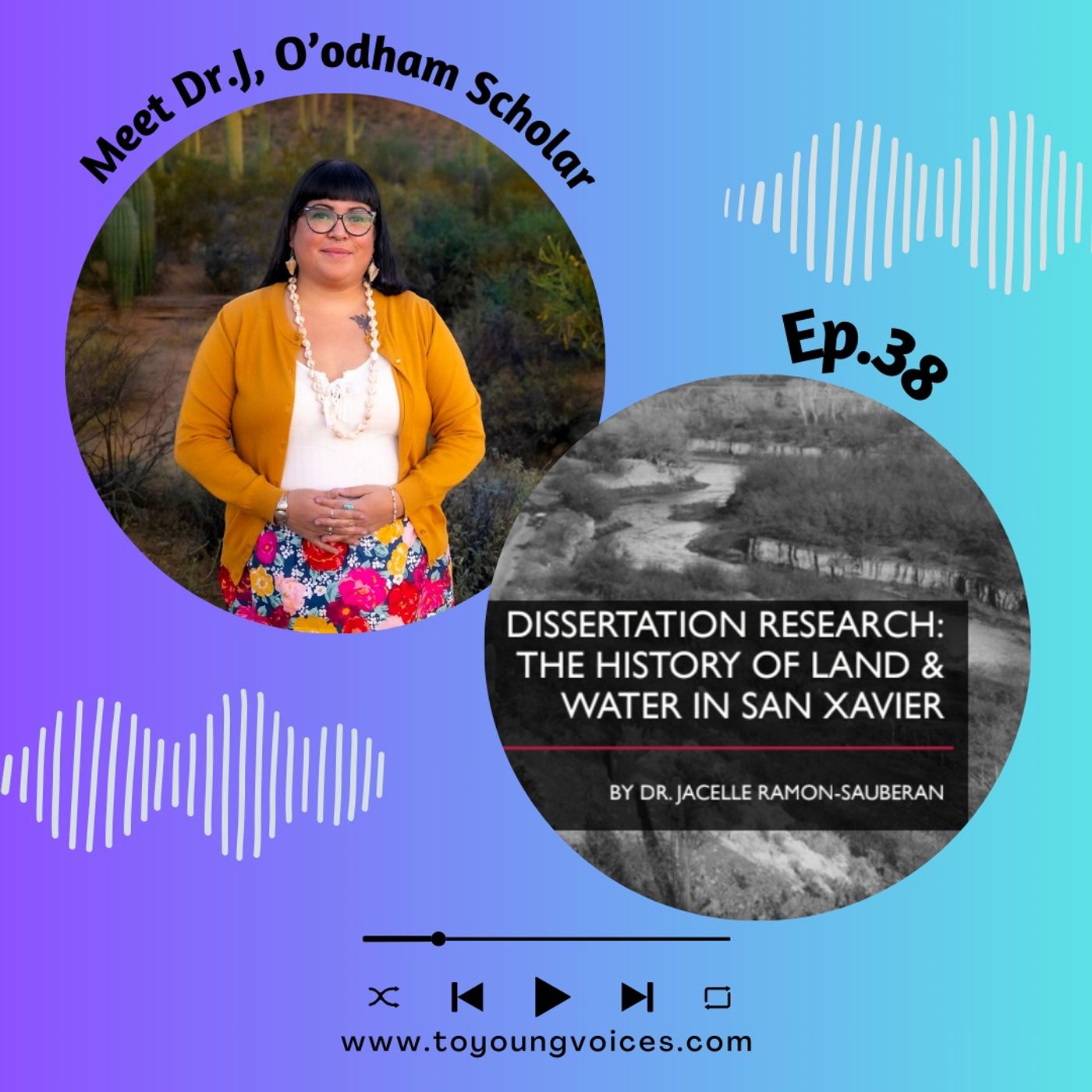
This episode is co-hosted by Tina and Napolean with guest Dr. Jacelle Ramon-Sauberan (Tohono O'odham). Tune in as we take a deep dive into Dr. J’s dissertation research and background in journalism. She is from Wa:k Ceksan (San Xavier District) of the...


This episode is co-hosted by Tina and Napolean with guest Dr. Jacelle Ramon-Sauberan (Tohono O'odham). Tune in as we take a deep dive into Dr. J’s dissertation research and background in journalism. She is from Wa:k Ceksan (San Xavier District) of the Tohono O’odham Nation just South of Tucson, Arizona. Tina has known Dr. J and has over the years followed her work in the community, both as a student and as a professional. The journey in journalism for Jacelle started at a young age as a bear essential news reporter up until her college years where she fulfilled her dream to be a journalist for Indian Country Today. As she transitioned into the doctoral program at the University of Arizona, Jacelle began to focus more on her community of Wa:k (where the water rises) also known as San Xavier and its history of land and water. Growing up she often heard stories of the jewed (land) and the impacts that have affected it til this day. It wasn’t until she began her own research that she unearthed community and surrounding local stories that helped her piece together what all those impacts were for Wa:k O’odham. Sapo!
With permission from Dr. J, if you would like a copy of her dissertation please feel to email us at tonyoungvoices@gmail.com to receive a pdf copy.
Background music by: baegel “Training Montage” and Dusty Decks “Top Glare”
Recorded: October 2023
0:00 For full disclosure. The views and opinions expressed in this podcast are those are the guests in the host. The content here is for informational purposes only. Good Sash, how are you all doing here? We are the podcast team is back with another episode for you, and we have a special guest, just sell Ramon sobern As here with us to talk all about the work that she does and so much more. If you've never heard of her, you don't know much about her work, you're definitely going to learn so much about what all of that entails. Of course, we've got a Napoleon here with us as well, so shout out to Napoleon checking in from Alkhamard Autem Joe Itt. So, thank you all so much for being here with us today, and I'm going to give Napoleon let him kind of chime in for you all, and then we'll have Jasell introduce ourselves. Yeah, it's good Thosh everybody. Thank you all for joining us and inviting us into your homes or wherever you may be. My name is Napoleon. Like Tina said, I'm here on in the autumn jubid northern area, which is also called Temptee Arizona
1:37 State University. So I'm really happy to be a part of this conversation and also just having our excited to learn more from our guests here. So yep, so all right, So Joselle, if you can go ahead and let the listeners know a little bit of who you are, your background, Where are you from? Sure? Scoot dash any jiggy, Doctor Jasele Ramon sareign chap walk amachid. So good day. My name is doctor Jasell Ramone Sabran and I come from the center of your community on the th not the nation. I just recently graduated this past May from the University of Arizona with my doctoral degree my PhD in American Indian Studies with the minor and journalism, and currently I teach at the Not Them Community College. I'm faculty within the Do Not Them Studies program there and primarily teaching autumn history and culture, and I also teach a not Them Food Systems class as well. Wow, yes, doctor, just so, I was telling everybody because sometimes people have a hard time pronouncing my name and I have two last names, so I used to go by doctor J doctor J. Yeah. I was just about to mention that I was like, I know you're a doctor, but I don't know about the last name. I don't want to be like it's either the one or the other wrong, but doctor. Yeah, all right, Well,
3:14 starting from the beginning, when you decided to attend college, was it something that was always encouraged to you, or did you just kind of have that, you know, thought that this is what I want to do. How did that process go for you? So I would like to say that I am a proud second generation University of Arizona Wildcat and a three time graduate from u of A. And my parents were my encouragement. They are now retired, but they talked K through twelve and so there was no doubt that, you know, I was gonna go to college. It was just how I was going to do. What was I going to go straight to university?
3:57 Was I going to go to a two year then transfer over? But you know, again, education was very important and in my home and I essentially grew up in the classroom with my parents, and when my mom was teaching Indian Asis Primary school, my brother, sister and I all you know, drove with her to campus and attended school, and so we'd always get there early, and again, I mean I was in the classroom all the time. And then as I got older, I would help my dad set up his classroom. He taught within Sunnyside Unified School District. And so again, you know, always having that be part of my life. And it's kind of funny because I didn't think I would become a teacher, honestly, but you know, that was my calleing and I'm really glad that I did.
4:48 But yeah, you know, again that was just for me. Again, you know, you're going to go to college. You know, the goal is to you know, my parents would say to me, the goal is, you know, to better yourself, you know, do something that you love and have a career so you could support yourself, you know, and if you have a family and you know, all of that good stuff. And so I actually graduated early from high school and I started taking classes early, like dual enrollment classes at Pema Community College. And so I started there and then worked my way up to earning my associate's degree and liberal arts and then I transferred to University of Arizona, where I studied journalism and earned my bachelor's degree. And then after that I decided that I wanted to take some time travel, so I did and I was in Italy. I also lived in Seattle for some time and then of course doing journalism work, and then I lived in Oklahoma for a couple of years, and then I finally came back and decided to work on my master's And once I was about to be done with my master's degree, there was a few instructors and professors that said, what about getting a PhD? Have you ever considered it? And at first I was like, I was like, no, thank you, and just because of the coursework and the time. But again it stuck with me
6:18 even though I said no at first, and I started talking to my family because they're my number one supporters, and all of them said, well, you have the opportunity, and you know, if that's something you want to consider, we'll support you one hundred percent. And so you know, with that, I decided to go straight from my pastors into my PhD program. And then well it was two years into my PhD program, I had my daughter lydia, and then pandemic hit and then you know, all of these different challenges. But I stuck with it, even though there was times I had to essentially just wait and just say, you know, especially during the pandemic, I couldn't interview, I couldn't you know, access certain information because I couldn't go to those different facilities. So I just again waited until I could finish. And my dad was a big part of that because he said, what's you know, every time updating, you know, with those updates, So what's going on? Oh? So you know, and I try to be like I kind of did this and that, but you know, he's like, we need to find time for you to finish this, and I'm like, I know. So with his help though, you know, he was like a writing coach, and we sat down and wed a lot, so much time together during the weeks, and then we'd work on my different parts of my project also known as a dissertation, to get to those final stages and you know, actually graduate. And I think part of me
7:53 is still sitting there. You know, I have those moments of like I'm done, you know, like I'm actually done, and it's it's hard to believe, and I'm still processing because it was such a long road going from my master's street into my page and all together it was nine years. Wow, that's a long time, but I'm sure it takes a while to kind of think about all the things that you're so used to doing right and now it's like a whole different transition to all the things you've worked toward now. But going backwards a little bit, how did you know that you were able to afford college? For anybody out there who may have those thoughts of like, how can I even afford college, that's a really good question. And for on autum, you know, we're very fortunate that we have our scholarship program, which is now called our Education Assistance Program, which is you know, there to help pay for tuition and give you a living stipend along with paying you know, paying for books and gas if you have if you live off campus. And so that was my main support of financial support when I was going for my undergrad and then I still utilize the services for my masters and my PhD. But also to knowing that there are scholarships out there that
9:28 whether it's within my program, you know, within the college because I was under Social Behavioral Science college, you know, again knowing that there are there is funding available and just seeking that out. And so I did that at certain times and I'm really grateful for American Indian Studies Department because they would do a call out and say, hey, you know, we have funding for you know, anyone that you know needs for tuition or you know it's looking for for a job. We have funding set aside. And so I always take advantage of those opportunities. And then certainly when I became a PhD student, I had the opportunity to be graduate teacher assistant and then also a graduate research assistant. So that was really helpful because I was then employed by u of A and I was amployed by University of Arizona, and then I had tuition reduction. So again there's different ways of how you can go to the university and have scholarships or work part time and have that tuition reduction. But again just seeking those out and saying, hey, you know what, I need help to pay for school. And I'm really proud to say this that I walked away with my PhD with no debt, and so you know, not many can actually say that, but I am really grateful for not the
10:58 nation that they have that service for tribal members. And also too, I would just work other jobs here and there, through my masters, I was actually working. I had the scholarship assistance from the out the nation, but I was also a substitute teacher and so on Fridays, I didn't have school or anything. So that's how I get some extra cash. And then uh, through my PhD. After I was done with those GTA and g r A, then I took on my position at Notts and Community College. So but yeah, again, scholarships, there's definitely plenty out there for students to apply for and then also to you know, there is free tuition for a naive American students now, so that's something that's really big too here in Arizona.
11:50 Well, thank you for your introduction and everything and your journey and sharing with us here where I work at too is sort of advocating for students maintaining their retention and staying in school. And we always hear about the financial part when I'm curious about you know, all these students are coming from different areas, like how did you balance like you know, the finances, but even balancing yourself like our hymn duck, are you know our way of life? Are are you know? You mentioned you had a family during that time and I can relate to that because you know, I have I have a twelve year old too, and that takes up a big part of like life happens, right, So, and especially during when you're doing this research and the really intense things, you're going from one more one mindset to a whole another.
12:43 It's like, oh, yeah, this, this and this, So how did you also keep that balance within you know, yourself, your family, the community, Like you know, you're talking about the responsibilities, you know, all these things. How did you for those folks you are interested? This is like, you know, financially, okay, I can do this, I had this opportunity, but also that that balance within like walking into institutions and stuff like that. So of course, you know, I grew up with more of our traditional side, with our hermathogue, with a little bit of Catholicism mixed in there. But yeah, that really being instilled in me since I was I was little and understanding that to you know, be healthy and successful is to have that balance. And so there were plenty of times that I had to definitely step back from something and do a reset or somehow be able to find that balance again, because it's hard, it's challenging, especially full time being a mom, and then also I'm a proud auntie and being there for my nieces, and then school and then every thing else I do. You know, that was hard, but really my family was it was what kept me going and were there every step of the way with me. Anytime I needed to work on my paper, do research anything
14:15 like that. You know, I could go drop off my daughter Lydia with my mom, you know. And but I think also to my parents, with their backgrounds in education, always having those check ins and knowing if they hadn't heard from me in a couple of days or you know, within a week, to call me and talk to me, and you know, always knowing the right things to say and so having that support, but also too, you know, knowing that there were gonna be times because I try to be that person like, oh, I can do everything of my own or I you know, it's okay, I can balance it all, but it's okay to ask for help. And I think that's the biggest thing that I had to to face, is yeah, even though I could do it all on my own, there's people there to help. It's okay to say, you know, I need help. With this. Can you pick up lydia?
15:09 Can you you know, And of course my family's like, yeah, don't worry about it. You know what if you need like three hours, that's okay to do that. And so that was a big part of it. But I think also too for me, I love teaching, and so when I would those days where I would be writing and doing my research and then I had to step away and then go into the classroom or teach virtually on zoom I, it was kind of in a way like my way to then take a break, do what I love, share my knowledge, and then I could go on with the day, you know. And so having it wasn't to me hard to shift from one to the other because everything is related. You know. My dissertation research was on the history of land and water and Sanavir, so I was, you know, was updating my students along the way, you know, of this is what I been working on, or look at I found out this cool fact or this photo, you know, and so different things with them. So being able to share, you know, wasn't hard. But you know, there were definitely times where, like I said, it was challenging, you know, mind, body and spirit and I have a really great partner. His name is Jesse, and so there were times where Jesse's like, I think you need to like step away, like let's go for a drive, you know, let's go do this, and I would, and it was exactly what I needed at times. And then also with us raising our little family, you know,
16:42 he always reminds me that there's always tomorrow, and I, you know, I'm like, I need to get that on like a sign and hang it, because you know, it's always a good reminder because I'd be trying to jam pack as much as I can into a day. I'd be tired. But then you know, he would say that to me, and I'm like, okay, you're right, you know, and I'd step away and then we'd have dinner and watch something on Netflix. And so you know, that's again, having that support from my partner and my family was what really got me through all of this. And you know, and then at the end when I was actually done, and I was talking to my advisors, my committee because when you're PhD studn't you have a group of advisors committee members or what they called. And I just started crying and I was like, fie, I was done, and there were and it was just like that release of everything. But it was like a good cry. But again, you know, there were other times too where it was like you had I had to step away because you know, I was getting promotional because of just the what it what it takes to get get through this. And I love challenges, but this was probably I'd put this up there with actually having my daughter, and it was that challenging and hard. And I was joking with someone the other day, I'm like, yeah, my dissertations like my second child, because it really does feel like it, you know, with everything that I went through. But yeah, and I think also to to the last
18:12 thing is that definitely with him a thug, my family, it's it's a big thing for us every summer to take time out of our busy schedules or you know, whatever we have going on to go and harvest by a such sorew fruit. So that was always a time for me to reflect, you know, as we are supposed to for our new year. But it was just again that those times that every year, that was my time to sit there and and reset and you know, step away from everything and just be around my family and do something that you know, we've been doing for time immemorial and being part of that, and then also stepping up as I've gotten older, you know, to learn how to make the sea thought the syrup, and then you know, also learning about how to do you know, just the whole process and learning about that and my mom handing it off to me and saying, okay, you know how to do it right and I'm like, no, wait what. But again, you know, taking on those responsibilities I have as not the woman and stepping up, and that's been another part of again balancing that, but also knowing again that you know, when it comes to work and other things, that there is tomorrow, but there is priorities, are things that need to take place, and so making sure that I always took time out for us to go and harvest, and
19:45 you know, also you know, within the next day or two, also making time to again go clean and get it all prepared to make syrup. And then I'm hoping next year that we'll be able to do jam. And eventually I do want to learn how to make the ceremonial wine. But again just learning and making sure that I'm continuing with with you know, our Heemothoge. And I'm a life learner, you know, as many of us are, but just making sure that you know, I don't I don't forget that and having it really at the forefront of everything that I'm doing. Yeah, it's just definitely takes a lot of balance, especially when academia, because there's so much that could just come into place and life itself, life changes or small changes. You know, it is a constant working thing to try to get some balance when you're in academia. But thank you for so much for sharing that. And when you talked about your journalism career and what you did, and you know, I've read some of the things even when you were in it in that time, you know, articles were coming out and I'd read them and which is really cool. And then I remember when you were in the journalism I think you were a teacher assistant. But you know, aside from the teaching, with your background in journalism, what is it about
21:15 writing that you enjoy so much and you have enjoyed that you you went that route. Well, growing up, I wanted to be a lawyer because I could argue really well. And then after that, I don't know, there was like a couple other professions that I said I was going to be, and then I landed on wanting to be a writer, and you know, and I still hope to be able to write a few books within my lifetime and then beyond being an author. I was introduced to journalism when I was in the fourth grade. So Channel four KVOA has bear Essential news for kids, and they were looking at the school I was going to Picture X Intermediate.
22:06 They were asking, you know, does anybody want to be part of this? And I read the little blurb on it, and I said I do. And so it was me and I think two others because it was fourth, fifth and sixth grade at that school, and so they just had one representative from each grade. And so what we did is that we would write an essay or something, you know that whether it was for class or something that we did on our own as interest, and then our advisor would send it to Channel four and then we would come in and they would shorten whatever we wrote, and then we'd read it on a teleprompter and then it would show up on Saturdays during Saturday morning cartoons. And it was just a little segment, and I fell in love with journalism and writing at that point and also to I believe it was the fourth grade, I won my first writing essay contest on cooperation and so I still have my mom I think still has a little trophy. And again it was just something that I really liked to do, and so I stuck with the Bear essentials and oh and also to the article that or well what you read on the teleprompter would then be made into an article and then it would come out in the magazine and so with you know, has the polar Bear on the front. And so that's what I did. And then every year we get to go for a tour at the TV station and get to see some of the journalists there, and
23:37 so it was really cool. And so after that I stuck with it and any chance I had to be published, I would. I wrote poetry. I was part of different poetry workshops and other things, and then high schools when I really got into journalism. And I think for me with journalism is that I really like to talk to people and I really like to tell people's stories. And then when I finally got to uo A and the journalism program there, it turned more into my focus was on Indian country because for US Native and Indigenous folks, there was a lot of negative spotlight on us in news and you'd only hear, you know, we'd only show up when something bad would happen in the newspaper or you know, there was a tragedy.
24:30 It's like, well, what about all the good? And so I really started turning my focus to telling these positive stories, you know, these amazing stories that people were willing to share with me about their lives or you know, whether that was within their personal lives or professional you know, or even you know, something that like an event that they had put together along with others. I wanted to tell those stories and I really wanted to shed light on that, and so so that's what I did. And I wanted to also have more Native and Indigenous voices within media because there were so many times I'd read articles and it would be about something, you know, pertaining to a certain tribe, but there would be no tribal members interviewed, and it's like, that does not make any sense. And so I and again I was like, we need to do something, and I again decided that that's what I wanted to do. And when I was an undergrad at yo A.
25:33 I was in a writing class and our professor at the time was like, well, what is a big goal that you want to do. What's something And I said, I want to write for Indian Country Today Media network. And at that time, they were in New York, and so he said, what's stopping you from reaching out to them right now? Like after he read my paper, and I said, I don't know. I'm like, he said, you should reach out, and I did. A had different assignments and so we had just turned one in and that he said, you know the one you just did. He said, send it to them, he said, and see if they'll publish it. And I said really and he said yeah, And so I did and they published it, and they asked me to start being a freelance journalist for them, and so I did and I was there with them until they decided to shut down. And so I think I was with them seven or eight years, I want to say, being a freelance and you know, I would share ideas, sometimes they'd reach out to me, and so it was a really good relationship and I got to meet some really amazing people and talk to people from all over the world and tell their stories and again I really liked that, and I had to hang up my hat with that because of you know, they shut down, but also to I was focusing on my graduate journey and so definitely still a journalist at heart my first love and passion, and I've had opportunities to get things published here and there. But again, you know, I
27:06 always say, you know what, I think, at some point I'm going to go back to the newsroom because I really liked it. And journalism took me a lot of places too, So I had internships Farmington, New Mexico, Saint Cloud, Minnesota, Seattle, Washington, and then I also I studied abroad in Italy through the Journalism School at the University of Arizona, and I had opportunity to do photography, journalistic photography, and then I think I had something else too that I did with journalism there. So that was really awesome to have all those experiences through that. But you know, again it's just it's a passion of mine that I really like. And even with my masters and my PhD, journalism was brought into both of those and my masters included a biography and the late doctor Bunny fonte Anna, who is a Southwest anthropologist who spent his life's work writing about Autum, specifically my community center her and also the center of your debac mission. And so journalistic skills, interviewing, talking to folks, and then with my PhD and my dissertation that I did, interviewing and telling you know, these the stories of folks because a lot of what I wrote about for my research, I wasn't born yet.
28:30 So having these community members and my relatives even tell the story and you hearing it directly from them throughout my research and my paper was really important. So again it's just a it's a first love and a passion that I've had and utilized and will continue to use. And really hopeful that I can be able to teach a journalism class one day and have you know, students really have this have a chance and opportun tunity to experience journalism and you know, also learn about what it means to write for Indian country today and the importance of it. Yeah, thank you for sharing that. I think we're long overdue for autumn led news coverage newspaper, even if they're tiring of the runner, that's inspiring, you know, because that first passion is always there burning, So I think we definitely need something. I'm just throwing that out there.
29:30 I don't know, like logistics, but that would be so cool, you know, because we like our whole initiative is telling our stories, you know, and we try to find that connection between Dono Akamar Auctionin you know, Kiyachin, those two, like, you know, such a vast area. But if we have like people like you know, folks like you who know how to do all like a lot of that stuff, it's it's really cool. So when I've learned that you were a journalist, at first, I was like, oh, oh, that's cool because that sort of like that foundation allows you to be able to tell these stories in a different way, just like how we do in like podcasting, you know, you do it on the grounds like perspectives and all these things. So thank you for sharing that. I appreciate it. Yeah, and I think also too, it matters too who's writing these stories and what the topics are. And just to elaborate a little bit more, when the announcement from Trump came out about the border wall, I was contacted by Indian Country Chain and said, can you write the story about this? We need your expertise at this. We need you to talk to aut them because that's whose perspective and opinion matter most.
30:44 And I remember I was just like in the middle of you know, my program, and I was like, I really don't have time, but I put things aside and I said, this is important and I have to do it. And so I did write three articles. There was a series of articles about it, and it was all Autumn perspectives and opinions, which was really awesome because I didn't see that at the time elsewhere like people may have you know, included oh there was a statement by this or that, but you know that that hit close to home, you know, and our people, and so I really wanted to tell it the right way and also including the history. And I think people are like, oh, you know, this is something they're dealing with them like, no, this isn't the first first time we've had to deal with something. It's been going on since eighteen fifties, so you know, telling that and having that opportunity that was really awesome. And then there was other stories too that I highlighted from for for Autumn and then I even for in Canada and other places too. But yeah, you know again that dumb perspective is really important. And there's not many of us that are our journalists that are aut them that are out there.
31:53 But that's one of the things I always incourage youth. I'm like, we need more journalists, we need more you know, aught them serving in all these different roles you are future leaders, Like, please, you know, step up and consider these different I guess you could say paths, you know, journeys that you could take. Amazing, amazing journey that you've had with your career in the academic world and what you're doing now. You know, you talked a little bit about your dissertation. And for those who may not know, what is a dissertation? What is the definition of a dissertation? What do you do with that? And when do you need to do a dissertation when you're in school? Can you explain what exactly that is and why is it that that's something that you need to complete a doctorate? Sure, so for a PhD program, you come in, you know, you start your program and you come into what is first your class sload, so you complete all of your classes whatever's required for that particular topic major that you're you're pursuing, and once you're done with your class work, then you know there's other stages of your journey that you have to complete, and so you also have to do oral and written composition exams. And so for my particular program, Americ Indian Studies, I was given four questions and each question had to
33:30 be roughly fifteen pages long, and I had a week to do this. It's all pertaining to my interest in what I wanted to do ultimately for my research. And that was tough, very tough. I had a three month old at that time, so I was used to staying up long hours. But I was really grateful that my mother in law, she came to stay when I when I was writing. And so you know, it's a big challenge, you know, and it's testing you of course, and it's an exam. And so after you complete that, you know you meet your deadline, you turn it in. Then that the oral part of that is meeting with your committee. Like I mentioned, you are able to select four or five or three to five I should say, individuals depending on your program, to be your advisors and to guide you and help you through your your journey.
34:25 And so you meet with them. They go over everything that you put together in those essays, those questions you had to answer, and you get a pass or fail with that, and it's again it's challenging. It's meant to be tough and certainly seen where you're at, you know, do you need more time, you know, to go back and take another class on this, you know, specific topic relating to what you want to do. Are you like set and good to go? You know? Are their recommendations And so then once you get through that, you can start your dissertation research. And so a dissertation it's a it's a very long paper, a very long essay, and mine was about one hundred and eighty pages, but it's based on research on a particular topic, and they are there's different parts to it. So mine was heavily on history. It was on the history of land and water and sandivir And I remember coming to my advisor initially with the idea and then he said, that's great, but you gotta have a research part to it too, so his and so then I had to figure out, well, how do I take what I'm doing with history and again have this like research component to it. And so it took a little bit of time, but you know it's it's your chance to do a project, and you know it is a requirement for you to graduate with your your PhD.
35:58 And so this dissertation can look and be formatted in and you know an any way you see fit like mine included audio interviews and then you know, I had my different chapters that were written out. Some it may be a video project that they put together. Again, it just all depends. And then certainly also too there's the other option where it's not necessarily like this big long essay, you know, research paper however you want to describe it. But it could be like a series of long articles that you get published. Again, it just depends. But it's a lot of writing. And so when you pass your exams, then there's a process that you need to do to be approved for your research project. Especially for you know, myself working with my community with the don out domination, I had to get approval. So that took about six months, I want to say roughly for me to get the approval get support letters, I had to go before the Center District Council.
37:07 Then I had to go to Legislative Council and seek approval there and again, you know, it took time, and I also had to go before the entire Legislative Council at one of their sessions, which was that I was really nervous. Usually I'm okay when I get up in front of you know, students and but legislative council, it has been intimidating. But I read my resolution, my research resolution, and so that was really an experience. And then I had to submit that to University of Arizona and submit paperwork there and then finally once everything was totally approved, you know, had that approval stamp on it, I was able to start my process of research. And that took time, and pandemic happened and really limited me on what I could do because you know, there were individuals I wanted to interview, and we did have Zoom you know, go to meeting and other you know platforms, but you know, I really wanted to sit down and meet with these people and talk to them, and so I had to wait till things got better.
38:22 But again, that research process, you know, was was timely. But then once I finally was able to complete all my interviews and do everything, then the fun part starts. And that's when the writing starts and so again you can see this alone took seven years for me to complete. And again it was just all these different steps you have to take and get through and you know, certainly did not plan for a pandemic, but had to again adjust to that for everybody's safety and their health, and you know, still try to do what I couldn't try, and I tried really hard to keep momentum. I didn't want to like completely just stop and say, oh, well, I can't do anything right now. I kept trying, you know, to do little things because I just felt that if I stopped, then you know, it would be really hard to start again. So I did what I could during all you know, during that time and continued on.
39:22 And then there's also with your dissertation. There's a many drafts that and I laughed because I think one of my chapters I went through like ten different versions of it with my committee because they just were like, I know, you could you know, this is good, but I know you could add more. I know there's you know, and they really challenged me, you know, which was a good thing. And you know, certainly I at the time, I didn't see it as a good thing. I was frustrated, and I was like, what else could I put in here? You know, But it all worked out, and you know, again I realized later on, like why they had me work so hard on that that I think was my chapter one is what it was. But and then you had to go through all the revisions and I actually had a chapter it was about forty five pages long and had to redo the entire chapter. And I dreaded it. Really. I was just like I knew like the format and how it looked and the organization of it needed work, but I didn't think I had to like reorganize the whole thing, so if you can imagine doing that.
40:30 But again, it was just learning along the way too. I'd never written anything this long. My master's thesis, which is also a long essay, that was ninety pages, and so this was double that. And you know, again going through all of the drafts and to the final stage, and even then, you know, now that it's done and it's published, I look back at it and I still find myself like wanting to tweak things, movings around, and I'm just like, no, it's done, but certainly wanting people to read it. And you know, so all again, all of this that had to be done, but also to the thought process of Okay, what am I taking from my research to put in my paper?
41:20 Because not everything will fit, you know, how do I figure out what exactly to talk about? And I wanted it to make it too so that people were understanding what I was saying, because there there's times in my graduate journey that I would read dissertations or you know, other published articles and I would have no clue what was being said. I was just like, what is this person talking about? Because of their word choice, because of you know how you know, they're describing different things. And I didn't want that, you know, I wanted everybody to fully understand what I was saying. And so that was another part to it too, and having information shared with me and then me using journalistic skills and you know, just my writing abilities to then take, Okay, this is explained to me, So then how do I then explain this on paper? Right, So just to share a little bit about everything that I just a preview of everything that I had to think about and experience during during my journey. Yeah, and I feel like what you're doing now, I mean, I'm sure it pretty much explains your research and your work. And you did this little mini presentation tour that you did, which I actually had an opportunity last night. I was telling Napoleon earlier that cause he was saying that he had watched the video of one of your presentations, and I watched the one that you did with the amerind
42:52 Museum, but I was at the gym, on the tread and on other machines watching it on YouTube. But it was really good, Like you did such a good job at thoroughly and simply explaining your research, and the way that you structured it from one part of it to the next part was genius. It was just so it just flowed so well, so good job. I mean, that was amazing, and I'm really thankful that, you know, I got to be a little bit a small part of your research. Even during that time, I was just like, wow, this is so cool, and I couldn't wait to see what the end result was going to be. And now here it is, and it's just it's just really good good work. Doctor j Thank you so. During your years in education, what inspired you to do your dissertation specifically on this topic of the history of the land and water and walk. Well, let me take a step back.
43:59 At even for my masters, I have really great supporters in my family and between my my mom Janice Ramone and my anti Julie Romone Pearson and my other anti, Wanji Ramon. But they were really people I could go to and ask, like, you know, what should I do my research on? Because I wanted it to be for people. I wanted it to be a resource, you know, whatever that may be at that time when I was trying to figure it out, and I'm like, what do we need, you know, as a community, as a nation, And so talking with them and getting ideas, and so that's how for my thesis that came about of why not tell doctor Bunny Fontana's story because the relationship he had was very different than other anthropologists with native you know, indigenous communities, and really also to learning more about our neighbor who was five houses north, you know, on Mission Road, and also to having tribal members who worked with him highlighted. And so that's what I did. And so then when it came to my dissertation, I went to my auntie Julie because we've had we had had conversations prior and I had worked on some video projects for the Sanavera Latti Association and one of which was highlighting the history of land and water in Santa
45:34 Vie. And so I did a three part video series of just talking about the district's involvement my Auntie as as a knowledge keeper and all her time and what she did, and then also to an elder Mike Enisbutt and talking to him of his experience and so it was really great. And after we had done the first recording with Mike, he actually passed away, and so we're really grateful that we're able to capture his story about being an out them defender of land rights. And so that was that that kind of stuck with me through this that video multimedia project and so you know, again having those conversations with her afterwards, and I said, you know, what should I do?
46:21 You know, get ideas for me, and we started talking about taking yes, we're an oral society, but taking these stories and writing them down because we felt that in our community it was time and you know, it's history and it's important and so we and there was no one document that had all of this information in there. It was really oh, you got to go talk to again my auntie Julie. Oh, you got to go talk to so and so. Oh, you know this person was part of this. But they're no longer here anymore, you know, So if you really wanted to know the history it was, you would have to take the time to go talk to people that are still around and you know, hear from them, and so you know, that was a challenge. And also too with my my auntie Julie. You know again everybody's like, oh, you know, she's the person I go to, But for her, she's like, I'm not getting any younger, and I want to pass this knowledge on.
47:22 And so I gladly stepped up and said I want to know because for me, I am a feature, a late landowner in Santa Vier, and I was just curious when I was when I was younger, but I didn't have that background. I didn't have the full history to understand why Alats were upset at that time about a certain issue or you know, why this was a big deal. Because again I did, there was nowhere for me to go find that out right, you know, like where I could read it, and so, you know, and it certainly wasn't being taught anywhere, So with that, you know, that was a big part of it. And also to you know, I wanted to do something for my community with my community, and community based research is really something that was important to me.
48:10 And so with completing my dissertation paper, I always say, you know, when I'm talking to anybody in the community, I'm like, we did this. I didn't do this alone. You all helped me from the very beginning to achieve this, and we now have this document that is a resource. So if people want to learn, it's right here for them. And honestly, it's just the start of I believe my research as an not them scholar, you know, my lifelong research. It's just there's so many more ideas and things that I want to do from here, you know, jumping from my dissertation paper, whether it's you know, publishing different parts of it or expanding on it because there's so much of the history, and at the very end of my paper, I did start talking about the future, but also too, like thinking about that of this is the history, Well, this is what's going on now when it comes to water, when it comes to land, you know, and expanding more on that in different ways.
49:14 And certainly too doing my presentations all over Tucson and in Phoenix and really sharing and having people have a better understanding of the history, because you can't understand the present or the future if you don't know the history. And so that was a really big part of you know, why I wanted to do what I did. And again, you know, having a resource, but also my paper be able to be used in education, and you know, I'm really excited to actually use it in my classes, and so you know that that was another big part of it. But I wanted to tell these stories from these individuals. I wanted to again have a have all of this be put together so people could pick it up and understand, or anytime they need to reference something, they have it there, you know. So having it serve all these different purposes is what I really wanted. And I think also too, you know, not only to be educated, but also too.
50:16 I think for some that were in our leadership, they said, well, I don't know how to tackle certain issues because I you know, I don't know much about what has happened in your community, right, you know, because they're from a different community district. So having that and you know, to to help them professionally, so in their leadership positions, you know, is another big part of it, part of it. But again, you know, I didn't I at the time. I was just like, I just want to put this together, and not realizing all the different ways that it can serve, you know, a purpose and all these different like I said, professionally for your own personal knowledge in a class like so on and so forth, and you know, definitely wanting it to be shared with as many people because there's always this running joke is that you're the only person and maybe a few family members that are actually going to read your thesis and dissertation.
51:13 But for me, I'm like, no, that's not the case. For me, I don't want that. I'm like, I want to share it, and you know, I have as many people have it on their bookshelves as possible. And so again that's why I really wanted to create something meaningful, you know. And I'm really proud of my community and all of their help in this every step of the way, you know. And for those that were willing to be interviewed, and I interviewed about fifteen people to get their whether it was you know, stories of these certain historical events I wrote about, or just picking their brains on like what do you know, what don't you understand? What would you like to know? Because that was another part to it too. It's like, you know, I know what I know and what I don't know, but is that the same as everybody else, you know, and so really taking their opinions and you know, their input to make sure that I did achieve that within the paper too.
52:13 So it was a process too with again like all you think about it now and now that I'm able to like digest and look back on everything too, you know, and how I did different things. There's just there's a lot of different like I said, the process for research, the process for writing, and then now thinking about like what's next and where I'm going from here. And believe me, I have a whole list of all these great ideas that I have that I kept having to be like, no, I gotta wait till I'm done. And now that I'm done, I'm like, oh, okay, Like what on the list can I start with? And I think one of the big things for me is publications and having certain sections or a chapter you know, published from from my dissertation, and I think also too, eventually maybe down the road making my dissertation into a book. You know, that's not off the table, but certainly too. I want to make sure that everybody's on board with that, all those that helped me put my dissertation paper together. But you know, again, that's just that's I think the first thing. And there's some other projects too that I want to be able to help be part of and help and share my knowledge. So we'll see, you know what in the future, and you know how be able to utilize what I learned through my graduate journey or journeys I should say, and you know where I go from here. Yeah. I was telling
53:45 Tina earlier that I was watching your video from two separate times that you presented. I think your hair was green at that time in one of them, and then the one recently that you did at the uh the hymn that key, I think that's the one was that the one. There was another some bits and parts of that, and just kind of hearing the differences, like you're talking about drafts and stuff, you know, writing thesis and things like that. And one of the things I mentioned in Tina was just like how that embodiment and connection that you had with the pape, the newspapers and the things that were documented the photos, capturing those or not captured, but seeing those kind of like brought out and lived and being in this history as a big part. That really stuck out to me because I I don't know why, I always like interested in you know, these like documents of photographs and you know aught them, you know, things that they were built back then, or you know, families, and so very rarely do I see anything of like you know, lineage is being documented in that way, and so I thought that was really cool too, that you're able to see that and be like, oh, that's you know, actually your your you know, she actually has those already, like yeah, ask her about it, you know, and how much of that is so important in our work that we do too as academics to really document those things and bring it back when it's
55:19 needed. And I thought that was just so the most well to me, that was like the most powerful part of the you know, because like the history and everything is always never never like that's that's happened, right, so it's never really gonna change. But when you see those photos, you're like, then you live, you live those memories and like Dan, they're out doing this and so I thought that was that was really cool, And again, yeah, this is the commending you on a lot of the work and everything that you're able to bring back because it also helps, you know, like I connect with not knowing much about you know, the Walk district, so you know only from like bits and pieces when we talk about language and culture and things of that, like are different dialects history, how it politically happens. And I think you did a really awesome job of politically putting you know, this is what was going on. You know, the guy that's purchase all these separations, these different ways, and it's such a small community but large impact, you know, because you mentioned you know we're a very small community, but you know there was a lot going on. Families were involved, you know, senators, state representatives, you know, being in different you know, you know, you're whether you're role member, you're just a person in the community living there. You know, all these different players.
56:51 So I think that was just a lot and I think that was just really my thoughts. And I was seeing your video and then off the like just looking up some of the history and just getting that knowledge, and I hope that other are like our listeners, like encouraging to reach your work and that it doesn't sit there. You know. I had sort of the same thing when I was reading my thesis, but I ended up doing a practicum, but that was sort of the same thing as just that joke too. It's just like, yeah, you know, we're going to change the world and do all this and it's just sitting there, you know, like, oh it was cool and that was a good time in life. But I think that's cool because like as Native people like our stories, like we hold on to some of those even though they're like snippets of the so so what if they called the past, but we bring out those dissertations like oh, great Green you know wrote this, and this is how we can use it as a tool to really like build and for our future generations, like you're mentioning and teaching and and kids of that nature. So yeah, that's just my thoughts on that. And then thank you for sharing on a lot of that and how you went through it. Yeah, thank you for sharing that.
58:04 And yeah, you know, my my family was also you know, and throughout my my research as well, and my who would she would pop up every now and then, and it was really funny at times because I would go tell my mom and my sister and Mom, did you see this? And you know, you know she was in this, She was you know, photographed and you know, interviewed, and so we were finding things that we didn't even know about or you know, my mom would be like, oh, you found that out, you know, And so it was really funny. And I think also too for me, I was able to take the stories that my who would my maternal grandmother shared and put them in my dissertation. You know. So it's that having those multi generation you know, and seeing that you know, and having that knowledge passed down and being able to put that and also to you know, there were times that you know, I was tired. I was just you know, getting frustrated or something, and she would pop up in the right times to just kind of give me that reminder to keep going. And again, whether it was in an article i'd find or a quote from her, and again it was just really I pay attention to that with their spirituality and you know, and it was a big part of like also motivation to keep going because there weren't plenty of times I wanted to just give up and be like, you know what,
59:37 I'm fine with how far I made it, you know, like I might just hang my hat up, but you know it again from her, and then even also to my late Anti Wanjie, you know, and having them again pop up and kind of give me that second wind or just that motivation and so and then also to fighting photos of like my great grandparents who my grandma talked about, you know, my who talked about, but I never seen photos of them. And then discovering photos and published books you know that we didn't even know that those photos were used in there. And then also to Arizona Historical Society. I went there and searched through you know, different boxes they had, and so finding photos of also you know, family friends and others you know in Cena Rag community and sharing those because we have a Facebook page for Cenebra community and so I would update people and say, hey, do you know I found this. I found that, and then people are like, wow, you know, I didn't even know that photo existed. So that was also another part too, and you know, sharing all of those different photos and then also the newspaper articles I found and you know, it's just interesting how how connections happen and how things, you know, unfold and come together. And so again those little reminders that I'm right
1:01:08 where I need to be and I'm you know, doing doing this for all the right reasons, and you know, I need to keep on going again. So you know, it was just thinking about things and having those those times of encouragement and so but yeah, it made it that much more meaningful to me because I had a direct tie to not only community, but all these events that happened. And I was teasing my auntie Juli, and I was like, I didn't even know you were part of all of these things that happened. You know, I'm really glad I had all those times to sit down and talk with her, and I think with her alone, I have maybe I don't even remember, probably eight hours maybe of like audio and a lot of it's just us kind of like going back and forth and just me asking questions about family. So it's really it was really an awesome experience.
1:02:00 So for those who who may be trying to piece together the dissertation topic, we're talking about doctor Jay's dissertation, which is on the history of land and water in wak Trick Shan Sinevir community, and in her dissertation she focuses on the you know, of course, the history, the historical part of it, what the Santa Cruz River was once like, what it looked like, how it was thriving, how it was you know, it was a whole river. And then what impacted that rivers and how this you know, no water, no more water flowing through, how that impacted the autumn in Santa Feir and then just so much other things that kind of come into play with the land and the water itself and the history that it's had, some good, some not so good, the fighting that the autumn did. When you mentioned the the defenders what was their name, Autumn Defenders of Land Rights, Yeah, Defenders of Autumn land rights. Sorry, Defenders of Autumn land Rights. And and why that organization or that group was put together just because of some potential folks trying to come in and build a whole city or community.
1:03:29 And you know, how the allotments came to play. That's also again the land portion of the dissertation is is how that comes into play and explaining what is allotment, how did that happen? And again that happened back in history when the Mertigan were getting autumn to be more I don't, I guess, you know, in modern times, more contemporary with the work that they're doing. It's explained so much more better her in there. But that's a big part of why her dissertation is specifically focusing on land and water, just because there's been so much with it historically up until today. Where can people
1:05:08 find your dissertation if they're interested and they want to read it. You can actually find it on the University of Arizona Library website also too, you can reach out to me directly and I'll be happy to email It is also at Dona then Community College in the library there, and the Sanabya a Latti Association is also another place you can reach out to and they can send you a copy, whether it's print or digital. And then I'm also wanting to provide a copy to the Himmaduky the Cultural Center and museum, so planting it in different places so you can be able to check it out. But certainly if you want your own copy, I'm happy for you to reach out email me and I'll send you it. Yes, definitely send us a copy with it.
1:06:00 So one more quick question in regards to your research. During your research, what was the most surprising piece of information or detail or story that you found or heard. It's a good question. Let's see. I think for me, one of the big parts was piecing together what transpired with the proposed land development that was brought in in the late nineteen seventies by the Santa Cruz properties and an individual, Jim Rothschild Junior, was at the forefront of that, and I had known a bit about it, but really diving into the details and the fact that the Tucson Weekly, which was a bit different back in the late nineteen seventies into nineteen eighties on their coverage and so finding One of my former journalism professors at that time was a PhD student, and she worked on a series of all these articles that highlighted what was going on throughout the whole time with the proposed land development and tracking those down, you know, and saying, well, where can I get a copy of all of them? I don't want just like one or two, I want the whole
1:07:30 series of these articles, and you know, contacting all these different people and then finding them at our special collections at the University of Arizona and being able to then have all of those and dive into that, because it's really interesting how there was actually a reporter in I want to say, probably like the sixties, seventies, maybe early eighties that their beat was to cover the th out the nation, to cover Santavie, and so there was always coverage that we were in the news, you know, of highlighting business developments, highlighting what was going on with the proposed land development, you know, all of these different things, and so there's all these really neat and interesting articles.
1:08:19 So again diving into that and finding how all these investigative articles were done and so detailed, and you know, I'm just like, wow, if I didn't have these, like how would I have told this this section, you know, along with weaving in the stories from the community members and my auntie and so I think for me that was just that part was having all of those details, all of that information and being able to provide that throughout my dissertation paper, which was to me really amazing because you know, it's something I feel that a lot of the community members didn't know about, you know, unless you were there standing up and saying no, we don't want this.
1:09:08 You know, unless you know you are part of that group, the defenders about them land rights. You know, it's like if you unless you were really active in it, you didn't know much about it, you know, and these and it's not like these articles are are readily available either, you know. So to me that was the most interesting was finding all of that and being able to say, hey, this happened and then doing this like chronological order of you know, this is what happened first second, and then just the span of that time. You know. It wasn't like, oh, the person you know, that company and that person who is ahead of it came and took no for their answer and just left. You know.
1:09:49 They were really trying to build a city of one hundred thousand that would be uh it would be the south of where the where the Bock Mission is. And I couldn't imagine that today. If you were to stand there, look north at the church and then turn around and then you would have seen this city and it was going to be on allotted land and it was going to be partially on tribal land within the district. So again just I couldn't fathom it and then it wasn't even for aut them. That was another part to They just wanted the land and promised that we would become millionaires, which wasn't true at all. So it's just one of those events historical events, major events that happened pertaining to land that I'm really glad I was able to find all of this information and put it together in a chapter. And I really I actually feel that every chapter that I wrote could be its own dissertation paper within itself, but I didn't want to do that. I really wanted to again have this one document where you get a big chunk of what happened, you know, and hopefully that will then spark interest for you to then go talk to somebody or you know, start attending, you know, a lot to association meetings if you're in a lotti or you know what I mean.
1:11:16 I'm just hoping it just there's more that will come from from reading these different chapters. And certainly also too when I wrote about the Southern Arizona Water Right Settlement Act, and there are many people that are no longer living that did help with that. But one of the lawyers, he lives in Albuquerque, and that's what he told me to. I was getting his input on what I had put together and wanted him to read my draft. And that's what he told me. He's like, you know, you could have just wrote about this, right And I said, yes, I understand that I didn't want to. I was like maybe I was like down the road, I'll like write more of just on that topic. But it's just was interesting, you know what I had to go and dig out, you know, and even I guess what was covered, the different topics and whoever those journalists were, whether they're working for Tucson Weekly or Arizona Daily Star, even when we had Tucson Citizen, you know as another paper, and having those those different beats covered, and thankfully with the fighting of those certain autom because there were some auntum that were for that you know, ninety year lease and from the developer and believed that they were going to become millionaires and that's what they wanted, right. Yeah, that is and it actually Mike Keyness but said it best, is that it really divided our community because you had so many of those that saw dollar signs and you know, wanted and needed money to
1:12:51 be able to provide in you know, for their families and to live comfortably, you know, and they thought, oh, this would take all my worries, you know, because I'd have this income coming in, whereas others were like, uh no, this is not what it seems, and there's there's lies that are being told to you and really reading the fine print and doing the math and everything and realizing there's nowhere close to becoming a millionaire, you know, with what is stated in those documents. You know, that's not what was gonna happen, you know. And so and again also too, there wasn't like, oh, and you can come live in this city of one hundred thousand, you know, there wasn't and you'd be promised anything.
1:13:36 It was just like no, you know what, you can have the money, We'll just take the land. And you know, again, it was really hard on a lot of families, and even within leadership too, because there was leadership for Senator district and also the nation or at the time we were called pap wall Go Tribe, and they were on board for this. So it's like, again, how I just couldn't imagine that time of how the feelings, you know, when everybody was in the room or you have everybody that was not for these others that were for it, and even have tribal leadership that was for it, you know what I mean. And it was just kind of this interesting time. And I remember in that interview with my keyness, but he even said that, you know, it took some time, he said, for you know, he said, for me and my family members to be able to be on good terms and talk again because of all of that that transpired during that time. And so you know, in thinking about that, it wasn't just like, oh, this developer came in, but the effects of what that caused on my community were huge, you know. And but again I'm really glad for that group, the defenders about the land rights, because they didn't give up because again, this wasn't something that just went away overnight. This was years upon on years and going you know, to court and you know, and staying up on all
1:15:06 the facts and going and promoting and saying, you know, this is why you shouldn't be for this is you know, providing pamphlets with you know, all the information on there. I think there was even t shirts that were made, which I wish that they were still around, and I'm really hoping that someone might have one, like in a box, because that'd be really cool to see. But all of you know, just being out there and educating folks and even educating themselves. You know, there were a lot of autumn that went to I think Pema Community College and took classes so they could better understand what was at hand, what was at stake, and you know, wanting to serve how and again figuring out how they could do that and also to I think understanding that was a big part of us understanding what was presented to them. And thankfully there were others that had law backgrounds that came in to help. But again it led to a lot of people saying, well, you know what I want to learn for myself so I can better serve my community. So that was a really good, good outcome for that, but again, you know, it was a long road to for it to finally be totally squashed and you know, not going to happen, but they kept trying to find different ways to make it happen. And so again, really grateful for those people that served, and I really think that was a big part of activism in my community and seeing it really unfold and and
1:16:43 form you know with with that group and you know, and I hope that our youth see that and say, hey, you know what you're next to fill these shoes and make sure that you know, our our land stays, stays with us, and you take care of it. Yes. One thing that I always pictured and imagined in my mind when I was listening to the interviews during you know, while transcribing, was there was this one story that was told and well, I don't know if it was in the interview if you were telling me, but it was of how there was this big meeting and then afterward, one of the guys I believe, got approached by another individual who I don't know if he was a lawyer or if it was something else, but he was kind of like I believe he was either encouraging or letting him know that, you know, what was happening, that he was willing to help them. I don't know if do you remember that? Was it a lawyer? Yeah? It was. And that was the thing too, is that through these articles that were published, whether it was you know, whatever local news outlet, and they were telling like, Okay, this is the latest update of what's going on, and so people, you know, all of Tucson and surrounding areas were reading the battle, the fight that they were taking on. They meaning my community and those of the defenders of
1:18:13 ot them land rights. And yeah, through doctor Bunny Fontana, his friend reached out and said, I've been reading about what's happening in Sanavie and I want to help. And so then doctor Fontana brought that individual to one of those public meetings I think they were having, and and so then introduced him to Mike yness Butt and others from the group, and he was like, I, you know, I'm here to help. You know I have I'm a lawyer, I have experience, and so what can I do to help serf in you know, this capacity. So whether it was do you want me to be your lawyer? Do you want me to like help you understand like the legal documents? Like however, I want to be able to to help. And there was a couple others too that that did that as well, and I thought that was something that was really amazing because then Mike was like, yes, you know, please, like we need you know, folks that understand you know, the legal jargon and what we can do, you know, as a people and how to proceed and everything of that sort.
1:19:21 And so that individual you know, started to help them every step of the way with the legal case that they built and then you know, representing them and being there, and so I thought that was, you know, really amazing. And I think also too with my my community, you know, where we're situated, you know, definitely having those allies and working with others that are not on them or they're not native or Indigenous and working together, and you know, even also to I know we're talking about land, but even talking about with water, and then as to making sure that our traditional ways are upheld. And I'm referring to the you'd all brothers, Stuart and Morris you'd all who are allies and helped to make sure that we were able to continue to harvest by that sorrow fruit in to our national park.
1:20:16 And then Morris you'd all helping to make sure that the Southerners and Waterwright Settlement Act was passed. But again having these allies outside to come and help, and knowing that what was transpiring, especially with the land development, was wrong and saying, you know, they shouldn't be doing that, they shouldn't be telling lies, they shouldn't be trying to go around to all of these different people to get their input, you know, and say, oh, well this tribal leader said okay, you know, and then have it passed. And so it just kind of even dates back to how things were done with treaties long ago, didn't They'd go to the tribal leaders and then they would say no, and then you know, the government or whoever serving for them to get the treaty signed, and then they would just find somebody and promise them riches or what have you for them to sign. And so it felt like it was something similar this tactic of like, oh, well, the group who should be really consulted are the Lattes because this is whose land is going to be leased, and certainly also to the community with the tribal lands that are looking to be leased. But again it was just going to all of these other people and groups, not going to the ones that it really mattered. And it was really interesting too within that because it was my my uncle Mike Rios that found out about it and he happened to be at a community meeting and he was like, what do you mean this was approved?
1:21:45 And he was starting to ask questions and he's like, I didn't know about this, and then he went to my grandma and asked her and she didn't know. And then after that it's it just you know, spread like wildfire throughout the community, and everybody started, you know, going to each other's houses or calling each other, you know, and to say did you know about this? And so the power of a community right coming together and informing each other and then coming together to say, hey, we're gonna stop this because this isn't right. It kind of just reflects back on how like earlier when're talking about the historical context is that you're mentioning there's a lot of there was a lot of deceit and false narratives that there a lot of folks were coming in and promising one thing but not but not that was in reality.
1:22:39 And so it just made me think on how like earlier, how the farmers came in and just used up all of water and you know, just took and took and took, and you know, you saw the drought and everything you saw we're able to keep that sustainable and then having to find other ways and this was it. It's sort of like we'll just give you whatever and then you can take it, but who knows what have happened, you know, once they've came in utilized it, given the money, and it's just probably would have taken off, you know. So that's where I see the really strength in the in the collaborative efforts of really foundational the activism that happened, that impact of stories, like just because there was no media, right there was only like limited amount of like folks having to know like this is going on. Hence this is how you're going to be impacted, you know.
1:23:39 And it was like an autumn community member and autom community members leading these these initiatives versus someone else, you know, the lawyer could easily went by and be like, oh yeah, here's the legal ramifications. But as it's like it's autumn community is like us doing it for ourselves and having that sort of mentorship of others who can really contribute. And I always feel like as time goes on, we won't have to rely on a lot of you know, outside sources, because we'll have that in our communities. We'll have that sort of support within our communities because the amount of people doing that sort of work and from those historical context is to be in the present now, so we don't have to always be, you know, relying on our metagon lawyers and stuff. Will have out them lawyers, you know, and we'll be able to fulfill a lot of like what we try to accomplish as far as like protecting our land, water and everything that we see that is important to us. I think, like now, what you mentioned like a couple of times some of your presentations, like the border wall and everything, how that separates too. So I think it's a it's a small part, but it expands so much in that and that sort of like organizing work and find who those relatives are, finding the people getting on the grounds and stuff. So I think that's what is really key to me, is like the stuff that I find inspiring. It doesn't matter how you go about it, you know,
1:25:12 whether it's politically gathering people, organizing or voting or doing all these different things. There's always that sort of like initiative to keep going. And that's what you're mentioning, like keep going, you know, you'll find your ways to it. So I thought those are just most of the really strong impacts that I saw out of it and just learning more about it. So thank you for sharing. I appreciate that, Yeah, of course, and yeah, I think you know also too, there was this pattern throughout all of these different events happening in my community where we'd come together to figure out what to do, you know, because that's what we that's you know, we as a people, that's what we do, that's who we are. You know. It's described as communal or as I refer to it as the relationship the relationships that we have with each other and the importance of you know, that consensus that coming together to make those those decisions, and that's what we did throughout time and what we're talking about specifically, you know, a group was formed to tackle this, to take this on, you know, and whoever wanted to join could you know. It's very you know inspiring to learn about what happened over time, but also to how community members from the center of your stepped up in different ways. And yeah, certainly also too.
1:26:34 You know, we had help from you know, those that weren't at them or native or Indigenous, but you know, certainly led to others wanting to further their education and you know, take a class or pursue a you know, a degree, which I think was really awesome, and even also during that time having certain individuals step up to serve in leadership position, one of which is our chairman, the cener of your district, Austin Nunias. He's been in office for as long as I've been living and always you know, wondered about why he ran, you know, and everything, and it ties back to this land proposal, and so it was really interesting to make those connections too, and you know, figure figure things out of Okay, that's why you know so and so is you know also, but why so and so you know ran And during that election time when that land proposal, that was the biggest number of individuals that had wanted to run for district council and also for chair and vice chair. And it was a way that the defenders of lot them land rights were getting people into office so they could fight back on you know, no we don't want this. So again, interesting time, you know, to to be in Santa Viro when all that transpired.
1:28:08 Absolutely well, thank you so much for sharing all about your work. But now that you are a newly minted graduate, what does your focus of work look like? Now? I think for me, you know, I have this list of all these different ideas that I thought of and had conversations, you know, with folks about, and so I just started writing them down because there was I started doing that because I had times where I would supposed to be writing and then I start like, you know, kind of taking a turn and focusing on all this idea you know would be really great as a project or this or that, and my dissertation tear doctor Ron Trasp would be like, remember, come back, can you stay focused? There will be plenty of time after you're done. So I think now it's going through that list and seeking out, you know, what I want to do.
1:29:11 And you know, definitely a big part of it was to do presentations. You know, I did some here and there, but you know, it's it's different when you're still working through it, right, and there's only so much you can share at those times. And then now that I'm done and you know, able to fully share what my dissertation research and paper is about has been really awesome. You know. I do serve as a speaker for Arizona Humanities and they have a program and so this is my second year with them and being able to have folks reach out and say, hey, yeah, you know, I have two different presentation topics I can I do and can do and so it's great whenever folks reach out and say, you know, come talk about your dissertation research. And so just being able to share with what I think like an hour, hour and a half week I you know, we have when I do those presentations is really great and spark some really good questions afterwards, and so definitely continuing to do that. But I also want to as much as I love talking to adults and elders, I also want to turn my focus also to the K through twelve and doing more with as I said, our future leaders and you know, sharing with them in different ways about land and water and you know, the issues and why it's important for them to know about it, and so you know, trying
1:30:44 to find opportunities or projects or presentations whatever to do that with them. And so I really am you know, looking to hopefully work with some teachers on the nation and then also just like reaching out to folks and saying, hey, you know, I am available for whatever you need, you know, when it comes to the land and water environment. And so certainly that's something I on my list of what I want to do more of. And I think also too, you know, I do want to get out in the community more because before that was another part to it too. It's just I couldn't, you know, and I was just like, as much as I want to go to this event, I am, you know, on a deadline. I'm too tired, Like you know, I just I'm gonna have to wait till next time around, or you know, maybe another event that's similar. So you know, definitely, I think just going out and talking with folks and being present is something that I'm looking forward to doing. And you know, not saying, oh well, I can go for an hour, but then really thinking about what I need to do is really in the back of my mind. But fully going to things and enjoying them and talking with folks and seeing what what sparks from from those conversations, because you know, there's so many times there I've just had like a quick conversation and discussion with someone and that sparks this amazing idea and we end up having this really great collaboration. And that's another big part to it too, is more collaboration.
1:32:15 For example, Soro National Park and then also kit Peek National observatory. Those are are two that I have collaborations with and want to continue collaborating with them in different ways. Uh, certainly also to within my classes that I teach at down at them Community College, you know, sharing more with land and water and hopefully having some events on campus. And you know, so again it's just all these different ideas and I just need to start going down the list and seeing thinking long term and wanting to definitely achieve all of those, but certainly also to I think publishing and flooring all of what that could entail is also something really big for me that I want to I want to do and there has been a couple people that have reached out and want to publish my work, so that's exciting and you know seeingwhere else where that goes, and you know, certainly to you also presenting at conferences, you know, that's a That's one one thing I really didn't get to do is go to a lot of conferences. So I think now I want to look into those and whether it's just attending, like I said, in mingling and networking and you know, getting to talk with folks, or actually presenting so that I know, and that sounds like a lot, and it is. But at the same time though, it's just you know, all these things I've been thinking about it and wanting to do. Yeah, you definitely have plenty
1:33:49 of time. I mean you're so, you know, a pretty young person, and you've done so much and you started from the bear essentials to do where you're at now. And for anybody who is interested, you know, I was able to watch your one of your presentations online on the Amorand Foundation at amarand that's a M. E. R I n D Foundation on their YouTube channel if you're interested and you want to watch her presentation. It is Caretakers of the Land, History of Land and Water in Sanavir community. And just thank you so much for being here with us and sharing all of your work, what you're doing now, what your future goals are. We absolutely appreciate the time that you've taken to be here with us and to share your story with the listeners as well. And Napoleon, do you have any last thoughts? Yeah, just thank you so much for being a part of this conversation. I think it's so beneficial to our listeners, to me, to our team, and just like anybody in general interested in wanting to know about Autumn, just a very small snippet of who we are. I mean, we can always talk about things closed doors, but that's for us saying.
1:35:18 So that's the cool part. But also just like in academia, you know, and all these other different ways that we're being seen, sometimes it is lonely being Autumn here on this site, you know, even though there's a lot of you of A folks on our team. But I definitely find that it doesn't matter where you are, there's always someone always listening and wanting to know about our communities. So I thank you again for your contributions. And yeah, just just that that it will live and it will still grow, and I know this is probably not the last time I'll talk. And I know you're always about like you're before, because I do that too, like oh this is a great opportunity, and this is another great opportunity, and oh there's like this over here too, and they're like whoa, whoa, whoa. You know, I was kind of like my thing there, my thesis. It's like, well I want to talk about this, this, this, and they're like no focus, you know, narrowed down. So and that's how creative we are. And that's how strong are. So thank you, thank you so much and sharing that there's always tomorrow. So thank you for sharing that because I think that's so important and those listeners to take that as well. There's always tomorrow and might not academia might not be for you, or community college could be for you. You know, there's always tomorrow to plan that and make that journey. So thank you so much, and really quick, just sell. If somebody didn't want to reach out to
1:36:49 you to read your dissertation, how can they do that? You can email me. My best email to reach me is just sell our Soabron at gmail dot com. So that's j A C E L L E R S is in sam au b A ZIMBOI E R A N And it's all one word at gmail dot com. And I'm pretty good at you know, replying pretty quickly, and so just reach out if you want to talk further, if you want to copy of my dissertation, uh, you know, if you want me to come present what have you? Uh, you know, I want I want to be a resource for people. I want to be a role model for for folks. And you know, certainly if I can do it, you can too, and I want to, you know, help in any way I can. You know, whether that is sharing my my knowledge with an audience that might not know much about not them history and culture or specifically you know, history of land and water in Santavir, or if you want help with you know, pursuing community college or university. I'm here to help and I want our people to be successful in whatever you know interests you. And so if I can be a helping hand with being a mentor or sharing more about my experiences, reach out, let me know how.
1:38:18 You know, again I can I can help you. Thank you so much. Did you have any like last shout outs that you want to give? Sure? You know, I want to shout out to my family for all their love and support, my partner Jesse, our daughter Lydia, and then to all of my nieces, so Bella, Zaviva, Azalea, Layla, Amarisa, my other niece Sally, and my nephew Reyes and my sister Julie, brother in law Ken and for again all their love and support and especially my anytime I was just all stressed out and you know, they'd say something and we'd just all start laughing, and you know, having that laughter, that good medicine and you know, reminding me you know again there's always tomorrow, but also too, you know, to enjoy time with family. So yeah, and also to thank you for having me be here with you all and sharing about my journey as a as a PhD student and outome scholar and teacher as well. You know, I always like to share because again I want people to know that they can do this too, and hopefully you know, what we talked about today is and inspiring to others. Absolutely, thank you so much for being here as well as to my co host Napoleon for
1:39:49 being here with us as well, and to all you listeners, thanks once again for listening and spread the word. Doctor j is ready to come to your play to speak or you know, read up on her work or check out the YouTube video on what she's done and work so hard for. So thank you all for listening in right here on Don Autumn Young Voices. Thank you listeners for tuning in to today's episode on Don Autumn Young Voices. Make sure to go check out the other episode. You can find us on Spotify, iHeartRadio, Apple Podcasts, or wherever you listen to your podcast