 Apple Podcasts
 Spotify
 Castro
 RSS Feed
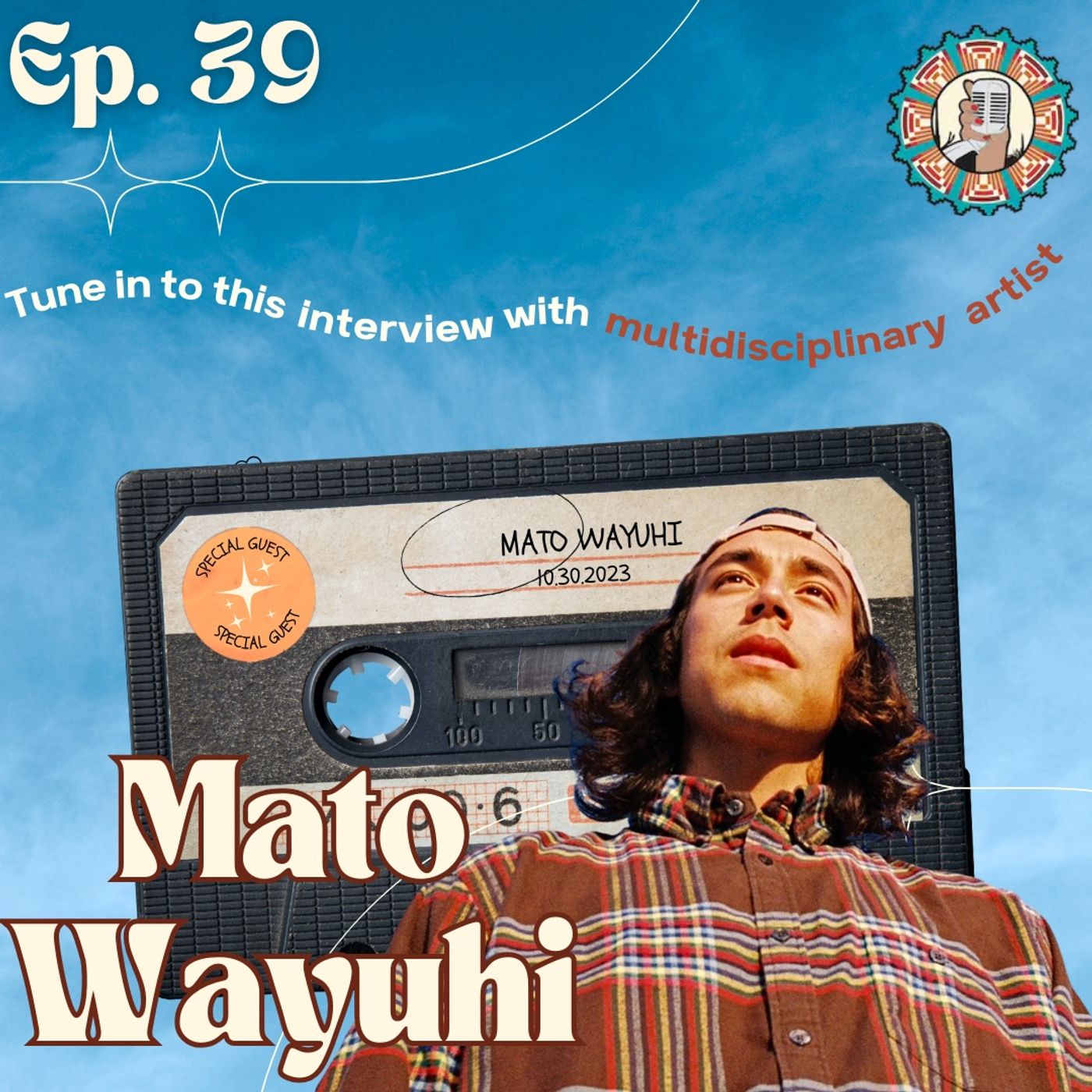
Episode 39 was co-hosted by Bre, Tina, and Mia with special guest https://matowayuhi.net/. Mato is Oglala Lakota from the Pine Ridge rez in South Dakota. He is mostly known as a multidisciplinary artist who composes his own music, raps, and is brining...


Episode 39 was co-hosted by Bre, Tina, and Mia with special guest Mato Wayuhi. Mato is Oglala Lakota from the Pine Ridge rez in South Dakota. He is mostly known as a multidisciplinary artist who composes his own music, raps, and is brining his own unique sound to mainstream media. His recent work is infamously heard throughout the Reservation Dogs series seasons one through three which he composed as well as acted as Young Bucky in season three, which is sadly the final season of the show. The impacts he's making and the roads he's paving for younger generations to follow or not follow, are at least recieving recognition from all walks of life. Bringing that indigenous sound for the universe to hear, staying true to his own individualism as an artist, while intigrating his Oglala Lakota roots, his talent does not disappoint! The interview Mato, shares his music journey that eventually led him to also compse music for Disney Launchpad titled "The Roof." We hope you enjoy the conversation!
Background music by: Mato Wayuhi "Rez Dogs Theme" "Switch Lanes" "Sour Sofkee"
Recorded: October 30, 2023
0:00 For full disclosure. The views and opinions expressed in this podcast are those of the guests in the host. The content here is for informational purposes only. It's good gosh everyone. This is Tina, executive producer of Autum Young Voices, and I'm here with two of the podcast team members as well as a very special guest who we're absolutely happy to have here with us on the show. And I just want to again thank you for being here with us.
0:40 You know, we're super excited to learn all of the good things that you're doing, all the things that you're doing within an outside of Indian country, and just to learn who you are as an individual, where you come from, your little bit of your family history. So with that being said, I'm going to hand it over to Bree is going to do you official introduction of our guest. Yes, thank you, Tina. We are here today with Nato Yuh. He works in film and TV as both a producer and musical composer, with one of his most popular projects to dating his work as a composer on the award winning Hulu series Reservation Dogs. He's also on the future length film War Pony, and we'll talk about that more as we get more for the conversation, and I understand he also has some very exciting future projects coming up, including a new album, he's going on tour, and he's also scoring on upcoming Marvel and Disney Plus series. So yes, again, we are so excited to have you here, very appreciative and just thank you so much for taking the time out of your business schedule to be here with us and to share your story with us. And our listeners were really excited. Honestly, when I reached out, I had no idea you were gonna genuinely respond. So again, so thank you so much. So yeah, of course I'm happy to be here. So I think first, who wanted to ask you just a little bit about your background, where you're from, what tribe you're from, what res you're from, maybe a little bit
2:12 about your family history and background. So yeah, yeah, So I am from South Dakota. Originally, I grew up in Sioux Falls, which is on the eastern side of the state, and I'm Oglala Lakota from the Pine Ridge Reservation and so that's on the western side of the state, so my family is over there. And then I grew up on the Eastern Side, and yeah, I grew up with, you know, a lot of access to like traditional Lakota culture, which was really grateful for and that kind of helped me determine I guess, you know, it just like introduced me to music pretty early on. And I didn't really see much of a difference between music and ceremony and culture. It was kind of all I'm sure you all feel the same way in terms of your culture is kind of all the one thing. But man, I loved, Yeah, I loved music growing up, like I loved I would just go somewhere else when I was listening, I'd see visuals and it was always a huge component to my just creativity was music. And so I'm really grateful that, yeah, I got to kind of keep going with it. And I don't know, I was a pretty normal kid though, like just kind of running around and hanging out with family and friends and cousins and being outside a lot, played sports, just a normal res kid, I suppose, Yeah, yeah, I remember. Yeah, I had a lot of a lot of cousins and they were really just like instrumental in terms of raising me and getting learned how to be teased and
3:46 teased. So that was good. Now I feel like I got like my weapons and if anyone wants to try me, But yeah, it was, I don't know, it was. It was a pretty cool upbringing. I mean, I'm really grateful to like have the folks I did and like experience what I did. And then you know, it's dynamic being native, as we all know, the upbringing, it's a lot. It's a lot of good. It's a lot of difficulties and stuff, but it really helped shape my artistry and also just my like community work. But yeah, that's kind of about me. Yeah, thank you so much for sharing. So kind of coming off of that, you said you had like a normal upbringing, So what was it that really pushed you to go into you know, like film school. I think give in to film school, right, But yeah, just I know it's kind of hard to go into the arts, especially as a major, and I know some a lot of stigma around that sometime.
4:46 So yeah, I was just wondering, you know, what gave you the confidence to pursue that and to go through with that. Yeah, I I didn't. I didn't feel like I really had an option in terms of what I could. I knew I could excel in I think I knew I could be probably like proficient in some stuff, but I didn't think it would make me happy. And I I really started picking up music, not professionally, but you know, just like passionately. The cat outside me owing picking up one of my I was like, where I'm staying. So I'm like that anyway, So I I took I was taking music serious as I got into college, and so it was interesting where I'm at this school and I don't have to I didn't have a major yet. I was at University of Southern California. I didn't have a major, and I was feeling very pressured and very anxious about the whole thing because I didn't have a major. But I was pursuing music on my own time. But I also, you know, the arts oftentimes, I feel like in university settings are very well, they're literally academic because they are academia, but they're very It was a there's a barrier of entry, and I felt like I couldn't do it because I didn't I can't read music. You know. I didn't grow up going to choir. I didn't grow up playing an instrument. I just like the feeling of music, and I like to sing and to rap and stuff. So
6:19 I felt really conflicted. But to answer your question, yeah, I don't. I kind of made an ultimatum. I said, I'll apply to the film school. If I get in, I'll stay in school. If I don't, I'll drop out through music full time. And so I got in, thankfully, and so I stuck with school because I just couldn't imagine dedicating myself to anything but art, at least from like a career standpoint, like I would, I would do anything, and I still will do anything in terms of making money, like I'll I don't care, I'll be a waiter, I'll paint houses, I'll do anything I gotta do, just to make sure I have that freedom to make the art that I need to that I need to do. And so with that mindset, that's kind of what led me to doing A And I didn't care about the outcome either, Like I was like, I don't care the stigma about art degrees or anything like that, Like if you're happy, I don't know, and you're contributing something and saying something, especially at a time like we are now and we that we've always kind of been, especially the last like ten years and stuff. I just think it was a really it was a really important thing for me to pursue, and I had the privilege of, you know, pursuing that.
7:26 So yeah, yeah, that's beautiful. No, I definitely think it's really important to pursue something that's going to benefit you, I think holistically, just because there are so many negativities going on, I guess around the world. So I love that. I guess another question I had kind of relating to that is I have seen some of your other interviews and I hear that you describe yourself as a multi disciplinary artist. So I was wondering, you know what that means to you and you know how that connects to you know, your art. Yeah, I think, and I just feel like multidisciplinary it's a buzzword. I can't really say like what it exactly entails. I think, well for me, like if you break it apart from a just a grammatical sense like multidisciplinary having multiple disciplines. And so I guess that was kind of how I attributed going to film school while pursuing music, And there's these kind of both different And it's funny too, because now everything has been so democratized, so everyone does everything like everyone edits video, and which is great.
8:35 I'm really grateful for that. And I think I got the treatment of getting it from like a very kind of like high brow Hollywood, you know, perspective, and so I think when it got to the point of like scoring, I felt multidisciplinary in that I had a film degree because and I watched so many movies and I studied it, and I studied sound and sound design and music, and then I was tasked with creating music for picture, which is cool. It was all the things coming together kind of it's kind of all blending, which is really that was really exciting. And so I think in that regard, and now I'm starting to act more so that's really been really grateful for that to be able to kind of dip into that a little bit with a couple of short films and then also with res dogs and stuff, and so that to me, because to me, like it's not people a lot. Sometimes people are like, oh, yeah, like I'm a renaissance person. I do all this stuff and it's so multi talented, multi hyphen it, and I just want to die and throw up on myself.
9:37 It's like, nah, I don't like that because we're all a single mom, a single mom with two jobs. That's a multidisciplinary person, you know what I mean. That's like so to me, I've never tried to, you know, hyperinflate that title. I think it is just a literal sense of like, I do love practicing different parts of storytelling, and and to me, that's just I'm really really grateful to be able to do that, to dip into these different things. And that also comes by way of like producing, Like I'm executive producing an upcoming documentary that's coming out, and that to me is like, however I can contribute to the narrative and to the story and just make it better, is like I'll do anything. So that's kind of where that comes from. I think good question, though I've never been asked that. That's a good question. Thank you. I think I've won my question before I handed over to Tina really quick. But since you were talking about, you know, producing music, and I've seen a couple of your videos. You actually like making the music and it's really unique and different. But how was how is that without having had like prior instrumental experience. Just because I don't mean Tina play some instruments, but it's I can't imagine having to produce music not knowing really how you know instruments work, or like reading music and all that. Yeah, it was a lot of It was a lot of faking it till I made it, I guess.
10:56 And that's still still this day. It's so funny like as adults, we're all we don't know what we're doing, like no one knows what's going on. It's just so so gratifying and reaffirming, like no one knows the hell's going on. I remember my mom told me I think I think I was eighteen at the time I was about to go to school and me, you know, my mom is not eighteen. She was I won't just you know, disclose her age, but she's years ahead of me. And we were talking about feeling young and feeling old and whatnot, and she's like, I gotta be honest with you. I'm, you know, fifty something years old. I still feel eighteen mentally, like I don't feel like And I'm like, wow, that's both tragic and really reaffirm it, like it's just okay, it's cool, Like why did I bring that up? Oh? Faking it till I make it. Yeah, So I yeah, I don't know.
11:50 I think it was off of feeling right, like off just feeling of what felt good together. So even creating a chord progression. To this day, what I'll do is I'll sit down at a piano and I'll just play, and I'll figure out different progressions that I like, and then i'll have one of my one of my buddies like help me transcribe it, you know, and say what I'm doing, kind of like articulate it to me. And I didn't know what that was. It just kind of felt natural. And then as I learned more about music and musicians and the history of specifically like jazz and blues and rock and roll and stuff, it's like that's kind of the common practice with a lot of these because you know, it was almost like a response to classical music and that there's been such a you know, elitism that comes by way of like classical music, sometimes specifically towards like musicians of color, where it's like you can't you know, you need to be able to read this type of music and play this type of style.
12:48 And then jazz in a way was kind of a response to that. Of like, well, we're going to create music that you can't even digest, let alone try to replicate, and it's going to become and it so, and it became what it became, and so it was kind of indecipherable and it wasn't easily translatable, which I thought was really cool. And then with Jimmy Hendrix, I'm sorry, I'm a nerd. I'm really going off, but like Jimmy Hendrix, he didn't read music either. He just played off of feeling, and so it was really gratifying to like know that there was there's been this phenomenon of just playing off of feeling and emotion as opposed to the traditional notation of music, and so I was really Yeah. So as I as I continue, I'm getting better, Like I'm picking up different instruments and learning a little more like bass guitar. I really gravitate too, so I've been learning that more. But yeah, it's all just feeling. It's just like feeling based. Yeah. No, I really liked that, and I feel like I definitely hear that three year music. I feel like I could I feel like I could compare it to like kind of Sizza or Cuckoa type of energy, but I really like it. But anyways, Tina, I think you got some questions as well. Yes, awesome, thank you so much for you know, sharing your insight on these questions. And so my thing is more like wanting to know the acting part of it, because I've been a fan of Reservation Dogs in season one and learned that you composed for season one and season two, and then you acted in season three as a young Bucky, and that was really cool to see them bring back everyone
14:24 in a different light in a different way, a younger person, a younger self of them, which is really cool when you think about so like our parents. You know, my mom she passed just very recently in February, and you know a lot of thoughts have been going through my mind about just remembering her when she was just young, she was a young mom, and how she was and just all these things come to mind when I think back and think of my mom's entire life. But I just thought it was cool that they were able to do something similar and show just kind of the background. What does all certain things stem from that get carried on to our older selves. So my question is with acting, what was that atmosphere like for you, and you just said recently, how this is kind of something you're starting to get more into. Well, how has that path been. Yeah, that's a great question. I'm sorry to hear by your mom too.
15:28 I Yeah, So I composed the first I composed all the seasons for res Dogs, and so I felt I think translating that to acting was really special because you think about it, like, all I'm doing musically is just trying to service like the narrative and push it forward. And then with acting it's just the same thing. It's like, how can I perform to the best of my abilities to make sure the story is getting told, which to me was so cool because it's just decision making. It's like, Okay, well I'm gonna fidget. I'm going to like work on my fidgeting because I know that this will, you know, accentuate that there's going to be a nervousness that's going to come later because I haven't told my boyfriend that there's an iguana in the closet, or you know, just like you know, you just like think about the little minutia of like how to, how to, how to further something. So I thought that was really cool. I'm a really big nerd about that acting for the show was really really really special. I think it's so fun. I'm young for this stuff, and like, I feel like I've like hit my peak with a lot of things within the industry, at least from a native perspective of like being on that show and working on it. I'm kind of like i've been. I've been telling people, I'm like I might retire, Like I think I'm kind of like I think I've kind of done all that. But yeah, so I it's just funny.
16:51 But I think with with acting in Red Dogs. So I was supposed to be in season two and I was going to play a a social media influencer and I got cast and everything. It was gonna be the whole thing. And so I flew to Tulsa. I showed up on set, or I showed up to like, you know, the offices, and right before I got there, I took a COVID test because we still had to do that, and I tested positive and so I couldn't be in the show, which was really whack. But I so I missed that opportunity for season two, and so I you know, I talked to Sterling and a few of the other folks and they're like, well, you know, we'll just aim for season three. Now. I'm like, okay, cool. And so yeah, when season three came around, and I I'm like, I would get the scripts beforehand, so I could, you know, start working on the music before they even shot the show. And so yeah, then I got a casting call for Young Bucky and I was like, okay, cool.
17:52 And so yeah, when I got that, I don't know, I felt like I felt really grateful and also like a responsibility because the show is you know, I know what it means to me personally just as a as a Native and as a Lakota and everything, and I know what it means to Indian Country and just to you know, people and even non natives who've like had an affinity towards Native people or no people or you know, believe in us and you know, and so it was really cool. I was like, Okay, well, I have to do a justice. And so I just studied and studied and studied, and you know, studying West study and his mannerisms and studying the story and everything, and so it was it was really a great experience and it was fun doing a different decade too, like this with the seventies and stuff. Yeah, you're right, I mean it was kind of like it was paying homage to folks who came before.
18:47 And the way that time is explored in the third season is really I think representation of how natives see time and generations. And every time I'm back home or every time I'm with family or talking with friends about the culture or just anything, it's all we always think genealogically, right, It's always kind of like, oh, well, so and so is them, and so therefore it's this, and it's that, but also therefore, but they were adopted, but they're blah blah blah blah blah, and so it's really cool. Like so to to show that on screen was really special, and being those actors and yeah, Bucky was just it was great. And it was full circle too, because recently I got to meet Wes Cud for the first time.
19:29 I went to Uh, he's in a play, Larissa fast Horse's play I'm forgetting the name right now, but I saw it at the Guthrie Theater in Minneapolis recently, and so we got to see after we got to meet each other after he got off stage, and it was great. He's like, oh, you played me. I was like, oh, yeah, it's so weird, and yeah, so it was really cool. It was just like a great experience. And I'm and I love I love acting just for the performativity of it, and you know, entertaining is great putting on a show. And what's cool about acting too is I think it's with any art form, you just you you walk away learning more about yourself, which I think is a really cool thing, and it gives you empathy for people too, So it's just a very like human it's a really human art form, and it's a really Buddhist art form, like being in the moment, you know, and understanding, like just being present, being mindful, and it's there's it's a very meditative thing about that too. So I love those crafts and I'm really grateful to be able to do it. But I'm also like, I'm not around town saying I'm an actor. Let's just keep it real. I feel like I act for my friends. My friends made Red Dogs so I acted for that, and my friends doing film, so I act for that. So it's not something I'm like dropping music to do.
20:41 It's just it's a it's a nice. It's a nice compliment to music. I guess, awesome. Well, thank you for you know. And it's funny to hear because I would have assumed that you had met Wes prior to you know, the whole being him. But yeah, that's interesting to know. But I know, Miah, I had a couple of questions for you, so I'm gonna hand it over to her. Thank you, m okay. My first question would be what was your inspiration on becoming a music artist? My inspiration, I think the biggest inspiration was to express myself. I didn't really find a way to do that before making music. I was doing a little bit of acting in high school and stuff, but I never really lashed onto it. And I was just getting into trouble a lot, and I wasn't doing well in school and just you know, all the things of being a kid and being a troubled youth, I guess, and so I just didn't have a good way to express myself. And so with music, the moment I recorded my voice, it was like, Okay, this feels like the right thing to do. It felt like a good outlet, and that was kind of the biggest inspiration. And then there was the second fold was like, well, I have a duty to represent the people that raised me and that support me. And so that was inherently like my you know, my just family, you know, and Lacota it's like a kiuahe and
22:15 there's like tiosh Bay it's like the you know, extended family, and so I felt a duty to represent them. What was cool about it too, Like there's like expressing yourself and representing your community, and those aren't those aren't mutually exclusive things, but sometimes they do kind of contradict each other, which I love. I love that gray area, like ooh, it's just good. It's like that conversation. It's like that is weird. It's strange. It's like I do believe in decolonizing, but I also want to private jet. You know. It's like these things and like not saying I want that, but it's just it's an interesting like it's just that kind of you know that that that that choreography between those two things, and so I do I'm I like that, and I like opening up a conversation and asking a question and not necessarily answering it. And that's kind of what I think. Some of my music in my art has become recently is kind of that dialogue, which is which I think is really fun and really interesting. Thank you.
23:12 And going back to Young Bucky, did you have to audition for the role? I did. Yeah, I did two rounds of auditions for it, so yeah, I had to audition, so I kind of to prepare. I just got in the mind of young Bucky what I thought he might be, and then when I actually got the role is when I like really started studying too, getting down all the little things of Wes and his mannerisms and stuff like that. But yeah, ironically too, I actually didn't do any music for that episode. Like there it was all in like the industry. It's called like needle drop music, which is like licensed music and so and then I do the original music for the show. But yeah, there was no original music for the show, which I thought was kind of funny.
23:57 But Sterlin was like, I think you've done enough for this episode. I was like, yeah, okay, my last one will be what are your plans now that the series has ended? Well back in that unemployment life and so be kind into the offices and figuring out some no I don't know, well, I got some immediate immediate plans pre kind of alluded to earlier on with like tours and an album and stuff like that, So that's kind of what's on the the main stuff. But I think it's interesting. I think the way Red Dogs was for me was kind of the biggest thing. It was was a time stamp in terms of my life, because the past three years very it's like college kind of like springtime was like prep and then summer was you know, in sessions. So I was really working hard the last three summers, and then fall time, like right around now was like okay, unwinding a little bit, and then winter was kind of you know, uh, revamping. So that was the past three years for me. So now that that's over, that it's going to look differently with different projects.
25:08 I mean, that was kind of the trippiest part. I was like, man, that was a really that was a whirlwind of life. And now it's over and it's just keep a pushing and I'll be working with a lot of the cats who made the show still, and you know, those are some of my you know, really close people in my life, so I'm grateful for that. But yeah, I think the biggest thing is like everything I've learned from the show. I would hope to continue to you know, uh, just strengthen those skills and then also start to like give them to other people, you know, like to start passing that stuff on and all that all that knowledge and hopefully, you know, we're making my own shows and stuff too. So everything I've learned has been really helpful. Awesome, Thank you. I appreciate your answers that all the questions I wanted to ask.
25:53 All right, okay, so I just have a couple of questions concerning like collaborating people. Well, first I thought it must have been so I don't know, incredible, amazing, life changing to work with people like the fourteen ninety ones. These are all people like I grew up watching, and so to know that you were able to work with them is so crazy, people like Gary Farmer. So first of all, how it was that? And then secondly, are there any could be music or just in film, TV, anyone you were hoping to collaborate with in the future. Yeah, it was. It was. Yeah, it was such a special experience getting to work with those cats, and like, yeah, Sterlin is like my big brother uncle now and he's just giving me such like good insight on everything, and yeah, it was very special, and you know, I think, yeah, growing up seeing their stuff and knowing that how it could be like expanded on, you know, like in terms of just like Facebook videos and then becoming a real show is like so cool to me. You know, like it was a really exciting thing to bear witness too, and to be a part of it too is really cool. So it's kind of like it was a good lesson in like believing in yourself and like don't you don't have to you know, compromise your vision and like your culture too, which is a big thing too, which I thought was really cool about those guys.
27:22 And yeah, they're all really great. I met I think everyone. Yeah, I recently just met Ryan for the first time. Ryan Redcorn. It's such a weirdo. I love him so much. It was so great to just yeah, and there's a lot of osage a la cota crossovers too. We like come from the same language group, so it was like fun to compare. But yeah, it was. It was really great to work with them, you know, And I really they just opened up my world to the opportunities of stuff and they never made me was just I think The best part about that group and a lot of a lot of Native artists that I look up to, is that there's no like threshol told to be like Native or like Lakota or whatever tribe you're from, you know, And they really they picked that apart. They dissect it. You know, there's traditional values, but there isn't. They don't have this idea of a traditional Native, specifically traditional Native man, because they deal with a lot and with engendered stuff, which I think is great because they just picked that. They just that's you know, Dallas's character in the show is to just like crack that open and subvert expectations, which is great because I've never felt like a Native man. I've always felt different, you know, and I feel like every man native man has probably felt that too. You know. We're all just trying to be the version of what people expect Native men to be, which is like it's hilarious and just so insecureus but I love it. But yeah, so I think that's really cool that they do that. And in terms of collaborating with other people, yeah, I mean with this album, there's been a lot of people who I got to work with that I was really
28:53 stoked on Tommy Pico and Skyhopinka and a couple of these different artists who who I've always looked up to. I think moving forward, there's a few people that I would love to like get in the room with and just really talk about things. And but I don't know. I love working with my friends. I think that's my favorite thing, and so continuing just to make stuff with my friends. It's a woman named Mollie who worked on the show. She did some of the music for the Dear Lady episodes, so it would be really cool to work with her. I always love what my friend Shunding Tom is doing, so checking in with her to see what the vibes are and always doing some stuff. And then Raven Chacone is someone who I've loved to work with too, And there's a lot, there's a long list of folks, so we're gonna be if I if I go too much. But yeah, I love I mean, I really admire the work that's being done by Native artists right now. So yeah, anyway I can contribute and collaborate and be honored to do that. So how do you side on the themes or topics for your songs? Yeah, so I typically start, I just kind of mess around a little bit, you know, I'll open my little I'll say a prayer. I'm joking. I don't know. Always maybe sometimes, but I yeah, I don't know. I just kind of tinker.
30:18 I think I'm like, I just tinker a lot. Like That's how I've made all my music, is just kind of messing around and like figuring it out. And I think I'm sure. I mean, you all are artists, respectively, so you all know this feeling of like it's just letting go, letting go of any like and like inhibition, just going for something and like letting I think Stevie Wonder said, like letting God in the room or something like that, and like letting the universe or creator Tim Goshla or whatever, like letting that force take over and just now you're just communicating it. And so for me, that's music. Like I'll play a bass line or something and it's like, I don't know this is going, but I'm not even going to decide. I'm just going to go with it. The only time I can't think of something is when I go in with intention, and it's kind of the irony of it. It's like like recently, actually, I was playing some new music for my sister and she's like, yeah, it's cool. It's cool. And I love playing music for people that don't necessarily like my music too. Not to say she doesn't like my music, but she doesn't. She's not ever historically like my music. Now she's coming around to, which is cool. Like I love my sister and I love her for that, just the honesty. So I was playing her some of the music and she's like, it's cool. I like it. Okay, it's dope. I was like, thank you, and she's like, where's the banger though? And I was like what do you mean. She's like, where's the banger? Like there's not a banger here? And I was like okay, word and so like literally like the next few days I went,
31:52 I got I started making music, and I was like, I got to make a banger, but nothing came out. You know. I was just perceptually constipated, is a good way to put it. Like I had nothing because I just was going in with too much intention And so I've learned with me and create creativity and stuff. I just gotta go and I can't have an expected outcome when it's my own stuff. Scoring is a different story. But for me, like my own stuff, I just try to, yeah, just kind of go in with just an open mind to different ideas and things like that. And so yeah, that's typically how it goes. But like technically, I'll start usually with drums, and then I'll start with the chord progression and then I'll mumble into the mic and record like you know, cadences and stuff like that, and yeah, and then my buddy's just coming and you know, get their freak on. They just do whatever.
32:42 You know, they'll play stuff or rap or sing and everything like that. But yeah, let's usually how it goes. Hey, sweetie, how you doing. This is Reservation Dog's original soundtrack by my to yuh Dake. Three. Yes switched Slans, I ain't been the same since, and no a neck pissed man because I stayed breaking not in modes. Yes switched Slans. I ain't been the same since. And though the neck pissed man because I stayed breaking not in mode. I tripped the globe and mop the flow without a competition. All my pops is what his focus. He ain't not no pot to pissing. So I'm pissing till my crops go top of in one hundred million when they talking should I take it? There's a compliment. I went for the vision of the kissing those prisons who had no choice, but the region not being in the field where its teams don't wring it with the grass stay green and the greens they hitting this tooms day. Now I'm a new killing that blam with the feelings go missing up sent it with the green till you we just all finished. I came, I saw could you get it? Yeah, So composing is basically so it's creating the original music for a show. So any of the like you know, intense like anytime you like hear that stuff in Red Dog's that was me making the music. But then when you hear you know, Redbone come and get your love, you
34:14 know, I still gotta tell folks like I didn't make that song, like that was not uh but yeah, so I so I do the original music for it basically. So it's kind of like orchestral stuff and things that are like kind of it can be under the radar, which sometimes is like the point of it. But yeah, so that's kind of And so I've always produced my own music. So I make all of the music that you hear, so that lent itself nicely to composing, because that's you know, it's not my face. I'm not rapping. For the most part, I'm not singing. It's just the music. It's just like the literal music being played. So that's what I do for different shows. In terms of the Disney Plus show, not legally allowed to talk about it, but with different pride.
35:01 Well, I can't talk about a Disney short film I just did though, it's called The Roof Starring West and so that, for instance, they I talk with the directors and the filmmakers and it's like, what kind of a vibe are we looking to accomplish here? It's like, well something for that specifically for the Disney for the Disney Plus short film, we want something intimate and you know, feels like home and warm, a little metallic, which those words are great, like little adjectives like that. That helps me so much. Like I want a fuzzy sound. It's like, oh, got you, got you, got you. And so those are the types of conversations that happened between the director and myself as a composer, and so yeah, and then I just make the music and kind of hand it in.
35:53 They might have some notes here there, and so that's kind of how it goes, like back and forth. And then typically, you know this, this soundtrack, the original soundtrack will come out on streaming services and stuff. And that is my shameless plug segue to say that Friday, November three, the Reservation Dog Season three soundtrack comes out on all streaming platforms. Take a listen, let me not you think. And I know you recently came up with a new album. Can you please tell us more about that? Well, yeah, so I have a new album coming out. It's called Stank Faced Standing Soldier, and I've been working on that. I'd like to say my whole life basically, but I think it's you know, I lost my dad a couple of years ago and that this album has been how I've gotten through that, and so I'm eager for it to come out. It was, you know, slated to come out earlier in the year, but some fortunate things have happened where it's it's stalled it and so I just gotta be patient. But yeah, so that's coming, that's that's forthcoming, and I'm going on tour with she Test Scott. She Tests guys a good friend of mine. We've known each other for a few years now, and yeah, we're We just did a song called Veils that he released, which is streaming everywhere. Now, I'm a rapper, Like, I love rapping,
37:23 Like that's how I got into this stuff, That's how exit this stuff. But yeah, so I I just love rapping. So it's so fun to write that verse and it's a it's just nerdy. It's like tinkering, it's like wordplay. I just love that stuff. It's like I'm touching it almost. It's like, so hmm, I love that stuff. So yeah, that was really fun to be a part of. And yeah, crazy stuff. But yeah, how do you feel your music has evault since you first started making music? That's a good question. I think I gravitated to, you know, rapping and singing a lot in the beginning, and then I kind of transition more to like focusing on the musical the musicality of my songs, and I think that just came with learning more about producing and stuff like that. So I'm grateful that I'm at a point now where I feel very all encompassing, like I can really make a song on my own, and with that, I'm looking forward to the next chapters of my you know, careers and stuff where I can like open it up more and work with more people. But yeah, I'm just grateful, you know. I think the best part about art is that it's your scrapbook for your life. And I can go to any one of my albums and listen to it and know exactly where I'm at emotionally and spiritually at that time in my life. And I'm grateful that I was just that honest with my music. And I always tell, you know, younger folks who ask me for advice about music or any
38:59 of this, is I just like be honest, like be really, be really honest. With this new album. There's one song that I made and it was like, you know, ooh, the wound was like fresh in terms of what I experienced to write this song, and I made it and then I was like, this is really cool. But I was really I was really unsure about putting it on the record because it felt so honest, it felt so admitting of a lot, and I was like, I was playing it to my buddy and I was talking to him and I was like I think I need to do that. I need to go for the go towards the discomfort of putting it out, because that's the only way that I'll grow, and that's the only way it'll connect with people too. And that's kind of like these these things I've learned in my career with releasing vulnerable music.
39:49 So that's all to say that, Yeah, like I've seen it evolve in a way of like people feel comforted by my vulnerability. And I don't think artists should ever feel obligated to do that. I think you should have your own relationship with what you put forth to the world, because once you let it go, it's not yours anymore. It's the world's. And so I think making that decision is very crucial and I think you should take time to think about it. I just know for me personally, like the way I the way I communicate to the universe is like pure just I gotta be real about it. I don't care if I'm right, I don't care if I'm wrong. I just got to be like completely honest about what's going on, what the story I'm trying to tell. And so, yeah, I think that evolution has been really cool to see just being honest and being vulnerable and you know, expressive and everything like that. I think, you know, it brings humanity to which I'm grateful for. So you know, when I was doing research on you as well, and I came upon like you did this interview and you talked kind of we're putting it out there that whoever wants to do like a romantic or love music or you know, a genre, You're a kind of putting that out there. Is that still something?
41:01 Is that still how you feel? Have you found the right people to work with on something like that? No, no one took the bait, bro, I'm going to do myself. Like everything in my life I was doing myself. No I yeah, No, there hasn't. Well that's not true. Actually that's not entirely true. I have like I am going to be a part of something from an acting standpoint that is a romance. So I'm excited for that. But no, musically, no, no one has. It's kind of heady for me to be, like, someone write me a script that I can scarre But yeah, so I gotta I guess I'll have to take it upon myself to to actualize that. But yeah, yeah, I do. I love romance like it's crazy, Like what the hell, I don't know what part of me. I've just always been open to the idea of doing that stuff, and I think are like, yeah, they're beautiful and they're they're real. They're like a lot of times resolute too, like they don't have the outcome you'd expect, which is kind of beautiful, I think, very tragic in a way. But yeah, No, I have not been asked to compose anything romantically yet, so I'm gonna but when I do, you'll be the first person I tell, Yes, tell me I want to hear it. Yeah, still putting it out there once again, you know, to all the listeners out there, you know somebody who knows somebody who knows somebody. All right, well, uh so tell us
42:37 when are you going on tour? When is it that you're actually going to be coming here to Phoenix? Yeah, I mean the tour is going to be great. To the Moon and Back Tour tickets available now or play in Phoenix, Arizona, November ninth at the Rebel Lounge. It's gonna be a great show. Yeah, I'd love to see all there. Let me know and we'll figure out tickets. Some worry about talk off off Arabic. Actually, November ninth is is MEA's birthday. It's exciting. Wow, happy early birthday. That's my sister's birthday too. There you go that Scorpiu. I just celebrated my birthday a couple I'm still rapping high from that. Yeah, appreciate appreciate it. Let's go Happy early birthday, Yemiya. I hope you make it out to the show. Also, if you don't want to do that on your birthday, definitely don't. So anyway, Yeah, so the tour, The tour is gonna be fun. I'm excited to just get out there and you know, play music again. And I this summer was cool.
43:46 I was working a lot. It was really the summer just flew by. I was like doing a lot of different stuff. But I did get to do like three festivals for a lot of people, you know, like thousands of people for some of them, and that was a really fun experience to do that. With that, I'm also excited to go back to like the more intimate stuff, to like play for folks who came to see you right just to see you, which I think is really cool. So I'm excited for that and then afterwards, you know, yeah, I'm just excited to to I don't know, to go back to the drawing board of like my creativity and like figuring more stuff out. And my life has changed so much in the past year. It's accelerated, which I'm grateful for. It's kind of like gotten faster, and with that comes like, you know, different opportunities, but also like you got to keep your feet on the ground a little bit, you know, and I think for me, my way of doing that is seeing family. So I've been spending a lot of time with family this past year, which has been really good, going back to the res and also seeing family on the East Coast, and that's been really good for me. Is like seeing family and being a part of their lives and everything like that, and so yeah, it was, Uh, those are kind of my next steps, and I'm looking forward to acting and stuff and being trusted, I guess is really cool with like your art, which is really I'm just really grateful for. So yeah, that's been Those are
45:16 some things I'm super I'm super stoked on and just making more stuff, you know, I just love I'm the best version of myself when my hands are in the clay pod and and sculpting and forming and things like that. So it's always fun to me. So how has your family reacted to your success or people back at home, Like, how do they feel about all this? I mean, because you've definitely you're doing big things right now in the world. Yeah, that's a good question. They I think any artists can probably relate to this, where it's like your family never really knows what you're doing. You'll try to tell them, but it might not translate. He's just like, oh yeah for a long time, Like my family's like, oh, he's just in Cali. That's like what it just was like lehido folks back home like or back on the Reds, it's like, oh, he's just in Cali, Like how's Cali's kind of like just like idea of the state. And I always be like it's good. But yeah, I they're there's they're supportive, they're you know, they're stoked, and I'm grateful for that. I'm really grateful for that. I do what I can to make them proud, and I do what I can to like provide opportunities for my family, and I'm really grateful for that, you know, because I think a lot of any opportunity I get, I feel like is a way
46:46 to pay homage and to kind of for my relatives and my ancestors to live through those experiences as well, because a lot of you know, I think about my grandparents. I have like recordings of them singing these traditional Lacota songs, like these sweat lodge songs and stuff, and I'm like, man, they're just beautiful voices, and like that's where I got mine from. And I don't even think mine is beautiful, but I know that's where I got the spirit from, you know. And so it was It's really cool to be able to do that because I always feel like, you know, I'm just like a vessel for the for those folks who had those same dreams.
47:31 And I think, you know, because I try to operate in that way. It's like I think, you know, my family can feel that too, you know. And I think when I was younger, I felt like I had to save the world a little bit, or save Indian country and stuff. And you know, I I love my people too much to ever try to understand them, and so I think now I'm just at a point of like showing love and showing support and also yeah, just making my music. And I think my family has gravitated to it, especially now it's easier for them to point to stuff a little bit. Like Ray I don't know if y'all know she did the show Insecure. Have you heard of that show at all? It's on like HBO. She has a she's like a writer and she does like a lot of comedy stuff. But she had this great interview where she was like, Yeah, my family never knew what I did until I was like on Oprah and they're like, oh, you're on Oprah, like you do art like it could they could digest that a little more, which I think has been a little bit of my life too. I think before Red Dog's people were like you just kind of like what are you doing exactly? And and I was always like trust me, like come on, guys, like I'll figure this out. And then I got that opportunity and then people could like point to it a little It's like something they could like tangibly see. I was like, Oh, that's what you're doing, which you know, people need that. People need those types of those markers a little bit. So overall, to answer your question, Yeah, they're they're happy about it, which I'm grateful for. If you could give advice
49:05 to your younger self when you were just starting out, what would it be. My biggest advice I think would be two, don't feel pressure, I guess to figure it out. I think take your time whatever that may be, whether it be like you're figuring out like a recipe or trying to be a pop star or trying to be a you know, go to the moon, whatever whatever have you. Like. I think, yeah, being patient with yourself is a really good thing that I learned. It's hard, it's like the hardest thing because I'm very antsy, fidgety, like I want to get things done and blah blah blah blah blah. But I think being patient has been really helpful for me. And I think building horizontally is a really uh, you know, valuable thing that I learned early on. And what that means is, you know, I think there's a way to build vertic, which is kind of like reaching or like trying to have like upward mobility in terms of like whether that be like you know, I don't know, going into like starting as an intern and then building your way up. That's a way to do it, and I think there is a lot of merit in doing it that way. I'm someone who did the other way, which is like horizontal. So it's like, you know, my friend who doesn't want to even make movies, but can you hold the mic? My other friend, can you press record? My other friend? Can you you know what I mean? So that's like seeing what was available to me and then
50:37 making with that and then slowly kind of like gradually building, and then you start meeting new friends and stuff and like who are at your same like status, and then going from there. And and I think when you are creating from a place of like expression, And also I didn't want to compromise my vision it was it lends itself well for me to build hohrores onto and just build with who you have around you know. Also I think like creating your own definition of success is something that can help you. You know, if you want to make money. If you just want to make money, that's okay, Like I want to be famous to make money, I want to be rich, and then it's like okay, cool, at least you know now so you can make decisions informed on like your what you want. You know, if you want to just like bring awareness to native culture or to you know, different like activist efforts, then it's like okay, cool, you know what you want and that can change. But in the beginning, if you just can, if you're able to like articulate that a little bit to yourself, like I I with this effort, I want this outcome, and it's like okay, cool, and then go from there. And then also to contradict myself, don't expect anything, like literally like don't like the world doesn't know you anything. That was something that was helpful for me too, Like why am I getting what I want? Well, it's like, because no one owes you anything, you got to create it yourself. And I thought that was a really valuable thing I learned too. It's a hard truth, but it's also liberating in a way because it's like now I can
52:07 just create really what I want, you know. But I do think, yeah, having your definition of success is helpful. I knew for me personally, like I just wanted to make the best stuff possible, and so that's helped me inform every decision I make is like that. You know, It's like, well, because I'm out a place now where I get I get options, I get opportunities, and I get choices have to be have to be made in terms of what I do with my art and my career. And it's like, well, it's just going to get me to make the best thing possible. And if it isn't, then no, thank you. If it is, let's do it. So Yeah, that's some advice that I can give to I think, yes, just to find your like what it is you want to do? All right, Well, thank you so much Tomato for being with us here today and answering our questions. It was a pleasure speaking with you, and we wish you good luck on your upcoming tour. And if you have any other information you'd like to share about what you have coming up, please feel free to share. Yeah, So to the Moon and Back tour hit in the US in a couple of days running around. You can buy tickets at mato yu he dot net. That's mato yu he dot net. Some more music coming out. Reservation Dog season three soundtrack drops Friday, November three. On All the Things. I'll be playing those songs on tour as well, so you should check those out. Will be fun. Yeah, if you have any inclination to write romance or romantic comedies up, no where to find me on all the things I'm willing to.
53:44 Let's have a conversation. Are the the you know this this blooming of like indigenous romance or non indigenous whatever. I'm not picky. We'll figure it out. It will. We're manifesting that good energy. Yeah, it's it's going to happen. I appreciate that it's going to happen. Yes, it's we're manifesting it for you right now. Yes. Did you also want to give any shout outs to anyone out there? Shout out to you know what? Okay, wait, wait what about this? Okay, check me out, check me out? All right, So I won't say who in my family there is someone with COVID right now. They're doing okay, they're they're all right, but they're they're locked in their room right now. There there.
54:37 We we text every day making sure it's all good. It's their first time getting COVID and their their significant other their wife, uh has COVID now too. So there's something there romantically like what it what it is? What? What is it? To expose yourself to the illness to like to be closer to this person. There might be something there. I'll have to ask you if I can use that intellectual property. But yeah, all right, Well, with that being said, thank you all so much. Thank you Brie for leading the conversation, and to all you listeners out there, hopefully you did enjoy and learn something new about our guest. Once again, you have been tuned in to the on Autumn Young Voices podcast