 Apple Podcasts
 Spotify
 Castro
 RSS Feed
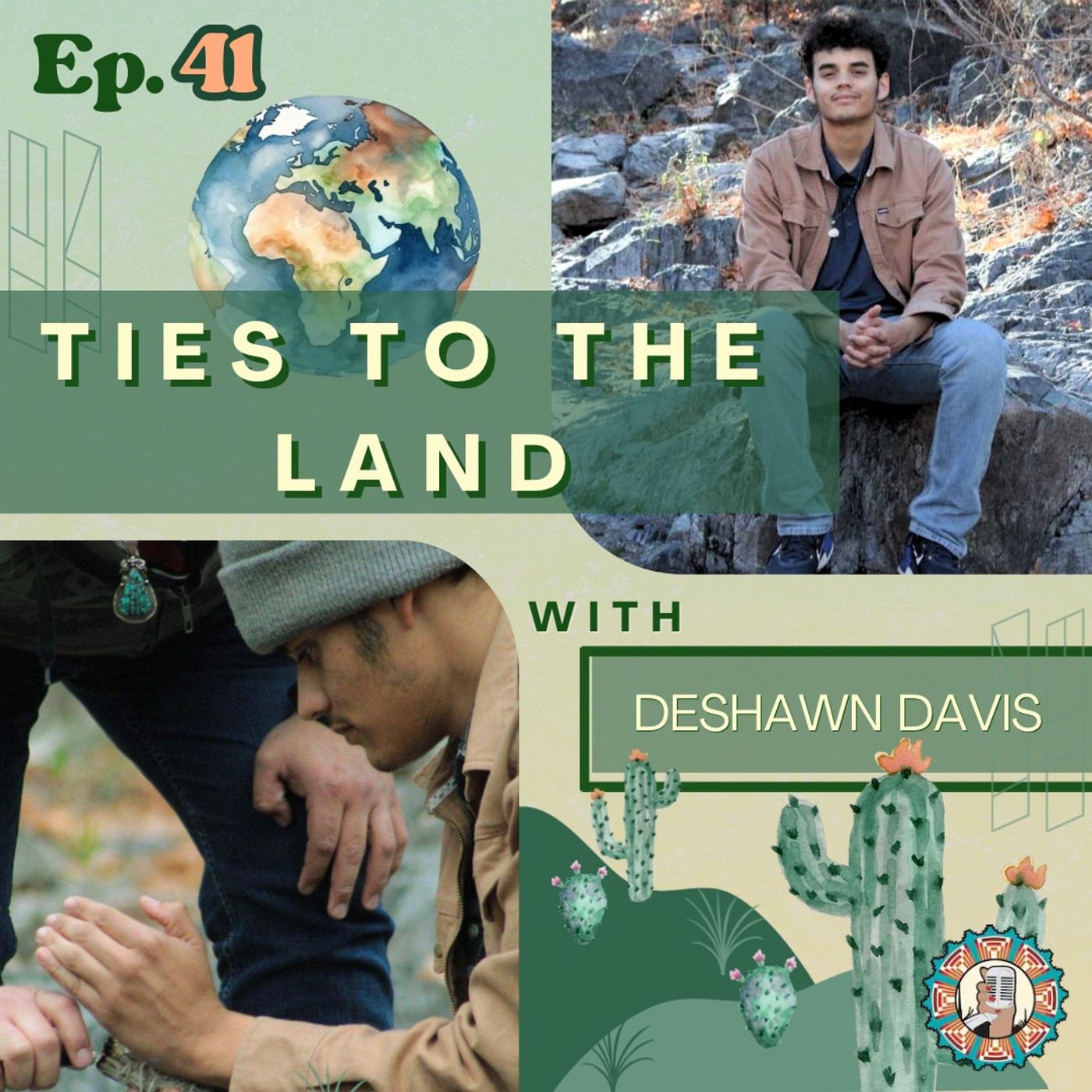
DeShawn Davis is a young environmentalist exploring traditional O’odham Jewedga (O’odham lands) in Southern Arizona. He currently works as a Next Generation Ranger at Saguaro National Park and is also an involved participant in the Eco Truths for...


DeShawn Davis is a young environmentalist exploring traditional O’odham Jewedga (O’odham lands) in Southern Arizona. He currently works as a Next Generation Ranger at Saguaro National Park and is also an involved participant in the Eco Truths for Indigenous Youth. His passion for science-based programs and work experiences have provided him with the knowledge and the tools to excel in the STEM world. He also embraces his deep cultural connections and access to ancestral lands. The critical role we have as Native/Indigenous people to protect sacred sights, nature, animals, etc. is important especially when working in the National Park Service; to educate and share historical facts, and cultural perspectives, and update the narrative that local tribes are more than just a chapter in history books, but that we are still here evolving and thriving while still holding on to our cultural inheritance.
Recorded: January 2024
Background music by: Guustavv “Barranca” and Bomull “älv”
For more information about Deshawn's involvement, check out these articles and interviews!
Next-generation ranger camp
https://www.nps.gov/sagu/getinvolved/next-generation-ranger-corps.htm
Eco Truths for Indigenous Youth
https://ironwoodtreeexperience.org/community/projects/ecotruths-for-indigenous-youth-2/
0:00 For full disclosure. The views and opinions expressed in this podcast are those are the guests in the host. The content here is for informational purposes only. Shah My Masma Autumn. We are back with a new episode with a local here in the Strike Shawn area, the Tucson area and whose roots lie throughout Southern audis Sean. This is Tina here with you, your host for episode forty one, so hopefully you're ready. Sorry to keep you all winning.
0:48 I know it's been a little bit of a minute since we last released an episode, but no worries. We got a lot of really good folks who are going to be coming on and just a good lineup of discussions and conversations with different autumn But we're gonna get to this conversation and I want to thank our guests. Thank you for inviting me to your home. Deshaun. I'm glad that we got to make time to get together to share your story as a young environmentalist exploring traditional autumn. Judga and I see you got some pups in the backyard, which for your listeners you may hear barking here and there, But no worries. It's nice to have that kind of real life ambience in the background sometimes, but in this case it's all good. So I'm gonna let our guests introduce himself, share a little bit about their background, the type of work they do, and all the good things. Hello, how's they been doing. My name is DeShawn Davis. I am Dona Autum, black and Hispanic. My mother's side of the family comes from Nogalis Tota originally and also Nogaalas, Arizona. That is a Mexican background that I come
2:22 from on that side. And my father's background. His mother comes from Nebraska and his father is from this region Juet gotcham to sun Arizona. I am really honored to be on this podcast and really excited to share knowledge and share things that I have experienced, you know, in my young life that I've lived so far. Ready to just I guess, expand my reach into this community and to just share my story. And how did you get involved with Taara National Park and yees So? I currently work at Saara National Park in the Nexshan Park Ranger Internship program. It is a stepping stone program, I guess you could say, to help you get into this park service agency specifically so we're on National Park and it has helped me to step into that field and into that space and help me to also, you know, experience many different things in this park, not just the current positions that I'm in.
3:19 I've been able to also work in other fields and other spaces at the park and that's been such a great experience, you know, personally for me to be able to have that diversity of work and experience. You know. But my main position is resource management, and I work under the biologists and scientists of the park and do a lot of field work buffalo grass and basis plant management, foul grass. We also do serving, We do frog serving, water serving, We do also many other different things you know, throughout the year. We are coming up right now on some spotted out serving, which is going to be a very interesting experience and also an experience that kind of has some cultural ties to it because you know, owls are considered a taboo in a lot of autumn spaces. So that's something that I've thought about recently of how to kind of navigate that experience, and I've also even you know, spoken with people in the autumn community about how to go about that, and so I think I do have a strategy, and that's something that I just want to share getting into what I currently am doing as I'm getting ready to actually share a power point about this endangered species that I currently have a focus on in my work and am hoping to get more involved in with the overall work we're doing with this spotted out due to the fact that it is an endangered I mean threatened animal and their current population levels are dropping across the entire region due to catastrophic wildfires. So these owls are something that I do
4:56 believe is an important focal point in this work that we do, and also in work across the entire Southwest, stretching into Colorado, New Mexico, Western Texas, Utah, a lot of Arizona, and then even getting into a couple of states south of here in Mexico, Sonora, which is also part of his ancestral autumn lands. So that is an interesting thing that I think about when in regards to this species because it is centralized within autumn lands ancestral autumn lands, but it does go further than that due to it living in mainly sky islands and canyons, so those do stretch pretty far across this whole Southwest region. So that is something that has been a focus on mine and I just wanted to share that I got into the position on the map now.
5:50 I think by networking. I didn't know a couple of the people in my current position and was able to work with them and able to show my show my knowledge, show my skills, and connect with them prior to applying to the position. And I know that that did help me. Another help for getting this current position i'm in is I did start off on the west side of the park in maintenance, and that was a stepping stone into getting me into now resource management work, and that definitely also helped me get into this current position. I used to work in the city for nonprofit planting trees and creating green urban areas in areas that lacked due to redlining and other historic policies that just created a discrimination regarding the tree cover in certain neighborhoods in the Tucson area. And so that was a really great experience and I really think that that helped me just gain these good communication skills and community skills to work with the Tucson community and communities related to Tucson. I also believe that it helped me to build my resume and to get to help me get this current position in the park Service. So I think that that was also a nice a nice help with you know, being where I currently am. I also think that, you know, in the future, with where I'm going, that will it is possible that I do have to go back and get more
7:20 education in order to pursue my career further. And that's completely just understandable due to the fact that it's kind of how it works in a lot of environmental fields. So that's just something that I've really been thinking about a lot lately, heavy lately with my internship coming to an end towards the towards the fall of this year. So that's something that I also wanted to share it with currently where I'm at. And yeah, so I currently work at soar On National Park in the Nextion Park Ranger Internship program. It is a program, a stepping stone program, I guess you could say, to help you get into this Park Service agency specifically, so we're on National Park and it has helped me to step into that field and into that space and help me to also, you know, experience many different things you know, in this park, not just the current positions that I'm in. I've been able to also work in other fields and other spaces at the park and that's been such a great experience, you know, personally for me to be able to have that diversity of work and experience, you know. But my main position is resource management, and I work under the biologists and scientists of the park and do a lot of field work buffalo grass and basis plant management, foul grass.
8:43 We also do serving, We do frog serving, water serving, We do also many other different things you know, throughout the year. We are coming up right now on some spotted out serving, which is going to be a very interesting experience and also an experience that kind of has some cultural ties to it because you know, owls are considered a taboo in a lot of autumn spaces. So that's something that I've thought about recently of how to kind of navigate that experience, and I've also even you know, spoken with people in the autumn community about how to go about that. And so I think I do have a strategy and that's something that I just want to share getting into what I currently am doing, as I'm getting ready to actually share a PowerPoint about this endangered species that I'm currently I currently have a focus on in my work and am hoping to get more involved in with the overall work we're doing with this spotted out due to the fact that it is an endanger I mean threatened animal and their current population levels are dropping across the entire region due to catastrophic wildfires. So these owls are something that I do believe is an important focal point in this work that we do, and also in work across the entire Southwest, stretching into Colorado, New Mexico, Western Texas, Utah,
10:16 all a lot of Arizona, and then even getting into a couple of states south of here in Mexico, Sonora, which is also part of his ancestral autumn lands. So that is an interesting thing that I think about when in regards to this species because it is centralized within autumn lands ancestral autumn lens, but it does go further than that due to it living and mainly sky islands and canyons, so those do stretch pretty far across this whole Southwest region. So that is something that has been a focus on mine, and I just wanted to share that so it sounds like you're doing your best to navigate between cultural beliefs and your professional work, which for most Native Indigenous folks you hear it all the time. It's like walking into worlds. So what's that journey been like for you when learning how to balance this cross cultural work environment.
11:18 It's very interesting, it's very just sometimes I even giggle, you know, because I see how people you know, who aren't aut them sometimes navigate it. And it's not not necessarily that they're doing anything wrong, but that sometimes they go about things differently than I guess I would do, or someone with another person that has an autumn background in regards to not only our work, but how we view our work. And so that is something that's been very interesting for me, and it's helped me appreciate my heritage and my background and the fact that I have this ancestral connection to this region and that that walks with me every day and every minute of not only my work but my life.
12:05 And so I really, I really have been able to not only learn more about how other people are working and connecting with this desert, but also how I am and how I should be due to, you know, seeing things that I that I consider to be really important. I guess lessons as I've been working in this field for the past going on a year in March, So there have been many lessons actually that I have learned working in this field. And you know, sometimes those lessons are heavy. Sometimes they're just simple little mistakes that not just you know, I can make, but also the people around me that I just notice and I put in the back of my head and I and I just kind of reflect on maybe when I once I clock out or whatnot. But that's just something that I kind of notice, has you know, been an occasional experience, you know, working in this field. And also there are moments where I have been able to really connect with the land due to the fact that I'm working in these really remote, rugged areas that are not really seen by many people and are just so wild. I like to say, even though these regions, all this land that I work in has been caretaken for since time immemorial, there are there is evidence of Qualcum autumn, even Apache history in these areas that we work in. And so it's not that this land is pure wilderness, but it
13:37 is that this land still has that essence to it that that some other lands don't have anymore due to them being fractured or destroyed or depleted, you know, whether that be their groundwater and like what we see a lot of our lost reparent areas along the Santa Cruz, or whether it be minerals and resources which we have across this entire region historically occurring and still occurring to this day. And so it's been interesting to work in this land that is so not only beautiful but special too, you know, and sacred, and it's all sacred, it is what I like to say. You know, I know we have and there are sacred sites, and there are sacred, sacred areas that are honored in that are passed down by families and by stories and stuff.
14:26 But I also believe that all this line is sacred in that it's been such a privilege to be an autumn young person working in a space where it's been lacking. But not only has it been lacking, but the autumn connection to these far out areas has been lacking. And you know, I can't I don't really know the exact reason for that, but I could have my ideas on it, and that is I guess a whole other, a whole other rabbit hole that we could go down. But what I am saying is that, you know, it is a privilege to be out here and to also see more autumn coming out here and working out here. You know, we have had the privilege to work with groups outside of the Park Service that are working in the park, that have autumn workers, autumn staff doing the same things that I do every day for work, just in a different internship or a different group, but still working in this Sawara National Park region the west and east side. So it's been cool to see more and more of that and more of that connection come back into the park. But me personally, you know, being able to you know, even go up to the ring Com Mountains this past summer, you know, and to be up there and to experience that mountain and to be able to see, you know, view the forest and to walk that area and to walk you know, amongst those pine trees and all that beautiful land, and to experience that, you know, that's a really big, I guess experience that I have taken in
15:58 recently from working here, and that experience really helped me to understand how special this land is. Just to how how good I felt and the energy that I'm mount and also carried, you know, and that that's a special feeling that I can't really find, I guess everywhere in this land. So that's you know, that ties back to certain areas. Also having the special you know, unique energies that I guess have helped me to connect even more to my autumn heema, doag and cultural overall. I do believe that, you know, it's been it's been just an honor to work out there and stuff. Wow, it's good to hear about the cultural awareness that you have while exploring these same lands our ancestors, the whole gum and autumn traditionally inhabited surrounding the Structurwn area the Tucson area. But I wanted to ask, and we'll come back to your work at SOAR, But the first time I met you was at an Eco truth event where you did a presentation on your work.
17:07 So can you explain to the listeners what exactly is Eco Truths and how you got involved in it? Definitely? Yeah, so so Eco Truths for Indigenous Youth is a group of relatives of indigenous relatives from many nations, many territories, and spaces that have all joined into this one group of amazing people of many ages, many backgrounds and form this group. We have a lot of this stuff called like re reconnecting. One thing that we did recently mention is how historically we have been dismembered from our culture and from our ways and our way of life due to colonization, and so we are remembering that and putting that together. And so that's been something that has been a focal point recently, but also in general. It's just been a very healing experience and a very insightful journey that I've been able to have the privilege to be on with Eco Truths. And I have had so many privileges to be able to go to restoration sites, to the Wakidan, which is this river restoration area near Saint Avir, and I have had the privilege to go to the Sarco Mission reclamation site, which is a heavy experience but also an interesting, I guess experience to see what is being done to restore that area to its full potential
18:44 of what could be done after all the destruction that it has experienced historically from mining in that area. So these things that I've been able to experience and physically also on even amazing conversations, you know, on zoom calls and what. All these things together have really helped me reconnect and kind of also funnel back to my indigenous indigenouity. You know, sometimes when I'm not able to connect without you know, when I'm either working or when I'm when I'm just doing things that aren't you know, specifically correlated to that which we all have to do as we walk these two worlds, you know, this indigenous world and then this you know, post colonial colonial world that we live in.
19:29 And so that's been a beautiful thing and almost vital because you know, I don't really know, I don't really know if I'd be on the same trajectory I guess culturally and mentally if I didn't have this experience and didn't have this group of people to be able to connect with and share my story with and hear from them and you know, also learn lessons from them rather that be things that I really need to work on, or also just things that are that are simple that are just vital and part of the protocols, you know, And that's another that we talked about recently, protocols of being Indigenous and being Indigenous in this current world, because you know, it's not the same experience being indigenous in twenty twenty four than it was in you know, nineteen ninety or even going further back. You know, it's it's always like, I guess, changing navigating this world for an Indigenous person. And that's just my personal opinion, you know. So that's something that I just attest to and that could be viewed differently by anybody, and I respect that. Well, thank you so much for sharing your experience in the Eco Truths for Indigenous Youth and for anyone interested in learning more. I'll share a link in the description for any youth out there who also may be interested in participating in what they call the Eco Truths for Indigenous Youth Spring Lab twenty twenty four, which runs from April to June this year. Okay, so check out that information.
21:04 Check out the link in the description. All right, and moving on, well, actually not really moving on, but going back to your work in the Park Service. So, as someone who used to work for the National Park Service at Sawar National Park specifically, I was also in the same program that you're currently in, the Next Generation Ranger program, and I have to say I definitely walked away with a lot of really great skills that I'm still applying today in the work that i do. But you know, working for this massive and local government agency, it had its challenges and working within the realm of cultural differences. Because the park Service really is its own culture whose job is to preserve any unimpaired natural and cultural resources within the park boundaries, I often found myself torn between cultural beliefs and values and my professional work as a park staff. And looking back on it now, I think that maybe they weren't. At least at the time, they weren't quite strong in cultivating cultural curiosity with the staff. I think they were great at giving the visitors and educational experience in learning all about the park's natural resources and native Indigenous
22:41 history, but I felt the staff relied solely on the only brown person or Native Indigenous person to be the only one to talk about our culture, our history, etc. Which can be overwhelming at times. I'm sure maybe you felt that same way. But I hope that since that time they are able to begin to develop a more cultural awareness and adaptability working and creating a stronger cross cultural work environment. With their staff, which to me, I feel like means embracing diverse perspectives and showing respect for cultural variations and nurturing open mindedness.
23:29 So with all that being said, what are the challenges, if any, that you faced in your position and how are you overcoming them? So, yes, that is something that you know. I feel like this conversation could go on for quite a bit and it's come with like its challenges, and that's something that I am open to sharing because I do believe as an Indigenous person that it should be known that working in any agency that isn't ran or I guess controlled by you know, an Indigenous space or group, that there are going to be challenges with it, just like going to university and the challenges that come with that. As being an Indigenous person in that space, you know, it's the same thing and oh it's a different thing, but you know it falls into the same group. And so I do want to preface that this is not me trying to I guess look for the challenges, but this is just my truth. And so what I will share is that you know, being Indigenous in this space, it's come with many interesting I guess, challenges and one thing has been navigating a region, a sacred territory, a sacred land that is now also a site where you know, you have people continuously funneling into and you have people continuously walking and also riding horses or you know, riding their bikes, and you have this continuous I guess presence of humans and of I guess of resource use, you know.
25:03 And so that has been a very interesting experience for me because due to the fact that historically these areas, you know, they they weren't always so public and so so traverse. You know. Obviously, you know, we have our historical you know, by Dutch harvest and you know, chilled and picking and all that stuff that came with these same areas that are now in the hands of tomorrow. And so obviously they've always been walked and always been traversed, but it's just in different ways and in more I guess, more sincere and more I guess cultural ways, instead of more of like now, what we have as a recreation and a tourist activity in some ways, but also an educational experience for many people that come here and want to learn about, you know, the souarrows and the whole desert itself due to the fact that this desert is just such an amazing, magical place that catches the eyes of many people. And we've seen that with many people moving here recently and falling in love with the desert, you know what I've heard so many times recently, So you know, getting into that, you know, like seeing that respect, but different kind of respect for the desert has been very interesting because you know, it's there's a respect for it by all these people that aren't indigenous. But sometimes that respect also comes with like a assumption that it doesn't have a I guess a spirit that has I guess feelings and needs and also things that it doesn't need, and those things are I guess really important to
26:34 honor, you know. And that's why traditionally, when you when you're picking the fruit, or when you're picking the children, you know, he's supposed to talk to the plant, tell them what you want, or tell them what you're doing out there, and just having that respect because you're extracting and you're going into a land that is not just yours, but it's like you know, it's also the desert, and it's the home of the four Legates and of the plants and the hashun it's a special place, you know, and I think that that isn't honored as much anymore us to the fact that, you know, you don't have an autumn stronghold. Always acknowledging that and reminding people of that, that whole reverence that is so vital to have for this fragile sensitive desert, you know, and not not even speaking on the terms of this desert. It's like what I said right now, the spirit, but scientifically, you know, it's a it's a fragile it's a fragile desert. It's this is well known by Autumn and by many other people, by scientists that it's not easily recoverable when it's you know, affected by human use, overuse, whatnot. So you know, getting into that, you know, when I'm when I'm working in the field, and you know, simple things like having to walk amongst all this plant life and all this desert, all this fragile material and having you know, work around it. It's kind of comes with a challenge when you're autumn and you understand that you need to have respect for all all plant life, all animal life, you know, and tread carefully, and it's sometimes it's hard to tread carefully with the work I do and make sure not to have as much of an impact on
28:07 the land as I possibly can, you know, but it is going to be inevitable when you're removing you know, you're removing biomass from the desert, you know, so that comes with its stuff too, you know, and you are having an impact no matter what. So that's been a struggle too, you know, having to keep that reverence, but also working in this field and knowing that, you know, what I am doing has an effect, but it also has good effect by you know, in a sense of protecting the sawa or the hashun from catastrophic fires and unnatural plant material and plant cycles growing within that region and affecting the reproduction of the has shun and other sensitive desert flora. Another thing is just sometimes there's been there's been moments of disrespect, you know, and I have experienced that, you know, and I have experienced like blatant, I guess, disrespect you know, from people were kind of coming and going into this space, not really people who I work with all the time every day, but people who were here for whatever reason that they wanted to be here. For and then had another whole idea of where they wanted to be, you know, in sometimes in the national park space or in just this environmental space. And so that's been an interesting thing to see, to see people there have been times where, like I feel, my indigenity has been questioned and and also due to the fact that you know, I'm I'm a mixed person. I'm Afro Indigenous and also Mexican.
29:30 So that has came with its questions and it's inappropriate assumptions of where my place is in my indigenity in this park service field. And so that's been something that I've experienced, you know, working here, and I've also been able to find ways to navigate that and to mitigate the conversations even going there, and you know, and so that's been something that I still currently work on to this day. I thankfully have, I guess people to fall back on here, and you know, I could credit those people, and not just in my current field of resource management, but also outside of there. I have an autumn coworker who I really I really credit them for helping me navigate this field and being someone I could fall back on, and just not just for not just for the heavy stuff, but just to have that autumn energy there and that genuinity that sometimes I don't always get to experience outside of the autumn community of you know, genuinity is something that I've really really been aware of when it comes to working with autumn but also being with autumn people, and it's just a gift that I guess we all have, and so it's just something that I really appreciate having that, you know, having that, you know, even where I am currently at the park, you know, and being able to fall back on that. But I also have other people that I really think are you know, good people to be around, that I work with, and they've helped me to navigate this whole space of
31:03 the park Service and sometimes navigate the heaviness that sometimes come with not really sometimes understanding certain things, you know, due to me being an Indigenous person and also just in general minority person in this space that I'm in and noticing things that I guess are foreign to me. And so I will just credit those people too for being able to be that. And I think that currently where I'm at is I'm just learning that this is a good opportunity and this is a space that I could flourish, and then I could take a lot from and I just have to take sometimes the heaviness with that and understand that I'm not trying to find the wrongs in people and trying to find the ignorance and I guess and sometimes the experiences of people here. But I'm also not trying to diminish my indigenousity and my understanding of this region of Juwagatchian Mother Earth, of who that is and what that means, and what that specifically means when you come from an autumn background, and how it ties in with your heema dog your reverence for the earth. Well, thanks for bringing your depth of understanding to the work that you're doing now in the park. Is good to always have a Native and Indigenous representation in these types of workplaces, and I hope that the changing relationships between Native Americans and the National Park Service is on
32:37 a path of reconciliation, open mindedness understanding the extent of these protected lands and its deep cultural connections to tribes. Most national parks through out the US have cultural ties to tribes or a local tribe in the area, and even though it can be thought of as something of the past, we still have those cultural ties and connections, whether it has to do with traditional harvesting or ceremonial purposes or sacred sites that is still in US as a people. Historical information has been passed down from generation to generation of these places that are still in existence. So having that understanding that the strength of those cultural ties still exist in today's generations is definitely something to think about and maybe even considering giving the land back. Just throwing that out there, all right. So after the next Generation Ranger program that you're currently in, you did mention earlier that it's gonna be coming to an end at the end of this year. So what is your end goal and takeaway from the work and time that you've spent working for Sowar National Park. That is a really good question, first of all,
34:13 and so the takeaway, I guess I'll start off with the takeaway. So the takeaway from this experience, you know, and I guess the beginning of that of this experience that I've had the privilege to have is when I first came in here, I really did think that it was going to be much harder for me to gain the respect and I guess position that I currently have due to the fact that I mean not having a college education and me still in the space of having to figure out, you know, when I'm going to pursue that or if I'm going to pursue that, and so to be able to work in this current field that I'm in under scientists and bonist and biologists, it's been a privilege. And I really credit I credit the Park and other people for seeing my potential and honoring that and you know, putting that into paper, I guess you could say, by giving me this position. And so that's something that I will say, Like it started off with, you know, I just I didn't know exactly where I end up, and I thought that I would end up having to potentially start school and then get a position like this and be able to you know, do it while being in school. So it's been a privilege to be able to start here and still think about school and really learn where I want to go here.
35:31 And so that's been great. And also another takeaway is that working here, there's been moments where there will be so much going on, you know, and like there will be a conversation that is just kind of I guess very much in the space of forgetting the desert and forgetting where we're working. And so in those moments, you know, somethings that I've taken away is the fact that we're working in this beautiful desert and region, and so I've taken away a lot of a lot of those humble moments, you know, and those moments I've been able to have throughout my work here and being able to just look away for a second and understand where I'm working and how special this land is. And so that's been another big takeaway for me, is you know, really understanding that even though there's what I'm doing is really serious work, and I have to have that mentality of understanding that this work is going to be used in the far future by many people as the Park Service, you know, or I mean, as the park continues to study the Hashan and the other things that we are currently studying. And so that's something that I really do honor, you know, how serious this work is, but also how we're working in a place that is a cultural, spiritual, and just physical physically important space, you know, throughout this whole you know,
37:02 Suaro National Park Region and both the East and West side, you know, they both have their their specialties and their and their landscapes and their flora and fauna that are just so special and divine and I and I try to honor that even in those serious moments, you know. And that's something that I've taken away. Like I said, another thing that I really have taken away here is as we work in this park, or as I work in this park that has historically had even more more flora, more fauna, it has changed over the years due to colnization and due to settlement in and near the park. You know, we used to have Mexican gray wolves, grizzly bears, and jaguars and the ring cons and I recently learned the name for jaguar, which the autumn name is ash. And so we used to have the ash in the park and we currently do not anymore. We do not have those three species in the midst of the park boundary or in the park at all. They did kind of centralize within the Ringcom Mountain district and that whole region due to its so it being very bow diverse and very habitable for those animals that rely on those forests, but also the desert region, and so seeing these animals recover besides the grizzly bear, but seeing these animals recover near the park and around the park and starting to make their way and reclaim their lands and reclaim their territory. It's just like you know, us indigenous folks are trying our best to and sometimes even doing it so by working in
38:37 spaces that are a part of our ancestral lands, which is something that I guess I currently am trying to do my best by reclaiming that and seeing these animals reclaim their lands and do that, It's just been very special to witness and I think that, you know, working somewhere where there is a potential for these animals to when day make their recovery, It's something that I've thought about with a long term perspective of working here at Suarrow. But also there's the other side of things of that, this whole region, this science that I've learned and that I've taken in just from working here, also has made me think about just the entire region and what needs to be done and the advocacy that we should and we can be doing in regards to you know, many endangerous species in the area, like the vakita in the Sea of Cortes, which is ancestral autumn lands. You know that Vakita is right there in the northern tip of the Sea of Cortez, near where the salt the salt pilgrimagees were near, near where other sacred sites are. You know, that animal is tied in with that land, just like at them are. And so that's another thing I think about, thinking about the jaguars in this whole region, you know, in a chew dog, you know, and how we had jaguars running around your chew dog for many i mean many recent years.
39:54 You know, there's still records of them out there, and there's still records of them in the Wachukas and whatnot. And so that's something that I've been thinking about too, you know, in regards to also, you know, respecting the the space I'm in currently and respecting the work we do, but also thinking about the fact that this region, you know, this land base is huge, just like our ancestral lands are very very a very big region, you know, And so I think that that's something that I want to honor too in the future, and I'm hoping I'm able to and wherever that takes me. You know, in regards to where I am currently, you know, I want to be open to that, just like in regards to looking at Etho and the journey that he helps us kind of be on.
40:40 You know, it's kind of more like you have to be open to change, you have to be open to what he kind of provides for you. And so that's something that I've been trying to honor a lot in what I currently do and what I'm going to be doing in the future. And I even have my I have my interest in many other places too, you know, like we have we have a lot of environment issues around the world that need to be looked at, and that's something that I currently I try to keep my knowledge on, you know, in regards to like the Amazon, the northern regions, you know, the Pacific Northwest, we have you know, we have many many places that need that need work, that need indigenity, that need that need that presence again to help restore that, you know, restore the balances that are being lost around the whole world, you know. And so so that's something that I've also thought about, you know, And that's kind of getting into the bigger picture of things. But sometimes you know, that's kind of where we have to go and things, you know, and we can't just limit ourselves to one area or one space in this current world that we're in, in this current this current time. So yeah, it's something that I thought about too. And yeah, Stopple, amazing storytelling of your personal and work related experiences are absolutely inspiring. Thanks for being a steward of the land and also talking about the cultural ties to the land. I feel like that's very important to know and to share. So
42:13 I'll ask one last question before we wrap up this interview. What advice do you have for any autumn or native individual going into the National Park Service? What kind of advice would you give that individual to help them be prepared for the challenges but also embrace the good things the benefits of working in that kind of workplace. So yeah, that's a good question too, And I guess advice that I could give for that and just some tips is that to always know your roots when you walk in these spaces, to when you walk not only in the midst of your coworkers and in the I guess the visitor centers and on the little guided hikes that you're in, but also when you're walking in the field, know your roots, know the land that you're on, and know that it is still sacred, even if it is in the hands of a major agency or in the hands of a someone that you know you may not have cultural ties to, or a group that you may not have cultural ties to. Regarding your ancestral ancestral heritage. That's one tip I could give you. And also another tip is to be secure in yourself, which kind of correlates back to the first one, but I say be secure in yourself in regards to if people try to challenge you, you sometimes need to challenge them back, you know, and you need to stand on your ground and your indigenouity and remind them that they are working with somebody that does know things about this place, and those things that they know may not be the
43:45 same as a scientific knowledge that that person that is challenging you has. It may be different, it may be completely different, but it is still valid. It is ancestral knowledge, and that knowledge is unreplaceable, it can't be replicated. And be honored by knowing that and you know, and you know and know that that is an honor to have. And don't don't let people try to, I guess, like downplay it because in regards to like talking about like creation stories, there are so many conflicts regarding how valid those are, you know, and that's the thing that we you will run into, you know, in the archaeology environmental field in regards to the truth to those things, and just like and that goes outside of creation stories, that ties back into with so much ancestral knowledge that it's sometimes tested, you know, and so you need to stand on your ground with that, you know, with like just reminding them those little things, you know, of what these plants and what these animals mean to you culturally, because like what Tina said earlier, you know, it's good for them to know like where they're working and what they're working with in regards to not just the people, like the ancestral people like the autumn or wherever these ancestral lands tie that you'll be working in, but also the plants and the flora and the fauna and them mountains and the hills and all the stories like going with that. You know, if you're open to sharing that, and if you're in a space where your coworkers respect that, you know, share what you feel comfortable with and just remind them of what that is. And the last thing I'll share with you is just to have moments of indagen aity, I guess you could say,
45:21 and that means like going back to connect with that land in a more exclusive and in subtle way, you know, and not having to always include the people in your space and that connection. I think that's so vital because sometimes there are moments where I really feel the need to go and connect with the land after you know, a long week of work in the land. Funny enough in that same land, but go connect with a part of it alone, you know, and really relearn the land again, you know, if you feel like you were disconnected from it or like the work that you do has conflicted with that connection. That's like the last thing I'll share in regards to tips for that. Yeah, last comments would be you know, I just want to give a shout out to you know, my corecorat Sean and all my good friends at work, the people I could fall back on in that space, but also a shout out to the people outside of my current workspace that I'm able to connect with and my friends that I'm able to share share my struggles and share my highs of work and be able to have them open ears sometimes, you know, to have someone listening in it's really important.
46:27 I really respect that, and I just also want to give a shout out to the Nextion program for bringing in more of that brown and Indigenous space into this current to our national park space that they have kind of helped commit to and help create that. I guess that that entry away for that. Thank you so much, Toshan for being a guest on on them Young Voices, for dropping some knowledge and talking about your journey as a young person working in the stem fields. Best of luck to you and your next journey in work, in life, and in culture. Also thanks to you the listener for tuning into episode forty one. If you would like to learn more about Deshaun and his work in the Equal Truths for Indigenous Youth or in the Next Gen Program as a National Park, you can find that information in the episode description. Thanks for listening to than Autum Young Voices podcast.