 Apple Podcasts
 Spotify
 Castro
 RSS Feed
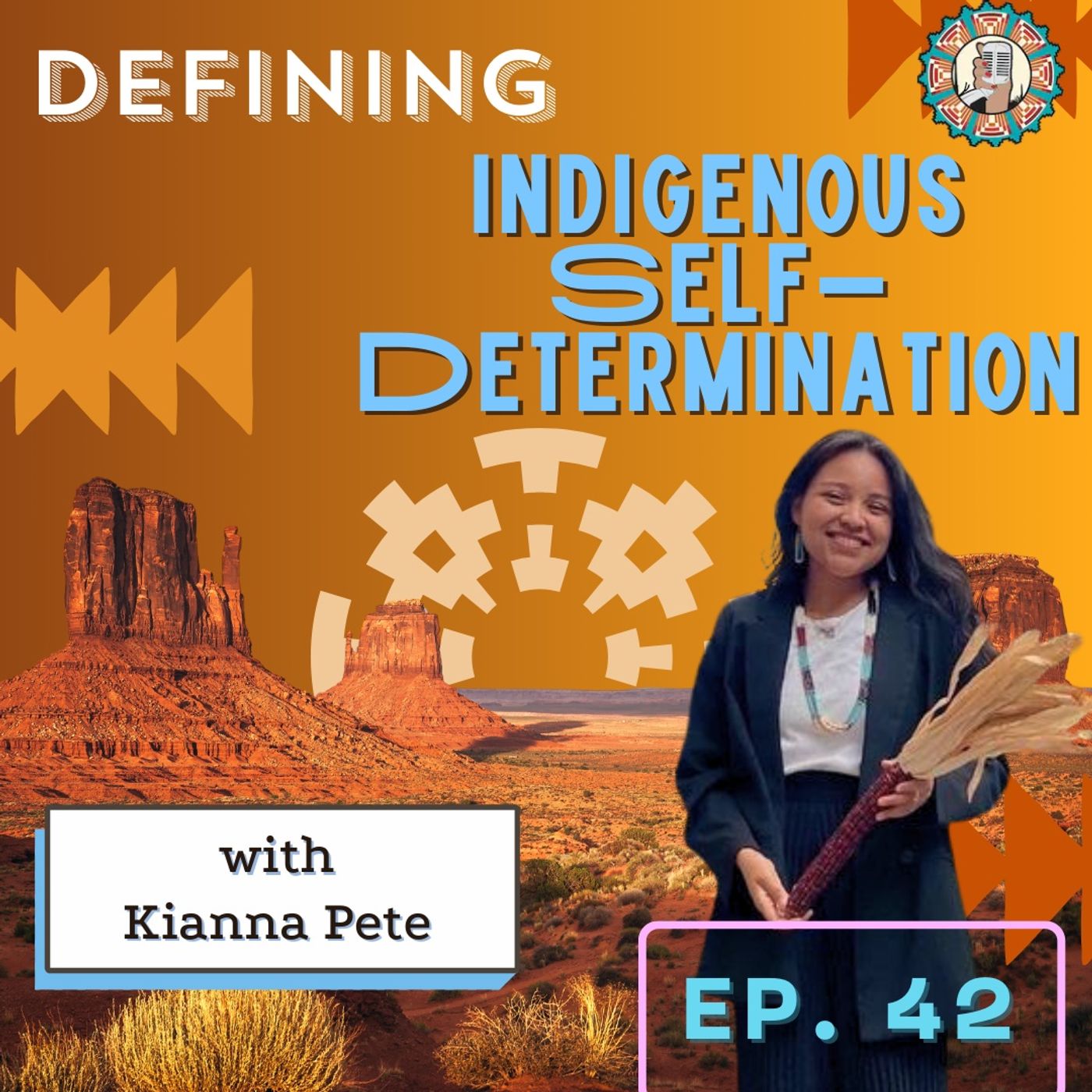
This conversation is Hosted by Tina, Co-hosted with Napolean, featuring guest Kianna Pete (Dine). Kianna is a scholar, advocate, freelance writer, and Indigenous education & policy researcher from New Mexico. Working with tribes of the southwest,...


This conversation is Hosted by Tina, Co-hosted with Napolean, featuring guest Kianna Pete (Dine). Kianna is a scholar, advocate, freelance writer, and Indigenous education & policy researcher from New Mexico. Working with tribes of the southwest, environmental justice organizers, and legal scholars, she promotes Indigenous self-determination and equitable education. Kianna also provides free educational resources on social media about Indigenous organizing around issues of climate change and tribal rights.
Kianna's project title: The Formation of Tribal Reservation Border Towns: Navigating Dine Identity in “Injun-Killing” Spaces. Examination of Tribal Reservation Bordertowns - relatively new concept to Indigenous studies that responds to the ensuing violence against Native Americans.
Helpful links:
Book - Red Nation Rising - https://www.google.com/books/edition/...
The Everyday Violence of Indian Country's "bordertowns" - https://www.hcn.org/issues/53-6/ideas...
The Amerian Indian Movement: "https://www.youtube.com/watch?v=IMjHxththQA&t=0sA Broken Circle" NHD Documentary
Instagram https://www.instagram.com/kianna_pete...
Tohono O'odham Young Voices: https://www.toyoungvoices.com/
0:00 For full disclosure. The information discussed in this podcast is based on the views and experiences of the guests and the hosts. The content here is for general educational purposes only. Content warning. The following contains discussions that describe racial discrimination and violent acts toward Native people that may be harmful or traumatizing to some audiences. Please take care while listening. Hi, Kanna, I'm Tina Zek, producer of the podcast. Thank you so much for joining us this morning.
0:49 I've been doing a lot of research and just found out a lot of great work that you've done. But I'm glad that you're able to come and be here with us on the podcast Scoop Gosh, I'm Chuggate, Napoleon Marietta, I need Wood, Autamna auntum and pepashani Amjad alkham At Autum chuk chun chud Habak Ski heat them So. Hello, Keana. My name is Napoleon Marrietta. I'm from Health River. I just graduated prior to this from a su in my undergrad and justice studies in American Indian Studies. Did finish my masters two in one in American Indian Studies with emphasis on Indigenous rights of social justice and another one in public administration. So been around quite a while and really happy to have you here and talk about some of the work that you do.
1:46 I am sort of familiar with with border towns. I have met folks from the Red Nation before. I've known Nick and doctor Melanie. So thank you so much for being here. Oh yeah, Nina hit Awkward, Sisana Schmid, Hello, thank you first of all for having me on the podcast.
2:30 Also congratulations Napoleon graduated. Always love seeing let need people be successful in the academy. It's crazy, But a little bit about me. So my homelands. I'm Dannette. I am Navajo. According to Navolis, where your mother is from is where you originate. So my family lives in Newco, Mexico, which is about thirty minutes outside Shipbrock and I grew up in Farmington, New Mexico. And it's had a lot of impact on the things I do and things that I decided to study and go into. But of course we're going to be talking all about that today, but about the work that I do. So I do a lot of things. I kind of broadly.
3:23 I've worked in the field of insist social justice and education in different spheres which include law, policy, racial and climate justice. At my university, I'm currently a grad student, so I'm studying politics in education at Columbia University and I'm currently on a fellowship. And at this fellowship, I co teach in creat curriculum for high school students in Harlem that centers on how to be an activist with a new community, learning about civil rights, history of what makes up Harlem. And I'm also a research assistant where I work with a legal professor in education and this organization, it's called Center for Educational Equity.
4:15 We advocate for children's rights to education via state constitutional law, upgrading, updating financial aid formulas, and also side projects of increasing media literacy and all soecific engagement. But outside of the academic sphere, I also am doing other things as well, So I'm a curriculum specialist for this Bipop youth organization called stard Empowerment, and we look at providing social justice tools for youth to learn about climate education but also to become environmental justice leaders and to pursue their own organizing within their communities and empower them to to give them those tools. So I focus more on the indigenous centered but just focusing on how Indigenous people fit within this unique sphere in environmental justice issues. My great curriculum centered around that.
5:15 But outside of that, I do freelance writing. I work a lot in the social media space. So I've been utilizing social media since about like twenty twenty to create free educational resources available to the public to teach about different indigenous issues. I've partnered with other bigger social need organizations, so places like Intersectional Environmentalist Feminist Impact, as well as starting to create more like longer based freelance writing. So I just partnered with the manage in five to talk about some of the environmental themes plan stewardship that happens within Killers of the Flower Moon and just bringing those lens into those spaces. So what do you do to take care of yourself? Yeah, I would say a lot of it's Stanley phone calls, Like I've been away from home like for a while, haven't been home like a long period of time. I think the long to sit home in the past couple of years has been like two or three weeks. But it's a lot of phone calls and creating safe spaces that I'm at. So I have a couple of closet friends with me in the city that I'm able to talk with and engage with, because these issues are hard to talk about, and it's also a lot harder when you when you're the one that's designated
6:46 to speak about these issues and to have to engage with other people who don't agree with those opinions or don't agree with your beliefs. And so I do my best to talk with my parents. I think I parents have been my rock. I mean, they've lived through everything that I'm going through. There, of course there are some differences, but they're the knowledge keepers. They are the ones that keep me grounded. I call my grandma, I call it I got called my grandma. They great anancies as they call them my siblings. I text all the time, so I just staying in talk with family helps a lot. Awesome. Wow, I don't know if that's part of your freelance work, but you did some an article with the Native Online News. I believe so a lot of what I write about comes from the academic sphere, and I want to make that public to other people. I feel there's such a closed door of understanding law and policy for Indigenous communities that I just wanted to like break that and say, Indigenous people should be knowing about this, and you know, not indigenous peoples too, because they're contributing to the proper we should know what you're doing. Yeah, well, it's great to meet you and learn all about the work that you do. Bri originally brought us all together, and she brought about the work specifically on your work with tribal reservation border towns, which to me, when I hear the
8:20 work, just because where I'm from, when I hear the word border town, I automatically think towns that are alongside the US Mexico border. But in the notes that Bri and Napoleon put together that it's somewhat of a relatively new concept to indigenous studies that responds to the ensuing violence against Native Americans and the work or your project title, the Formation of Tribal Reservation border Towns Navigating the identity and engine killing spaces. I guess first differentiating the term border towns from what I know it from versus what you're familiar with, can you talk a little bit about that My interduction to what a border town was actually And I'll talk of this later on came from this book called The Broken Circle written by Rodney Born Rodney Barker, and in this book he describes border town pretty vaguely, saying that it's a place where you have these two different communities that are separate from one another, different cultural values, different ideas, and many in the ways. Like that's true for different borders of the Mexico and so called like US border. What makes bordered towns with tribal reservations so interesting is that this isn't with one nation state, it's the same person that it's only one
9:52 entity that is pretty much controlling or has controlled. I mean, it could be argued with like the US Mexican border. US has a lot of on what's happening on those borders too. But I think it's interesting to put this in context within the United States. So I want to go to I believe like the Red Nation Rising book, which puts the first book to talk about reservation border towns. I believe their definition is the best explanation of what this is. So Red Nation Rising. This book is written by of course Nick Estis, Melanie Gazzi, Jennifer Dnadel, and David Correa. So they say the words that order in town are together, so they're all one cookies in word, and they're combined to describe the relationships that are connected with in these spaces. So I'll put it in quote. What they say is like in quote the name itself and now in town adjectively modified by the border end quote.
10:54 Yet this their definition goes beyond this and says that it is a truly a relationship where the contradictions of Stettler colonialism are merged and show themselves. So from that, they say that border towns are any white settlements because the purpose of settlements is that to eliminate borders and to secure their land. So differentiating that from what we see with the US and Mexican border, I would argue that they're pretty much connected and they're an extension of one another. You know, you have a lot of the indigenous tribes and groups that are down there near the border. After Post try jaup Hibbago, they were pretty much rendered to whatever said territory that they were put in. So like, for example, we have indigenous people that ended up on Mexico. They were automatically categorized as Mexican and they lost all indigenous identity. Similar to what we'd get like people who went on like the US side, And I actually wrote up paper talking about this unique relationship that happens within border towns. And you know, right now, there's like ways that people have tried to have Indigenous peoples in those areas have like more like the free movement spaces because they aren't necessarily have those same political relationships with their nation states. So one of the ways that they've tried to navigate this is through enhance tribal identification cards, and that in
12:28 itself is a huge violation of privacy, right, So there are these like little cards you get with like these microtips and then that monitor your movement, so somebody is watching you move across from order to border. So you're having that in that area. But within border towns, I think it's really interesting because it's a sense of racialization that happens in those spaces, rendering racial violence to Indigenous and Native folks. And I've seen that very apparent to my movement out within the East Coast. You know, within the East Coast, there's a course Indigenous presence, and I'm in a community with a lot of Indigenous spoke. But when you meet and engage with other people, there's no assumption that you are native or that you're indigenous. It's very much like, oh, like your Spanic Latina and like there's many like I'm going to see you guys have been spoken to in like Spanish like all the time, but there's no assumption that you're Native American. And I've at least like fifty plus times I've been told, oh, you're the first Native American I've met. Rather as in Bordertown, they know you, they know what you look like, they know how they have this assumption and stereotype of the way you're supposed to act. And I've experienced it in and outside of the education system. So it's very much you're racialized in the space and that. But just because of how you look and how you identified, there's this automatic assumption that we get of how indigenous peoples are supposed to act, and that's what's happening in those
14:01 different border town spaces. That's a really good point because I know, like in Uh, I guess for me like border towns when I think about that, like obviously the Mexico and the US border, and then obviously having the third entity, which is the nation, So there's like three entities that you're facing. And with all of that is like what you're talking about is like the identity of indigenous people, right, So it's like I'm a citizen of the nation, or I'm a US citizen or a Mexico Mexican American, like all those identities. But then what if someone is you know from back and forth, So that identity is interesting that you're talking about because like then you mentioned like how in some states, in some areas, you know, you're already perceived. They already have a perceived notion, you know, whether you're walking into a grocery store or something, they already know to surveil you.
14:50 How they already know to have that unique relationship already with you when you're going across whether it's the state line or whether it's international line. So that was really interesting because like when I think of border towns, I think of like like urban cities, so like Phoenix, tribal communities that are occupied in like local cities like Scottsdale, like these very heavily, and of course like New Mexico like Gallup. I'm sure there is a huge one, you know, Albuquerque, Santa Fe and like where the reservation is like is a is sort of that whole boundary line. It literally is a border. You know, like here's a border, y'all are supposed to only shop there. And like because we're out in Heale River, we're close to Chandler where there's like mostly retirees and people who have like, you know, their own like senior living houses and they have their golf carts and things. Compared to like Phoenix, where you have a high population of an Indigenous people from different nations, there's a tremendous amount of unsheltered folks. So like that's a really interesting point about when you're talking about identity and different spaces and like experiences like your own where you know, you're in the East Coast. One of the things that I was even told here like people didn't know Indigenous people existed on the East Coast still over in any of the East like because of what happened free contact, like a lot of them were wiped out. And then you look at like some of the planes tribes and communities, they're like you go there and you already know your native, Like, oh, there's a high population of Natives that live there. You know, so many tribal communities and that's unique.
16:21 Gossil like with Arizona was obviously having some of the largest communities here. It's an interesting point that you're making because like when I was thinking about border Town, I was like, man understanding like our ruralization of just being on the reservations that are you know, how Gallup has a unique relationship and what happened in the history there. So I guess like another thing I wanted to ask is like, sort of since the activism that has happened in a lot of like places like these major urban cities where the importance of bringing awareness and the identity in your line of work, Like, where has that shined through, what are some active changes that are happening, you know during all of these like foundes that have you know, because there's like the active is in part, and then there's this weird unique law legal thing and then like we're like the future of it, you know, Because that's sort of my question.
17:11 Yeah, So I guess I can start off with like the historical activism, leaving into now because you mentioned gaut has a really history of border town violence and this was actually my introduction into the American Indian Movement and learning about how that evolved over time. So, of course the American Indian Movement founding founding members Russell Beans, Demis Banks. You also have some really cool Indigenous revolutionary matriors. I've been reflecting on this month looking at the Donnald thunder Hawk Killis young gent McCloud, who are also part of the American Indian Movement. But their cause was looking of course, stemmed out of the Civil rights movement, where we're having a lot of awareness of the injustice happening to people of color, and so their movements stemmed from that type of atmosphere looking at the injustices happening to Indigenous folks in particular within these regions, these border town areas, and one of the catalysts of that, I think of I'll just explain a little bit about who Larry Casus was. So Larry Casus University of New Mexico, student of heavy activists who advocated for the rights of Indigenous and Native books and with What's Hope. So what happened to Larry Castus so in the region of Gallup. Galup is like about two or so hours from where I grew
18:42 up, in Farmington. It's a huge interception to where you get like all of the major highways. Basically, if you just want to move across the state from Mexico to Arizona, you're passing through Gallup at some point. So it's become a hub for that. But it's also where you have a lot of different trading posts that are happening. I talked a little bit about make pisis, but trade had plays a tremendous impact on order chouts because trade. This is where trade happened. This is where white settlers and indigenous peoples met each other. And that's also a part of white settlement. You know, white people setting up these trade and commerce and economic areas to build their profits, to religious people to travel to these areas to like trade and try to buy. But in Gallup, of course, on the Navajo Nation, we had had a law that pivoted alcohol sales. So what better way for white settlers to make money than to set up alcohol bars in areas right outside travel reservations. So in Gallup there was the mayor. His name was I met Garcia, names e met Garcia, and since Larry Casseus, he was a university in New Mexican University in New Mexican student and Garcia was actually going to be appointed to the board of regents for the university. And Garcia had advocated or like indigenous rites and like the elimination of alcohol. But he was an
20:15 owner of this bar that was in Gallop in that area, and so Cazus was like, no, no, no, no, We're not gonna like to get away with this, and so they had sent up in staged kidnapping. And David Correa has like a really good book about everything and talks about the whole event, but it was to say they were ultimately stopped at police and their Caseus was not killed, and he was only nineteen nineteen years old, very young, and there's a lot of things that Capita went behind his case that were unaccounted for. There are some reports of like him trying to student himself and which were not true. And also like after the event, there was this killing image and of his of him and a bodybag with police standing over him, and this was published in the Gallop Independent, which is like the local newspaper at the time, and so it was just gross.
21:14 And so the American Indian Movement came and started protesting on that area. Re late this iss and this is think this is a very similar situation to what happened in Farmington. So in Farmington, this was nineteen seventy four, three naval men were found and murdered. It was grotesque. I looked at the case file and it shows all of the horrible, relicious things that were done to their bodies. And this was done by high school students, the same high school that I attended and went too. And this came out as a result of what they call engine rolling, and that's where the title of my thesis came from. The use of engine in that sense, Indian rolling was we're just going like the ride of passage for high school students. It was similar to like like a sporting event, or like something that needed to be done in order to be accepted within the community. And it involved eating and stealing items of Indigenous people who were either intoxicated, elderly, or just couldn't defund themselves. And before Indigenous peoples who had to rely on quarter towns to get by, to get different supplies for the weekends, or they needed to get just anything that wasn't available in the reservation, they would go to border Town support. So after they ended up finding like the high school students were guilty for those both for those murders, but they weren't sent to prison.
22:48 They were sent to jail. They were sent to former Terai school. And like during the Civil Rights his dream of this became like a realization of the I'll just explain it to where you have sentencing of people of color are more harsh than sentencing of non white folk. So the American Indie movement got wind of this atrocity that was happening with in Farmington, and they had came in and they started marketing downtown, demanding for these changes happened in the community and to re evaluate everything that was going on. So after they had guns staged the protests, there was a riot that broke out and this riot there was tear gas. People are arrested, and this called for a major reevaluation or just a conversation of what was happening in Farmington. So they had brought in this, they brought in a lot of condissions. So they brought in the Human Rights Commission to do an investigation of Farmington and they gathered everything what they call it report a conflict of cultures, talking about the political economic history of Farmington leading into the events that sparked this outrage. And so they do a bunch of investigations in a lot of areas. So they look at the criminal justice system, they look at the health system, mental physical behavior programs located in the city. And from this report they start implementing some changes in it.
24:17 So we get some more health programs that are available for not a little people. They're supposed to be this more translation areas for them to be able to read things. Just bring in this sort of like multicultural lens, I would say, into the area. And although they established all these programs, any program that doesn't have a good foundational support or understanding of the people serving aren't good. So one of the major things mentioned earlier was talking about offering translation services. But recently, like I'm forgetting which year this happened, but it was really recent in Farmington and at the health hospital a patient had passed not patients away due to a misdiagnosis because they weren't given a Navajo interpreter.
25:04 And Bombington, like a border town that lives in the center of two HS places, couldn't find a Navajo interpreter for that patient in between them is just a huge injustice and also flat out refuses to serve Natives and Indigenous books. So there's still a lot of work that is going on. But Jennifer nes don it Del I look up through her a lot. She's the first person to ever have a PhD. But she's also a scholar in organizing an activists who's worked in and outside of this space. She is one of the boards on she could chair a board very what position she has, but she's on the Navajo Nation Human Rights Commission, and this is the first of its kind with any tribal nation in the soul called the United States to have a humans Rights Commission, and it's stemmed out of this finance now happening with in border towns. So it does allow now to help people to go in and seek out Oftenian right see seek their rights to this commission and to be able to evaluate it in a way that the US will somewhat sort of listen to or some are obligated to listen to. Thank you for sharing that, you know.
26:18 When I was looking up your work, that's definitely one of the things I came across was a documentary of just exactly what you're talking about on YouTube, and for those who are listening and maybe interested in checking out that, I'll definitely add it a link to it in the description so you can see for yourself the work that she's done and just visualize and see everything. But it's tiedled the American Indian Movement a Broken Circle. Thank you for talking about that, and I'm glad that I was able to see it and learn about it. It is shocking, though, it really is. It's unfortunate. It's something I never knew that was going on in that area, So thank you for making that known in public. Yeah, of course, that documentary actually came out of a high school assignment one of my teachers. National History Day is like an academic competition. You create a project based on historical event.
27:17 There's a certain theme every year, and so the year prior to that, I did it on the Indianmval Act. And so for this next year, after meeting my parents talking to me about the Broken Circle and learning more about the American Indian Movement about the suits, I wanted to do it on the Indian Removal Act, And at first I wasn't really gonna I was gonna publish it on mtoo. I was just like, I'll just leave it. This is just for academic competition. But I was like, let's just publish it. Let's let's leave it online. Mainly because people featured in the documentary. So like he was my former middle school teacher. He went to samed Peter dues Wood, he was in there. He wanted access to see it so you can show it to some of his class. One of the other people I interviewed, they were my mom's ust to be coworkers, and they wanted to do it to others in the high school. Teacher that proposed that I was leading all of the National History Day stuff also wanted to keep it and to be able to teach it to other people or to show other people.
28:17 And so from there I just made it hopefully available so anybody can watch it. Yeah, thank you for that. It's huge, a lot of history and things that I didn't even know about, intense and the reason why I brought up like some of the activism stuff is like obviously some of the fields that I've learned about research and have mentorship in, and so like when you're mentioning a lot of the work that you're doing policy wise, curriculum wides youth, and so I've sort of shifted a lot of geared towards the youth and how the youth can participate and be a part of this these like movements that have happened. So my question would be, like, since so much of the work that you've done is and now like you're doing now children and youth and then finding their voice, Like, what are some for our listeners, you know, who are out there? How do they get involved?
29:06 What do they do at their local schools? Like how do how are the youth, you know, Native youth they're feeling these days you know, and then seeing sort of them transform into you know, having that voice and empowering like what we do to empower these these things? Just like youth live along you know, they live along the border towns they live you know, the kids are the ones that experience a lot of this too. So like in your field of work, what are some ways that you know, having it involved and finding that voice for Indigenous youth. It's hard maybe because I recognize that I grew up in household and also had a lot of support that was actively but also a lot of support, virtually being connected to my community to like my extended family, and also just having those cultural practices and praying data pretty early age. So I always take that in mind whenever I talk with different other youths than people to talk with them because we're we're all come with a different experience in these border towns. I think first is get educated.
30:15 It doesn't have to be in the academic sense, doesn't have to be in those silos that a lot of schools put on you, because obviously, like the topic I'm talking about isn't taught in school. Someone was gonna teach me it in my classroom. It's something I had to go seek out and to explore, and it wasn't the sense like it wasn't taught before. I actually learned this throughout my research that the reading about the violence that was happening in the border towns I actually used to be a requirement or it got barred by some teacher or some family people or some white people in the community. But yeah, going back to that, if you find something that really interesting doesn't have to be in academics. If you really like reading, go read.
30:57 I think there's a lot of insteads of people telling you how you should act and what you shouldn't be doing. No, Like, if you love making art, continue making art. Just do something that you like. I think I tell that to any people who want to be activists, who want to go into this field, Like there's so many ways to advocate for your community that we don't think of beginning. Like we see people going out and protesting and like that's great, like on the ground work, but we need people in the education system. We need Native and Indigenous teachers. We need native of our teachers. I mean, we're made to create things to explore. So yeah, the first thing I say, just find your pofe. Find something that you like to do, but take up those spaces that supposedly aren't meant for you and be there. I talk with my dad and my mom a lot about is I like seeing like people surprised at what Native people can do. I think it's one of the things I or one of the things that I love to see is Native people for brothers wrong. Like we know how smart we are, you know how creative we are, we know what's right, And to see just those spaces of shop, you know, one of the fascinating things when I was going to school, was like hearing that the Indigenous excellence is like you know, American Indian studies is everywhere. Like you throw a rock and you hit AIS, what's your major? AIS?
32:27 Saw what's up? But you hit like masters or people like even undergrad in psychology or digital culture or aerospace engineer or electrical engineer. You're like, what what is that about? You know? And that's cool because like you're mentioning, like how like Native people like we get involved in all these different things and then we're finding that there's always that question is like how did you want to get involved in that? You know, Like that's very very passionate about it. And so I always remember those times just meeting those those different relationships and how important community is, especially when we're talking about some of these harsh, you know, histories, especially when it's happening still. You know, like when we do this research to white folks like our people institutions like oh it's some good historical context. It's like it's actually if you go down to Gallop or something and you go with me, you'll probably be watched, or you know, you go to the bashes our safeway, you know, we will probably be watched in Scottsdale. So these are you know, real life experiences that we bring to the table other than you know, like oh yeah, indigenous people have it hard and all this other stuff. But the focus is morally, I guess, less than just like beating down a lot of ponents. But it's actually showing like where we're upgrooding a lot of our knowledge toward to be teachers and things of that nature. And so I appreciate that too, because like, the youth are so important, and sometimes it's as they're growing, you know, and learning about different things like that are not taught in school or like you there are things that are taught that are misinformation, you know, learning about things taking and all this stuff, and you're wondering why uncle and the teacher gone to argument, you know, like why why are you guys arguing? You know, because Thanksgiving is like you know,
33:57 people can test it, you know, all these things that are wrongly thought in our schools and things. So yeah, thank you so much, and I also want to plug in. Bree was like talking to me and she said, oh yeah, Keanu p And I was like, I think that I'm not much of a TikToker. I'm not a native TikToker or whatever, but I think I seen you talk about one that was fairly recent. Now I'm wrong, I'm sorry. There was one about identity. I don't remember, but it was fairly recent, and then I was like, oh, that's cool. So then I was like watching a lot of education, like what you were talking about and your tiktoks. I think that's also another way that youth are engaged is some of it is cringe, but some of it is really like good stuff that people are talking about because a lot of our youth are watching that, even me, Like who's turning thirty today?
34:40 And like I still slide through and see some of all the ones that are really good at talking about border towns, talking about identity, you know, things like that. So I just wanted to plug in your If you all listeners have following Keana, definitely follow because this is good information. So if you had anything, yeah, definitely. I feel like the content that you put out there's very informative, very educational. Following your Instagram, you put out just information that's not easily accessible unless you're digging online. So thank you for putting in that work. And simplifying some of this information as well, and that's also what we need to help us to better understand the root of different causes or what's happening today and the effects, whether it's environmental, politically in the world of activism, I feel like you're definitely doing a really good job with what you're you're putting out on your content. So thank you, Keianum. Thanks. It means a lot. I always have like imposter syndrome, any of those spaces I'm like, is it good? Is it not?
35:46 Of like some people ask, like I think people and they don't know, Like my social media is like a lot of educational stuff, so I'm always when they ask can I follow you? And I'm like, but I post this and this, but yeah, in a way like big journalists friends and they're like, oh, I'm writing this piece and this piece, and they're like, you know, in a way, you're kind of doing like journalism, and I'm like, what do you mean. They're like, well, you every single like post you have is it's a story. You're giving it context, you're giving research, you're inserting quotes and pictures. That's journalism. And I'm like, oh wow, but it's great, it's something that I like doing. And going back to the topic of water towns, I was looking at this article online for from High Country News and it was written by Klin good Luck and it's titled The Everyday Violence of Indian Countries Watertime, and it talks about Zachary Bear Hills and what he experienced, what he went through and part of that violent legacy of Indian countries water towns. And so for those just to kind of go back and for the listeners to get a little bit more of an understanding, so the towns and cities outside Indian reservations where Indigenous and white residents live side by side, and that the book read
37:19 Nation Rising from Border Town Violence to Native Liberation by Nick s this Militi, Kaozi, Jennifer naz Dale, and David Korea. I believe it illuminates the long overlooked violence that has plagued any in countries border towns from early settler colonialism days to today. So again, if anyone out there wants to learn more, that's a book you should definitely check out. Thank you Keana for introducing that as well in earlier in the conversation. But I also wanted to share this quote because I thought, like it's like pretty powerful and it's so simple. But this quote is they said that the settler got the world, the Indian got the reservation. That's so pretty pretty strong words, but definitely something to think about and consider. So how can like future for the listeners out there, what people take from your research for building on and more like for future research? Like you see you achieved this, Now what can people do when they read and be like, well, there's just so much like you know, as you break it down. You you did a really good job of breaking it down, you know, like jargon and everything like legally and everything else, so we can perceive these high end like you know, definitions, But like for your research, would you tell someone like me if I was willing to do more work on border towns, like, oh, first of all, read this and then like working, where would you give someone
38:49 suggestions on like for building future research? You see the future from your research going. That's a good question, and that's something that I've been questioning for a while. What wanted to do my thesis and what I want to do with it after work, But the conception of it, like I talked about why I want to try it about word tones. But why I wanted to particularly focus on Douny these pieces because I have a hard time navigating who I was in that space, so a lot of codes witching in outside of school. But there were also things I didn't realize that my parents did when I was growing up. So like my parents could let me go to sleepovers, they would make sure i'd be too. I get to from schools, and then as I started like interacting with like my cousins who lived on the reservation, they were like, you know, Farmings is like racist And I was like what do you mean. They were like, yeah, it's like racist, like a racist town. And I was like okay, And like cut me to that realization of like, wow, I'm in the space run limited and expressing who I am. And there's a lot of ways that my parents were protecting me from all these different areas. So in my basis, I talk with Native American UH director within the high school that I went to, and like, reminder, this is the same high school that had that same racial bi racialized violence that was going on, and they've had like this different
40:23 types of programming over the years. But again, like if you really want to help these students take this knowledge that you're ruining and put use it in those positions, those small positions that are there. It was also another person that interviewed there are they those school board they're like the school board president and they were like the first Native school board president ever in Farmington, and that itself has shifted self perspective, so they of an Indigenous folks, so activist wise, it's it's hard because you need to have some sort of position for people to look at you or do people to take you legitimately. But again, there's open meetings, there's school board meetings. I know there's an Indian Youth Council within Farmington that youth can join and participate in. My AUNT actually helps run some of the things there for Native and Indigenous folks, Like if you're in close proximity to like your home community, get involved in your chapter.
41:35 See what's happening there. See what type of financial aid they have, what type of work opportunities are there for you, opportunities for you to cultivate career and college opportunities that are to get towards youth. But then again that comes to the caveat of you having access to go to and from. It's tricky, but I want to go back home and create some type of impact. I don't necessarily what that looks like. I don't know what that looks like. Now. It's going to be youth centered in youth blood, and that's my hope and I want to keep it that hope. And my heart goes out to all Indigenous youths out there for navigating. I mean, I'm still I'm still used. I have so much to learn and throughout these next ten fifteen years to like, so much so learn about. But that's what I hope to do in the future. Amazing. Thank you so much, Keana for the work that you're doing in the community, for the community, and for your willingness and just the desire and the curiosity that you have to undig some pretty important information for future generations to learn from as well. Well.
42:49 Last qession I did have so since you know, the seventies when all that had happened, has Farmington changed when it comes to being racist. I'm not familiar. I'm not yeah, like that far up in the state or areas. But for those who are not familiar, you don't know the history. And I'm just learning about it. Do you what's it like now? In many ways, it's like the overt racism that I feel many people experience. So it's not like all right, Like a lot of like the slurs you don't like, you don't usually hear those anymore. A lot of like the terms usually you don't hear anymore. But it's small things. My dad actually called me the other day, or I called my dad the other day and he was like, oh, a Facebook memory came up, came up today, and it was like five ors, so six years ago. We were at ib It's restaurant. We were at we're at some restaurants and I remember this older white ladies saying, oh, go back to the reservation, and that was like oh. I was like oh okay. But then like my Atlatic group, I was like, we don't live like, we don't live there, we don't live off there. And my Dad's like, yeah, I remember you were so round enough and you're ready to go at him and you're I was like yeah, I was like sir. But she was like a mother of the student that we went to school with, and like
44:22 my brother knew the student. So it's that Also you have like that generational that generational racism that's still ingrained in the community and it's being taught in really new ways to harm the indigenous Indigenous peoples. And now we're there is definitely like an influx of need to people within Farmington. Now there's also like an increasing Pasific islander of population within the area black population. But it's also looking at the systems too, like the criminal justice system is horrible through Native and Indigenous folks and we're over criminalized highly surveyance. Even within those systems that are still there, and I mentioned earlier the healthcare system. Healthcare system again, you have all elders who go into the nursing homes, who go into go checkups and you know, like I said, there's no people that translate them, or you have healthcare providers that aren't listening to these Native and Indigenous folks.
45:25 So yeah, that's not right in your face. But those structures in place, they're all still there. Yeah, that's intense. You know, it first starts with just learning about it and addressing some of these well a lot of the issues to create the change that needs to be made. And you're right, yeah, the generational attitudes racism personalities that you know, like you mentioned, it was an older, older white woman that made that. But thank you so much for sharing that. I appreciate that, Napoleon. Did you want to have any last questions are the thank you so much for being here with us and giving the listeners some really worldview, just some you know, your perspective, and as always, you know, keep up the good work that you're doing. And thank you so much for sharing with us and then giving us a lessons like your students, and so you've made two more students. So yeah, but that's it. Thank you so much.
46:23 Well, thank you as for having me, because something that's really important to me, like a subject I want to continue learning about and expand upon. And I think all of the previous indigenous organizers and scholars who have grounded this work and are setting foundations to build upon it and create interconnections of solidarity. Particularly I look at Jennifer Dnadel, who's raised generations of Indigenous scholars and activists, reproducing a lot of revolutionaries who are actually on the ground work, and I'm just a very shaky, it's very slunky helping you in that already movement that's there has been ongoing amazing well, for any other listeners tuning in out there, feel free to check out the description. There are going to be some helpful links there for you, the YouTube that we talked about and any online articles about specifically talking about border towns. You can find that all in the description, And if you want to learn more about the podcast, check out our website to Young Voices dot com and again check out Keana Pete on her socials where she shares a lot of really informative content for you out there.
47:45 So thank you all so much for listening to on the Young Voices podcast featuring myself Tina and co hosted by nap Bullion. Thank you listeners for tuning into today's episode on the Young Voices. Be sure to check out our website at Toyong Voices dot com to learn more about the work we do both on and off the mic.