 Apple Podcasts
 Spotify
 Castro
 RSS Feed
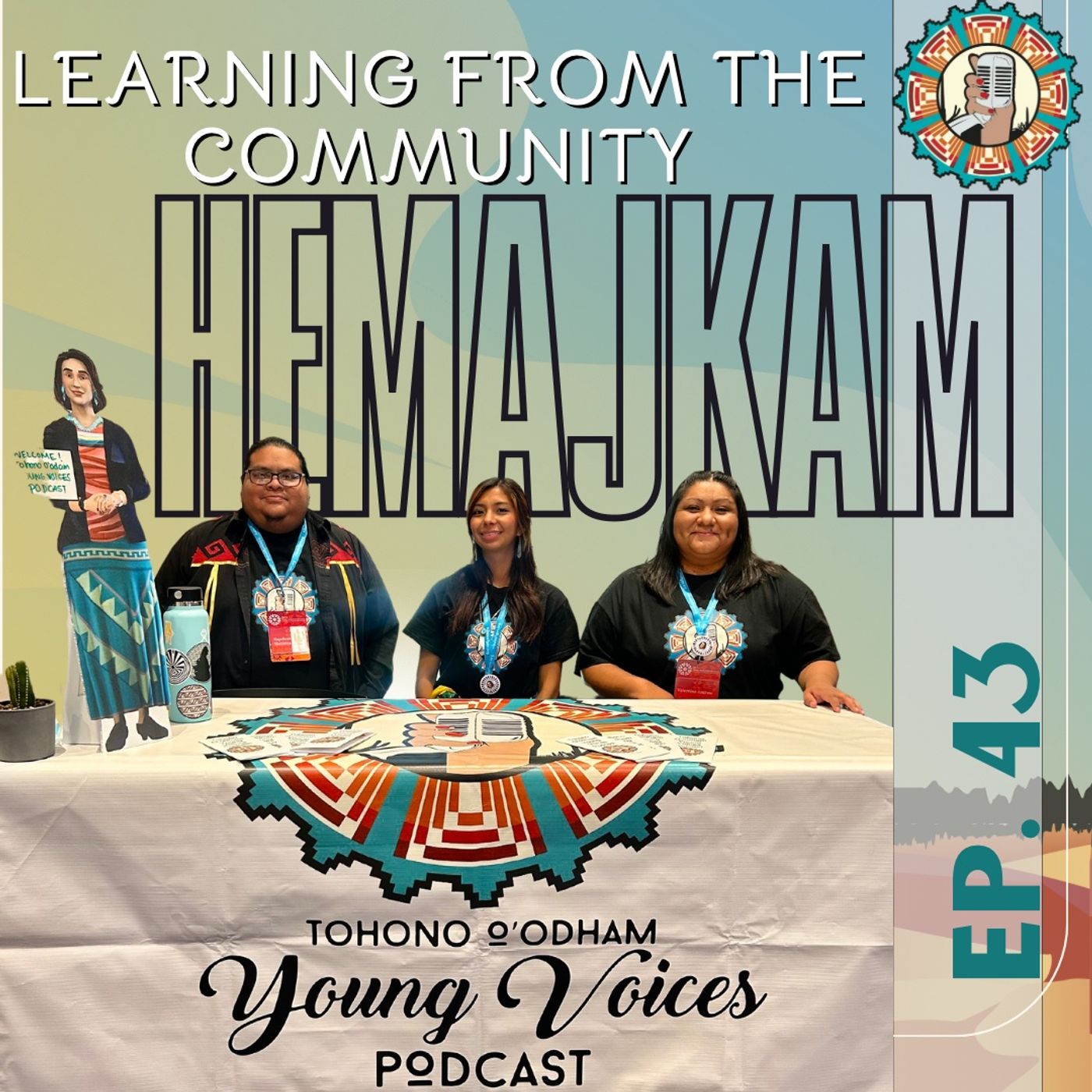
In this season finale of Tohono O’odham Young Voices, we thank the listeners for your support, as we also reflect on season eight's accomplishments, and preview season nine's focus on uplifting Indigenous stories.
This episode highlights personal...


In this season finale of Tohono O’odham Young Voices, we thank the listeners for your support, as we also reflect on season eight's accomplishments, and preview season nine's focus on uplifting Indigenous stories.
This episode highlights personal updates from us, including Tina's work with community radio, Napoleon's new teaching role at San Carlos Apache College, and Bree's dual degree pursuit. We also discuss Community projects, including a permanent exhibit at the Mexican American Heritage Center and Museum, an NEH-funded sound-based project, and the San Xavier Allottees Association's podcast initiative.
Next, we reflect on community events and conferences, underscoring their role in promoting engagement and cultural preservation. Key episode discussions from season eight are revisited including one with Kiana Pete and season nine's focus on topics like Indigenous rights and missing and murdered Indigenous women is previewed, kicking off with an episode about Raymond Mattia Sr. (baht).
We want to thank all the listeners who came to support us and gave us words of encouragement as we dive into deeper topics in our communities around justice and awareness that could be challenging for some listeners.
Follow and check out some of the amazing Indigenous communities doing similar work to us and support!
Here are helpful links to learn more about the topics we discussed in our conversation:
https://www.tribalselfgov.org/about/
https://usindigenousdatanetwork.org/us-indigenous-data-sovereignty-governance-summit/
https://www.nativeamericacalling.com/friday-april-19-2024-remembering-the-1974-navajo-border-town-murders/
https://grbc.tv/
https://www.pursuitfilms.com/blog/the-girl-scout-murders
Music By- Famous Ones "Love You To The Moon & Back (Interlude)" Chica De Mis Suenos
Epidemic Sound - Jobii, LM. Styles "Kerfuffle" Midnight Haze
0:00 For full disclosure. The information discussed in this podcast is based on the views and experiences of the guests and the hosts. The content here is for general educational purposes only. This is Tina here with you on Autum Young Voices podcast and we are so excited to be back because we have so much to share with you all. And shout out to ah you listeners, whether you're a first time listener or you've been listening to the podcast for years, thank you so much for being a loyal listener and just supporting the work that we're doing and the stories that we're telling. It's just an honor to do this work for you as the community member, and of course sharing your stories and other Autum stories and then just stories that relate to all Native Indigenous community. So we're happy to do the work. We enjoy it, we love it.
1:15 We get to meet so many different people. But we wanted to come together and wrap up this eight season. This is going to be our final episode for season eight and then later on in the interview, we're going to talk about what season nine is going to be about what we're going to be focusing on in season nine. But yes, we wanted to wrap up season eight with an update about all the things that we've been doing. And if you've been following us on our social media, then you've definitely got to see little snippets of where we're at, the people that we're meeting, and how we've been involved in the community, both on and off the microphone. I'm gonna give a little update of myself, share a little bit of myself, my little bit of my personal life, I guess. So you know, for me, I live here in Tucson, but of course I live on the nation as well. Family out there grew up out their truth on Autumn through and through. But I live here in Tucson now because I work here in Tucson and I work at the local community radio station. I actually used to work for the thorn Out, the Nation's tribal radio. I worked at Kohen.
2:37 If you're a listener, Lady T. I still go by Lady T when I'm on air here. But I do do a lot of like behind the scenes production work. I am the production coordinator, so I produced mini programs and shows, but I also work with their automation system in radio broadcasting. And then of course, you know, if I'm just hanging out. I like to just be at home, chill, relax, play video games. I love playing Fortnite. Yeah, so if you're on Fortnite, drop your your name. Maybe we could be friends. We can emo together. So but yeah, and I love my cat. To have two cats, Thundercat and Callie, both named after some pretty popular music artists. And then of course just hang out, go out with friends. We have some good food, a good meal which we'll talk about, a delicious meal that we actually all three of us had when we were at a recent conference. But I'm gonna have the mic over to Napoleon and you know, give an update on what he's been up to. Yeah, hello listeners. Yeah, so just a brief update, kind of just taking it easy. I'm staying with my mom and step dead for a bit, kind of catching up with them.
3:57 Also taking care of some of the houses, working things, and their dogs. So if you hear barking in the back, that's all the dogs which she has. Also playing video games usually just like the Dark Soul series, Elder Ring, a lot of those open world things. I haven't really been playing video games for a while, just because of the changing of the landscape of video games. Nowadays. So, but back in the day, it used to be a hunter in a call of duty. So but since that's changed, I kind of retired. Yeah, and then I know, there's an amazing amount of things that are been happening for the podcast members. So one thing that is that has happened to me is that I've been able to obtain a position this coming fall semester. The next semester at San Carlos Apache College, I'm going to be teaching online class in philosophy one O one.
4:50 So it's a class that you have to take. So if you all are interested in any listeners wanting to start their education, you can actually enroll for free at on An autom Community College and then they'll be able to give you access to all the classes and then I'm sure that we can see my classes there, or you can roll at sun Cross and Practic College. So really looking forward to that. It'll be me and another colleague that'll be taking on that role. So I'm just excited to get my feet wet looking to talk about more indigenous philosophy out there. So really excited about that, and I'm excited that what the success of everybody else has been doing rather than just taking care of my kid, you know, seeing my son and watching them grow. And then started my own podcast too, and so yeah, that's pretty much it. I'll hand it over to Breathe. Yeah. I also have a part time job. So aside from that, I have been enjoying my last free summer because I just got into the law school here at the University of Arizona, as well as the master's public health program, so I'm going to pursue dual degree, which is a little scary but very exciting, and everyone just has been so supportive, not only like you know, the people around me, people at the schools as well, so it's really exciting.
6:12 But besides from that, I've just been playing my cello. I was saying that I have a little recital next month, so that's fun. And then I also played Fortnite from time to time. Me and Tin are gonna play suits together, crazy, we have to play. I'm telling you, Napoleon. When we were waiting for you earlier, I was telling him. I was all like, were is she breezy? And I was like, we should start calling her breezy. That's so funny because when I was younger, that's what one of my soccer coaches used to call me it, but like ever since I ever sat, like since I stopped playing with that team, like no one's ever me. You can bring it back just for you guys. That's gonna that's happening now, darting right now, crazy, but it'll be my my DJ name. There you go. But yeah, aside from not I also have some some kitty cats and a bugs home. My children keep me busy and then just hanging out with my roommam, best friend and my little sister. She teats me on to skateboard, so that's fun.
7:20 Also another scary thing, I don't know. Lots of fun things happening. Cool, that's awesome. Yeah, so Breezy plays the cello. She's been playing for a while. I haven't seen her so I haven't seen it in full action. I'd like to, but I don't know how. But yeah, it's pretty cool that she can. I've been waiting for me and Tina to do a collab actually accordion. Yeah, so for those who don't know, I actually play the accordion. I play a GCF accordion, a soul accordion in which I was actually just playing for Napoleon. I was giving Napoleon a little concert earlier when we were waiting for me to jump on, so crazy missed out. It's not like a sound by of people going boom okay, So what are we going to talk about first? So what do we got? The Mexican American Heritage Center and Museum here in Tucson. It's actually located right next to the Tucson Music Hall, which is now called the Linda Ronstan Music Hall. If you're familiar with Tucson and you know where the TCC is Tucson Convention Center, it's actually between the Linda Ronstant Music Hall and the TCC, and it is the Sosa Carrio House. Yes, you're right.
8:50 But they reached out to us and they had funding to put together a permanent exhibit specifically focusing on Native autumn Native indigenous history here in Tucson, and they asked if we could be a part of that project. And of course that doesn't mean that we're gonna be the only ones working on it. It means that we get to partner with other local people here in Tucson who are working in museums, who have familiar archival and exhibit work as well, and of course relying on the community who is willing to share their stories. Maybe they have family stories or family history that goes way back any walk community members.
9:33 We're definitely hoping that we can find somebody or other autom who can help us to create this permanent exhibit. So we may be reaching out to local autumn in the future or this year. So we're excited about that project that we have. And I always say this, we're more than a podcast. We have a lot of things both on and off the microphone. So yeah, so we have that. I don't know, Bri or Nopolan, do you want to share with what else do we have going on? Yeah? We also uh are partnering for then eh Grant and I thought that maybe the point could share a little bit more about that because you do know more about that and what that entails. Is that the one of Doctor Burner Actually, yeah, that was the one. No, this any age ground. This one is with SFA Southeast Folk for the alliance. Yeah, let's explain a little bit more in that. Yeah, so we haven't fully started anything yet, but I am really excited because it's surrounding climate change and how it's affected the land here and we're going to be interviewing a lot of Indigenous people and community members about how it's affected them. They're traditional ways of life. But yeah, really exciting because you know, I did join this podcast to learn more about the communities here and the issues that affect them. So hopefully I will meet even more amazing community members that I've already met so far through this
11:07 and yeah, I'm really excited to share their stories. Yeah, So that one kicks off this year as well, and Brie is coming on this project as a program coordinator for this project, and any H is for the National Endowment for Humanities. And we're partnered with the Southwest Folk Life Alliance and Border Lower with Kimmy Izel, and they also have another partnership in Texas from Texas, they are called Las si Mia and we're all kind of these three entities coming together to work together on these different storytelling projects that we have. So we have that to keep as busy outside of just making episodes for the podcast.
11:54 And another thing we've been doing recently, I collaborated with the sanate Alati Association. They have a youth group and they brought me in as a consultant to help them create a podcast, and theirs is mainly going to be focusing on autumn, land and water rights topics and of the ALTI Association to share information about all the things that are involved with being in a LATTI what does that mean. And then of course whatever the youth are interested in talking about, whether it's movies, music, whatever that is for them. But it was really cool that I got to come in and kind of help consult and guide them and train them on how to set up microphones, what are all the gear and equipment that they need, what types of microphones are the best, which I recommended this type of microphone, the road microphone, and they were able to get a couple of them, and what software to use, so they're also you're going to be using spreaker as a host website as well as editing software, so all the things with all the tools that you need to produce a good podcast and produce it enough to where it can you know, then live online and then be you know, put out there for the
13:24 world to hear or locally whatever that is. But it was really cool that they caught on really fast, These youth, they caught on really fast, and it was really cool to see them kind of do it on their own after that, and I would just kind of sit back and kind of watch and also listen when they recorded their first episode, and then we would pause and I would recommend, oh, maybe you should say like this, or maybe you should share or expand a little more on that detail or on this story, and explaining to them, like you want to give the listeners as much content as possible and be descriptive with your stories. Tell things descriptively so that they can have a visual in their mind. So also again how to be a good storyteller. So all these little tips and tricks that I've picked up throughout my career, I guess as a podcaster and as a radio producer announcer. It was fun. It was a fun little project, and I believe I'm still going to be working with them a little bit here and there.
14:22 But that's an update on that recent project that I was working on just in this past month. Let's see what's next. I know we have a list. I can't see that list right now. Yeah. We've also been doing a little bit of community events and attending community events as well. The first one was World Water Day and that was in partnership with Alianza Indigenous in front Atas and that whole event was coordinated to help the community learn here from water advocates and just to learn about the importance of waterco Cervasan reclamation water rides and we had a lot of fun there. I went with Tina, we got to meet One of the things I love about these about these community events is just talking to people. Honestly, Like, I learned so much just from meeting different people that I didn't even know were in Tucson or listeners in tu Soon, which is also really exciting. And then even people want to start their own podcasts, and it's so heartwarming to hear when they come up and they're like, oh, I was inspired and I really want to start my own podcast, and how should I go about that? And then Tina can't give them the whole rundown about that, and it's just really nice.
15:35 It's really cool that we're able to, you know, spark that kind of inspiration in people. Yeah, that was really cool, especially when they come out and they say I listened to this episode or that they've been listening for a long time and they really like the topics that we put out in the stories that we share. And then aside from that, we did go to GABRIELLEA. Kelly's meet and greet fundraising events as she is running for re election her Prima County Recorder And if you don't know her, she was the first Native American woman to be elected Native American for that matter, to be elected for that position. And I know Tina knows a lot more about her, but just from an outside perspective, I've never met her before before this event.
16:21 I just followed her through social media and just the things that she's been she's been doing, And before I even met her, I knew she was such an amazing person and such a light to the community. But in person, she's just so warm and kindie. You can just like feel her passion to want to help the community and just bring justice to issues that impact them and so really really inspirational. And I can't wait to continue to work with her hopefully and just to continue learning from her as well. You know, we have definitely made it a priority. You know, we didn't ask to come to the event at all, but you know, like Brie said Gabrielle, like I said as Kelly, she was my advisor when I was at thorn Them Community College. So I've known her for many years and she supported my work and I've always supported her work. So again there was no question, of course I'm going to continue to support the work that she does because it's absolutely important for all Native Indigenous communities and voices and encouraging us to vote.
17:27 But yeah, she's definitely made some strides and made some differences in her position as the Pima County Recorder. But yeah, we went to of course just to support her, you know, share her message whatever she wanted to share with the community. And of course she's trying to get re she's working toward getting re elected, and I trust and I believe in the community that they did it the first time and that they'll do it again. They'll re elect her again so that she can continue the good work that she's been doing. But yes, also shout out to April Ignacio. SHEI is currently running for uh what is it? The supervisor for District three in Pima County. I believe I'm not really even I kind of have an idea of like what is that position, Like what does that person do? But that person really has a lot to do with like a lot of big decision making within Pima County, and so to have an Autumn in that type of position, in that seat or District three, which includes most, if not all, but most of the th Autumn nation on the main reds, that's a big deal.
18:37 So we need more Autumn to go out and vote for April as well, because we've seen it as a benefit to have an Authem in a higher seat and position within Pima County. We've seen Gabriella as an example of that, so we know it's it's possible, and we know that the change is the true changes and how beneficial it could be for us Autumn. So hopefully we can do that for April as well with her her coming. She's you know, got her campaign going on right now, and maybe we even get to talk to her and bring her on the podcast. Yeah. I think that brings us to the two little conferences that we went to, the first one being the US Indigenous Data Sovereignty I mean Tino and too, and then we also just came back from the Tribal Self Governance Conference and all three of us got to go, so that was really exciting. But Tina, if you want to kind of explain you over, yeah, experience of the data Sebortine for sure. Yeah. So we went to the Indigenous United States Indigenous Data Sovereignty and this is like a sticker that they were giving out hashtag data back and it was it was a first of its kind. They've never done anything like this. So for us to actually be able to get a press pass, to have access to get in for free, to capture stories and just be a part of this conference was really cool and very eye opening to
20:08 think about how Native Indigenous communities are utilizing data within their own communities, how to do best data practices in protecting what that looks like in different ways that the communities are using their own data in a beneficial way. So there's so many different ways that so many different people Native Indigenous throughout the globe, throughout the world are working on, whether it has to do with law, policy, medicine, health on a community based level when it comes to their data, even with the with the boarding school situation and information, so many different ways and topics. So I really it was an eye opener for me and it helped me to read about you know, for us even with us and what we're doing we're collecting stories. That's a part of data, right, But I feel like we've been super careful and not in not sharing or going too deep into detail when it comes to those culturally sensitive topics. I feel like we've been very good about that and a lot of the times when it comes to the cultural stuff, it's already it's information that's already out there on the Internet that other autumn have put together, whether it's a video, a song, a story, a YouTube clip. But we're just kind of being a little you know, putting our own spin on how we tell those same stories as well. But yeah, that's definitely one thing I really took away
21:42 from that summit was just the importance of data and learning what exactly is indigenous data sovereignty. Yeah. I also really enjoyed this event because the Yeah, this past summer, I actually was able to participate in an internship under doctor Stephanie Carroll, who is such a great name in data sovereign Didigenous data sovereignty a big name in indigenous data sovereignty at the moment. She's coined a lot of different principles surrounding indigenous data sovereignty in order to protect us, protect our data. I think one of the best things that she said about data that really makes me, has made me think about it in a different way, is explaining that we as Indigenous people have been creating data since time memorial, and that's through our language, our cultures, the way we take care of the land, and just us as a people, we have been data stewards.
22:45 And I found out that's so interesting and amazing to think about it that way, because I honestly didn't even think about what data sovereignty even meant before I even started that internship. So just knowing that that was the first summit and then seeing how many different people Indigenous people are working in spaces surrounding data sovereignty, it was really cool to see and really exciting just to see what we do in this field as it continues to grow. But yeah, I had a lot of fun. Yeah. So one thing that we had a chance to meet one of the keynote speakers and presenters. Her name is Gidi Kowai. She is from New Zealand, and she talked about her tribal community there, the work that she's done on the Maudi Maudi data. But one thing she said while we were talking was that really stuck out to me was that we are moving away from being data providers to being data designers. And that just was like wow, yes, yes, no more providing data for other people. We need to be using our own data in a beneficial way and protecting our own data. So that was that was another eye opening thing for me as well. But yeah, that was it right there, And of course on our social media you can check it out. I don't know if we posted anything from that on our socials from the summit, yeah, we didn't, unfortunately, but you know, that's a little bit of what
24:17 the experience was for us. But yeah, why don't we go ahead and move into talking about Actually, yeah, we can move into the recent conference that we were at, the Tribal Self Governance conference that happened at the wild Horse Pass Casino and Resort. They reached out to us via our website and they asked if we wanted to be a part of this conference. They were having their first ever digital storytelling room, and because of course that's what we do, they asked if we could be a part of that in sharing our story as far as like being a part of a panel as well as having a table there where we can promote our the podcast there of course, and then just meet a lot of different people. They got us rooms to stay a few nights, and that was pretty cool and pretty nice of them.
25:18 But for me attending that was really awesome because what it was was, you know, this is different tribal communities, tribal leaders from all over the States nationwide coming together to learn about how are you governing in a more sovereign way for your community? And one cool thing is like they had this thing called for the People, So every now and then throughout the conference, they would show like short documentaries on different tribal communities, so they were highlighting how those communities are continueing to be sovereign in their own ways. So it was like giving really good examples of the work that they're doing in their communities in a more sovereign way. So I thought that was pretty cool. Napoleon, do you want to talk more about what that experience was like for you and what you thought about the panel and then even you being there the last day.
26:22 Yeah, it was really cool to see that there's these documentaries and content that is being created by indigenous people. So it was really cool to just how as content creators and as people who document these stories to kind of connect in a way that makes us feel very wholesome. And I think that was really to me, It was a really impactful thing because we all had our own stories and intertwined, intertwined our content together and how we can continue to tell our stories in any way that we can, whether that's from broadcasting or podcasting, documentary series, in whichever way that we can document it. So I think all in all really brought us all together to feel safe and and in a way that we can feel comfortable for a moment to watch these trailers or share what our methods is like of storytelling. So it was really it was really eye opening and good good to hear from others who are doing work across the country. So and we also got to, you know, we got to shout out for the work that we're doing because a lot of these projects at the time started from podcasters. A lot of big product projects like documentary films people get involved with the communities have started from podcasting, and so it
27:53 was really cool to just kind of get that recognition that we're we're not something where we're not something of a minority in the in the field of content creation that were sort of in the forefront as it should be. I mean, like mentioned before, as far as data, we should be the ones documenting and telling our stories. So we just have a different way of a passion just like everybody else, and they all intertwine. So it was really cool to hear that and talk to talk to other folks doing that. As far as the panel goes, I think there's really good questions. I really enjoyed the company that we that we were able to sit with and talk with and yeah, I mean people were just from the community that I know and others made some new friends and hopefully that will allow us to grow and continue our work. And so a really uplifting way of what we what others might not know, what is digital storytelling or what is that? I think another thing of the conference was like, can you tell us a little bit about what a pot cast is or how do you frame the story? How do you do who do you interview, how do you fois content? What do you do you know? So I think that was really informational for a lot of our guests that were there, people that really wanted to engage with us.
29:15 So I appreciate the last few days with them, and then I stayed to the last day and pretty much that that Pantel was talking about the future and to me, I sort of kind of look back on the stuff that I that I enjoy watching on my leisure and I think I mentioned in the beginning, you know, like a lot of youth are with the rising of different platforms YouTube, TikTok, Instagram. You know, before there was a lot of creative ways to get content out, and I think now that we're seeing people who are creating their own content and being more community based as far as diging as people around the issues that are going on. I think we're going to start seeing a uprising of indigenous content creators in these bigger spaces like YouTube, Twitch, streaming services like we've already seen in documentaries and TV shows.
30:17 So my hope is that one day we get to have a whole network of shows and documentaries and our own streaming service that has indigenized that we can go and look for these things and not have to dig through algorithms. We don't have to dig through things that are most popular that are harmful to Native people. And that goes all back to data and all that stuff. But I envision that way we'll get that we take service, We have services that will contribute to our communities, that will show us what these stories are like from wherever we come from. I think that was a major point that I wanted to point out from the last day, was about the future or of digital storytelling and what it means. So I guess from that day, I guess.
31:04 So I asked both of you because I know both of you weren't able to stay is sort of that the same thing, like where do you see the future of digital storytelling? You know, in any any shape or form. So yeah, I'll just go ahead and relay that question back to both of you because I know there's some really good questions and I was like, dang, this would be a good one for bre but yeah, I just wanted to share share it ad as well. Yeah I could answer real click. I think at least I feel like I have a different little bit of a different view about it because then I kind of talked about that question before we went to the conference and then after especially seeing what the different media companies are doing and also Faith Phillips as well, because before I was like thinking you know, obviously there's gonna be a lot more Native people in media, and that's just going to bring, you know, uplift our communities and our voices. And I do think it's still going to also think that in uplifting, uplifting our stories and our voices, we are going to bring even more justice to our communities and the issues that we're facing, because, at least concerning faithbooks, a lot of her work concerns missing and murdered Indigenous women and people. Uh And even in just with the start of that, so many stories have been brought to light and to different communities that otherwise would not have looked into these stories or probably would even cared to watch stories like this about
32:36 our people. And I think that's really important in creating the change and creating the want and people outside of Indigenous communities to also want that change. So yeah, I think that's really important for us as a people, and I'm really excited to see how that continues to transform and to help us grow and heal our communities as well. Yeah, I think for me, when it comes through the feature sure of podcasting, I think it's just you know, with all these different ways that podcasts are being produced and again it's like you know, some podcasts, and what I learned at the conference was that some podcasts have you know, covered different topics and the topics that are so interesting enough that they eventually got created into a small like documentary or a docuseriies.
33:30 So that was very very interesting, and I feel like the future of podcasting is just starting. It really is just starting. So like you know, we've been around on Autumn started in twenty sixteen when nobody knew what a podcast was. But to see where it's at today and see how many other Native Indigenous podcasters there are was pretty awesome. I mean, there are barely a handful of Autumn podcasters, but I feel like it's growing. It's gonna start growing where we can all just talk about different topics, whether it's serious or just very conversational, funny, humorous, whatever that looks like for you and your podcast idea, because I'm sure there's someone out there who's been thinking about it. Now is definitely the time to get your podcast out there. Just like Napoleon said, he's got his five hundred Years podcast that he's going to be working on pretty soon, and I'm looking forward to that. I don't know if you remember, for those who've been following us for a while, we had a staff a team member, Hennessy's. Hennessy's she was a big part of also the team and the beginning. She's also reached out to me recently because she is also starting her own podcast, So that was just really cool and it makes me excited because it's like cool, more often podcasters, more local indigenous castors in this southern Arizona region. It's exciting. It's an
35:04 exciting time. So I just look forward to seeing how many other folks are going to be coming out to create and develop whatever content that looks like that's important to them to share, and of course being able to share this platform with them is amazing and I'm excited for that. Yeah. Another thing that was kind of discussed is like a digestible content and what that does that look like as we're telling our stories from our community, And for me, it's like, look, it's pretty much is that it's like your digestive system. You're not gonna like something you're gonna or at least you're trying it right, and if it's not for you, then it's not for you. I think people have abused that. I think it's kind of enforced as narratives. We've been forced for a long time to accept a lot of the narratives that go against earls storytelling. And I think, Tina, you when you started this podcast, you know, a lot of the content news was forced on your throat about you know, aut them on the Southern Border, and it's just sort of like, well, it's about sort of healing those that stuff that's been kind of forced down your throat, you know, and being able to digest something that is relatable and and and can and can make you hold again.
36:27 I think, what what that? What? What's your name? Faith? Was her name? Faith? It was faith. Huh. So what faith does is that is making that content to help others feel whole again, to tell those stories, to enrich their spirits and to give hope or bring justice in that way that is, others can heal from that. And I think that when you're someone who relates to that, it's a lot easier to get through it. I think that just builds a whole nother lot of content creation, because if it's not the story you expect, or if it's not the narrative that you expected. I think that there's just always a part that it's not even willing to give it a try. And I think that what's been harmful is that sort of forced narrative of things and we don't agree with and I think we're taking back sort of the narrative. Taking back the narrative is differently a part. That was another question that we were getting asked because a lot of the stuff we were sharing, it's like, well, how do you know definitely that you're the content that it's being shown, whether that's document is about in my w or palst on all these other things like that is for everybody, just like it's not going to be for everybody. You know, we have things and we don't like it. We have to see things, and so I think that was a really good way of addressing the the ways for us. It's just like, you know, we start out brainstorming and things and we see that's we see how the reactions. We kind
38:01 of just do it. So that was a that was a good one that kind of to my mind, when Brews and the shut out to those that were there that we got to meet, if you were there, I know there was a there was a small time. I got the chance to talk to a small time. They're a radio station, but I think they're out in Nebraska and they cover uh some some topical news, they cover basketball games. They're involved in the community in that way, and they wanted to reach out to us about the content and what we cover. So I have a lot of similarity. So shout out to that. I can't remember the name.
38:43 I think they're spending in the chat, but out out there and there in a remote area that is heeverly involved with radio and getting their youth involved with sports. So shout out to them and g R B C. Healer Broadcasting Company, all the folks on there, and then for the people folks that put on the documentary coming from Oklahoma. And yeah, so it was really cool. But yeah, I thought i'd share that a little bit too awesome. Thanks Napoleon for being there, for holding down the fort for us and being there all four days and getting to chill kickback by the pool. No, I'm just kidding Uncle outfit on. But yeah, it was a good time. Not only that, but we actually made time to you know, leave the conference for meet up for dinner at this really fancy Prime Cuts place. And we just had a feast and me and Napoleon shared this huge tomahawk steak and we're joking about that big bone part, and just had so many different types of desserts, had a little like one. I had one glass of well me and Brie had one glass of wine. Pretty fancy.
40:00 Yeah, it was a good time. We had a lot of fun that night, just going out to get together as a team. And I think that, of course, that's important for any team. We try to with all the work that we do, we try to do something for ourselves, treat ourselves, come together, have a little fun together as well, get to know each other a little more, because more we don't always get to be together in person, but when we are, it's an opportunity for us to really learn about each other and develop a friendship as well with this team, and it's just been it's been fun the other times that we've been able to do that, But yeah, that's what we've been up to. We actually do have content on that conference on our social media. Whether you follow us on TikTok, on Instagram or on Facebook, you've definitely we'll be able to see a little bit of our involvement there, So it was a really cool opportunity and I'm thinking full and grateful to Ricky who reached out to us and asked us to be a part of the digital storytelling you and we absolutely appreciate you, Ricky, if you're listening in, and yeah, it was a good time, and shout out, yeah, shout out to Hiller River Broadcasting staff that were there in the same room, holding up the same space as us, And it was just really cool to meet them and to learn about the work that they're doing. And just like how they're a separate entity
41:30 from the Hiller River They're not funded by the Hilly River Indian community. They're their own entity, so that gives them a little bit more freedom to cover different topics in different ways. And they have their own TV channel as well local TV channel. So yeah, it was just really cool to meet their staff and get to know about the work that they do. I think another thing we wanted to talk about was Sees eight. So we're this episode is the final episode of season eight, and what do we have coming up for season nine? So we just put out an episode, episode forty two featuring Keana Pete and I'll let Brie and Napoleon kind of talk about that how that idea came to be as far as a guest, And this is just a kind of showcase to you listeners and whoever's watching, to showcase how we come up with these ideas when it comes to having guests on our show, and what that process looks like, or what are the steps that we take when it comes to creating. And maybe sometimes it doesn't always work out and somebody else has to jump in and help co host the interviews, but I love retalk about more about it now. So as a content creator and just a young person, I guess you could say I'm just heavily on social media, and a big part of that is I do follow a lot of people who are spreading vucation or awareness on issues surrounding you know, minorities, Indigenous people
43:06 mostly. And I actually went to middle school with Keana. That's where I met her, and I just knew from a young age just like this girl she's gonna do She's gonna do some great things, and so I kept in touch with it a little bit over social media since then, and since then, I've just seen her into such an amazing and inspiring and impactful person just for our community, for the communities that she's been a part of now that she's going to school at the University of Columbia, and I just because I know she has her regular Instagram and she knows she has a separate Instagram where she posts specifically educational content. It's called Indigenous Underscore Pevie, I think you would like to follow that. And she actually interviewed me recently for her thesis about Border Towns and how that's affected us as we used to live in the Four Corners area. So she talks a lot about that in the episode, which you guy should watch because it's really interesting, especially if you don't know a lot about Border Towns or the Four Corners area. But yeah, no, she's just really cool person and I knew she would have so much information to share. And unfortunately, I did have work that morning, so I could not be a part of the interview. But I reception from the plane, and you know, as a good team member, he was willing to help me out and kind of set up that interview and also speak with her.
44:31 So yeah, I was not able to be there, unfortunately, but I do want to hear how that went and what you guys thought of her. Yeah, yeah, the start, So I guess to start with the episode. Usually when we talk about brainstorming podcasts, we kind of look up who they are and you know, if I'm not familiar, kind of get a feel of where he sort of where to kind of let's talk about maybe not to so just the stand up questions, but maybe go a little bit more deeper into the conversation about specific things they're passionate about. And so when almost but when so and Breed reached out to me, and it's like, you knows ks information, could check them out, see what the content is, and and I looked up I saw her Instagram. But then I remember seeing her before Bree reached out to me on a TikTok page. It's so it was so weird because I was just scrolling and you know, I saw her talk about I believe it was the terminology of a specific word, and there's a lot of good information. I was thinking, ohnest, that's really really information. I didn't know the history and our language has changed, and so I was like, oh, that's that's I think that's the same person.
45:58 And so when I we were doing the episode, I mentioned that, and she was like, yeah, yeah, those other things that we got into as far as terminology and stereotypes and that that all entailed stereotypes with border towns, discrimination, racial injustice, violence, death, all these different things that entail these really hot spot places throughout history that have been really entangled to colonialism and setlar violence that has happened, and you don't necessarily up here, you know, when I think about sort of the borders, I think there is some of the places that we go to now we don't have a bachelor. The only thing we have like that is like travel alone is probably like some of the nearby like grocery some of them who are like smoke shops and things of that nature, smaller businesses, but nothing like a you know, like a Walmart or a bashes or things on the edges of these things.
46:54 So to kind of hear her talk about some of the the discrimination that happens and things of that and throughout history activism that has gone on in these border towns to bring away and to hear some of the academic work that is being done to sort of look into the research of why that is helping change it and what's the future. So I think this is a real from the interview, I think it's a real, thriving work that has been done and those who influenced her and wanted her to get into this type of research. Really it was cool because I know some of the folks that she was referencing, so it was like full circle to hear how she's interpreting the work and were her passionalize and what she's bringing to the table. So really really good stuff.
47:42 I really emphasize people who are not aware of border towns on and off the abrahonation to really look into that because it's a lot it's nothing new that's just been you know, like how we're digesting content. I think that it's real. And even I've been on Boarder Challenge and things like Gallop and stuff, and you do feel you do feel welcome sometimes, so it's it's it's real. It's it's kind of scary. But yeah, the episode was great. Uh and then all the other questions Tina about how do we are steps I mean me and breeding kind of brainstorm and Tina brainstorm. Yeah, I guess just kind of like sharing with the listening audience about what does that look like? So yeah, again, you know, bre kind of made that initial contact. She already had was familiar with Keana and had a relationship with Keana and was able to you know, found her work interesting and thought like this would be a good topic for the podcast and to bring her on as a guest. So you know, Breing a Napoleon. Well, initially that's who it was supposed to be, bringing Napoleon to co host that episode.
48:51 But again, life happens and Bri ended up having to work so, like maybe too a day or two before she was like, I can't make it, so and I had to jump in, which is cool. You know, that's fine. That's why we're a team, you know, have each other's back like that. But it was cool. It was awesome to meet her and to also do some quick research on her. Again, just like Napoleon said, it's always helpful to dig a little deeper with your guests to find out, you know, those fun facts or stories about their work or what they do in the community, so you can have a better idea of what information or questions that you want to ask that maybe interesting for the listener. So again that's just a part of the process when it comes to getting a guest on and preparing for that guest to come on, and then of course scheduling a date and a time on when to do it. And yeah, so and for me, it took me a little while to get that episode out. We've been sitting at it. Well, I've been sitting on it for a while. I've been so busy and I hadn't had time to like really edit. And that's my job as executive producer. I edit and mix all the episodes, so we all have a little role in a little part, and sometimes editing it's a tedious job, you know. But I'm glad that we got that done and it's out there right now, episode forty two. So again that's episode forty two and what we're doing right now,
50:22 this is kind of like an update, a last episode for season eight. And then it's funny when we were with this topic we're talking about recently Native America calling. If you're a listener, I was listening in on my way to work and they were talking about that whole situation that happened with those high school students in Farmington. That topic came up and the governor for Farmington came on and he was talking and saying all these great things about the relationships and the positive things about it. But then after that they had a person come on live him and what they were like, you know, we live in Farmington, nothing's changed. We still deal with these racial discrimination and all these other negative things about it. So I know, as the governor, he's trying to paint a nice, perfect picture. As a politician, that's what you do. But as a community member, this is what we're really dealing with and what things are really what we're really faced with. So that was just an interesting conversation. So I mean, if you want to go back and listen to that again, it was on a Native America calling that I heard it on, because this past weekend is actually the anniversary of that whole situation that did happen with those high school students back in the seventies, I believe. Did you want to add something, bre Well, I think it'd be really good resource to educate yourself because there's a lot of history there.
51:52 But I just I don't live there anymore, but my experience there just growing up and then also just hearing things from you know, family members and cousins, and every time I do go back there, I can just see it and feel it, and it is really unfortunate because the population is so heavily not Hope people, Native people, and it's just really sad just knowing the history, you know, how we even got there and the fact that we're dealing with all of this negativity, brutality even and racism and all of that. It's just really hard to see and just know that my family's living there, my community is there as well. But yeah, no, I just suggest that you you know, do some research, educate yourself, watch your episode, and just learn more about it. Yeah. Absolutely, So that's what we recently put out. And yeah, so I think I don't there anything else that we were missing to talk about what's next to the podcast, And I think the biggest thing we were saying is just taking what we've learned so far about you know, data, sovereignty, tribal governance, and just trying to do our best as a podcast to promote our stories in a way that's you know, protecting us, but also speaking about stories and things that are you know, gonna do good for the community and bring awareness to issues that need awareness brought to. So yeah, hopefully we can continue to do that continue to learn, go to more community events and other events like the conferences we went to. I think would really be nice because I know since
53:22 then we've had a lot of good conversations, you know, surrounding these issues and just how to better ourselves as a podcast as well. Yeah, and so like season nine for us, we're gonna kick started. It's gonna be heavy. It's gonna start off heavy, to be honest, and that's okay because it's important the story. We're going to be putting out an episode to chat with Raymond Mattia's nieces Alicia, I believe, and you have Vaughan. I believe they're sisters. But they're the nieces of the late Raymond Mattia Bot who was unfortunately killed by US Border patrol in his own front yard in the on the Thana Autumn Nation in in the Gova District. And you know when that happened, that got local news from here, Toucson and from Phoenix that were out there. They were covering the story. And it's a tough one because this is this is what it is, this is our reality when we as a community that lives alongside the US Mexico border. These are this is our reality unfortunately, and a lot of there are a lot of untold stories, especially when it comes to tribal members our autumn being killed at the hands of a Border patrol, whether it's with gunfire, whether it's on on a head on collision, impact on our roads, which has happened unfortunately, you
54:58 know. So, oh, that's what Season nine is going to kickstart, is It's going to be heavy, but it's an important story that needs to be shared by the family members themselves and the impacts that it has and the effects and the trauma that these types of situations have on our community members and for us, we wanted to hear from the directly from the family. They've also been putting on a peaceful protests because not only are they wanting justice for their uncle Raymond, but they also want accountability from not only the US Border Patrol, but the thorn out them Nation Police Department. They just feel like it was just a case that kind of they just it was just done and no time closed the case. That was it. That was a wrap and they feel like they didn't get any justice at all. And one thing that came out by the CBP was they put out the video of the shooting that happened, the camera videos of you know when they wear their cameras. They put out that video footage. And I remember last year around like June when it was released. I knew it was released, and I knew that, Okay, I'm gonna watch it, but I'm gonna I gave myself time because I wanted to prepare myself mentally, emotionally, because I knew it was gonna be heavy, a heavy video to watch. And I finally watched it,
56:29 like in July of last year, and I seen the video footage. I seen what that looked like as far as like when they talked to TOPD, when they were talking to the dispatcher, the things that were said, how they approached his house when he came out of the house, and what they were yelling at him, and it was just so aggressive and forceful. But that's what they do, and that's how they are. They are aggressive, they are forceful to you. And really, if you've watched the video or you haven't, you know, all Raymond is doing is doing exactly what they're asking him to do, emptying out his pockets, putting his hands up, and you know he had when he was emptying out his pockets. Yes there was a machete that was thrown, but again he was just doing what he was being asked to do. And when he was told to empty out his pockets, he was trying to pull out his cell phone. And when he did that, that's when the shots were fired. And you see all of I seen all that in the video when shots were fired, and then even when he did go down, it was like, put your hands on your head, do this, do that, and it's like you literally just shot him this many times and you're still expecting him to follow directions, like I don't understand. And it was like you could tell when they when they didn't find a gun, because immediately they were like, where's the gun, where's the gun? And they were searching him and he was on the floor bleeding.
57:57 You could tell they got nervous. The tone and their voices changed. They were nervous. They probably realized, oh shit, this is there's no gun at all. We need to find the gun. It was like they really wanted there to be a gun, but there wasn't because they knew that they were in the wrong. But that's that's what we have to kickstart season nine, we're gonna go more into that realm of like border stories, border lands, especially with his anniversary. It's actually coming up. They're gonna have a visual for him. Raymond Matia in Aho, Arizona and his family just actually texted me the flyer just the other day and it is a candle light visual for Raymond Matia Senior. But and it says here that we hope you can join us as we celebrate Raymond's life together May eleventh, twenty twenty four, six pm to eight pm at eight North Plaza Street in Ajo, Arizona.
59:04 So, uh yeah, that's gonna be coming up and for sure where hopefully we can make it out there and support of the family as well, So any way that we can continue to support them and to continue to tell the story using our platform, We're absolutely going to do that. So that's gonna be the next episode coming out. I think we also wanted to I also wanted to share hopefully we can get apro Ignacio on an episode for season nine, just to again supporting her and her campaign. We're running for supervisor for District three and Bama County. I think that'd be a really cool topic to cover as well, and I'm not sure did you all have any other ideas for topics coming up for the summertime? A few And I want to just uh, those of you who don't know what happened down there and just you know, educate yourself on and dig deeper than what's on the surface.
1:00:10 I mean, there's a lot of injustice even just not only for those families right now, but others who have yet the story to be shared. Episode is to use our platform to be for community and others who don't know and others who are who are impacted every day and that they seek justice as well. So and then that and that sort of framework, there's a there's a few people that that I want that I wanted to reach out to because I think just in the whole escape scope of things, that we have a good thing of talking about these things that we're We've been inspired by so much of the stuff that is being documented in things that are that are happening in other communities and having that sort of support, especially from others who are willing to support us in these topics of violence in any shape or form. And I think that's what we also learned at the Self Governance conference when Tina was able to really talk about this episode and sitting on it for a while, I'm not sure whether it was appropriate or not what to share. And we got some support and we're just like we feel a little a little bit, I feel a little bit, you know, kind of supposed that coms of being a healing thing. So with that, I have a few people in mind as far as based around indigenous rights and social justice, some of the stuff that I've sort of looked up to people that I've known over the years,
1:01:43 so maybe sort of in that realm I know I've done. We've tagged team on different topics like boards and stuff, so there's a few people that that would definitely be cool to have on as well. Keep an eye on that. But yeah, those are a few things, just kind of coming back off the high of the self governance thing and all the support we got. And I think about when when people kept asking, you know, why is this important? Why is this important? Why do we need to learn about it? And you know, I always think of my friend Rodney who's from out the nation. Shout out to Rodney and see Saint Marie out there and not of the nation. But he said something to me that kind of stood on one of my classes. He's like, well, if you're not on the table, that you're on the menu. So we're not sitting at the table and people are looking at the menu, And that always stuck with me, like doesn't matter, Like that's because it does matter in any way, shape of and so that's why it's anty you're in some way or form, it's going to matter to you. Whether you're not the main platter, you're still going to be on that that maybe it's coming for you. So but yeah, those is some of the things that I would think about for the podcast, and obviously the community if you all listeners have any ideas or think anybody will be cool, not inappropriate TikTokers or anything, but people who people are chill and really to go to hear from. So yeah, agree, if had any idea. Yeah, honestly, was really inspired by the work that Faith was doing just for missing and murdered indigenous peoples and women, especially
1:03:16 Tucson being uh the fourth highest rate in the country, I believe, and I think Arizona is the third. So I think i'd be really interesting and insightful to look into the issue and how it's impacting communities here in Tucson, especially because I know that me and Tina have been listening to Connie Walker recently, and I've been listening to the most recent episode or yeah, the most recent I guess her season talking about Alaba Gay and that takes place in the Navah Nation, and I know a little bit about you know, that community and people that it's impacted, and so I know how hard it is to go through those things, and I also have some other just there's a lot of things going on in that realm, and so I really would like to bring light to that topic. Yeah, So I think it would be really cool to interview either Faith Phillips or Connie Walker. I think they're both really prominent voices in that space, and I just would love to know how they go about doing that type of work and how they do work with families, but also in a respectful way as well, because you know, we did talk a lot about digit data sovereignty, and I think that's something we want to focus on going forward, especially we are talking about sensitive subjects like this, So be excited about that. Yeah, Season nine again might be it's gonna get a heavy, but I feel like, these are absolutely important topics and these are just stories that we've recently heard from other Native and Indigenous folks who are working in media and providing this type of content. And yes,
1:04:50 shout out to Connie Walker. She is an amazing journalist investigator. Like if you haven't listened to her podcast called Stolen, she did one on which was crazy to even learn that Bree has some connection or ties to the first one she did. What was that first one again, Brie Germane, Yeah, Germaine. Yeah, you know, from Montana. But Brie is connected, like you said, you were like long distance relation or something. Yeah, she's all related to them, my mom's side of my family. My h up there. So yeah, I did started to listen to that I'm Finishtlonia, and then I started to listen to the lame one, but even just to hear the family members and kind of hear you know, like the last names of my family and just like really brought it, you know, close to home. And again like I just remember being up in Montana and seeing her face up on the billboards and talk to my mom about it, and it's just it's really hard, but I do really appreciate the work that you know, her and people like faith are doing to bring light to these to bring justice and to really speak up for these people because it is hard work.
1:06:01 But you know, they have shown me that it is possible, uh to get people outside of the Native communities to care and to want to do something about, you know, all these missing and murdered Indigenous peoples. So yeah, hopefully we can talk about that. Oh and that makes you think about episode on family. I guess Native families, digenous dad's things of that sort of thing. I think that what do you when you said uncle, your uncle fit? I think another thing too, like what ties into that you know important community and family is sorry? I think probably something around that too, sort of like in a lightening sort of thing, you know, getting some good some I'm just gonna say, good advice, some of you know some things that being an Indigenous father, mother, single parent. One of our Crystal Miller, who is on a on a discussion back I can't remember which episode. She's a mother of three and so she does it all.
1:07:15 She's a wonder woman. So also she's getting her doctorate and still working on her doctorate out there, so she outed Crystal, I remembered that, Oh yeah, that'll be a great episode because I mean, we have long conversation of of what support is out there for Native families and what support is out there for resources for a lot of Native families. So I think that would be another thing because I'm a I'm a single father, not by choice, I had my partner Will weren't together at the time, but my son's mother passed in an unfortunate way. And so I think for those who have lost loved ones in the family since kind of getting talking about that and how do we, you know, build together as a community, what does that mean being family oriented? So I think those are some other things too, maybe stories that have been told or relationship wise. I think those are some really good stuff. That also another thing that kind of slipped my mind.
1:08:17 And also another thing too before I lose it, our T shirts and merchandise that we saw, you know, thank you all for you all for stuck by the table. If you're able to get a sticker and our information and the T shirts that we got, I don't know, if you want to shout out the homies that we're able to hook us up and you know, shout out to them because they were able to get me a four x and for you big, for you, big aut them or big yeah big natives out there. You know you've got to get that comfortable five It regular fits sometimes not yet hit the gym yet, but is working on it into a muscle T shirt. They shut it all right here waiting down here. I know you see your extra credentials down there. They're gonna be flashbox my dad in the summer, like, yeah, exactly, exactly the shirt the sweat stains, but yes, so yeah, shout out, shout out. Dude Chad and his brother, the famous Ones Brothers. We've actually had them on
1:09:53 the podcast. We've done several episodes with them supporting their work and their music. But in the last episode, if you listen to it, I believe it was called more than Music, and it was a conversation not only about their music, but also about the things that they're doing outside of music. They have a lot of different projects going on, but one of them was they had an apparel line and it's called three hundred and seventh Apparel, and you know, they're really doing it right now and it's really cool. But anyways, going back to that that four x size. So the cool thing about it was that you know, normally when a company is you know, selling shirts or made T shirts for your company or whatever with your logos and stuff, they usually charge by the size, and the bigger the size, the more. But in this case they're not doing that. They it don't matter. The size is all the same price. And you know, because we had been supporting them, and this is again Autum supporting aut them, I told them, I said, you know what, I really need a favor. We have this conference coming up. I know it's a short window, but we really would love to support our podcast and we need T shirts.
1:11:14 I need T shirts for the team. Can you make six T shirts for us by next week? And can we you know? And they were like, yeah, we got you, We got you, We can make the T shirts. We can actually meet you halfway because they live all the way out there in San Lucy in the Hill of Ben area. But they came all the way out and they met me in Cassa Grand We met halfway. Not only did they hook us up with some T shirts, but they actually made us some stickers and they actually hooked me up with one of their latest wiredest CDs. Shout out to you. Thank you so much, guys. I appreciate you. Yeah. So they they actually made this. It's like a promo little thing, kind of like here's a little taste in case you guys are all so interested in these like little tote bags. We make these as well. So this is just kind of like a I don't know, promo thing, I guess, but they made this. They didn't you know, they didn't have to, but they thought they thought about more, you know, as a business opportunity, but also supporting us and the work that we do. So shout out to them for hooking it up and getting us to the conference and style and this was just kind of like, Okay, we'll see how the material feels. How is it gonna work if what if we make a bigger order and for T shirts that we can then sell to the listeners for longtime fans who maybe want to support us and our merch and the podcast. So that's something we're hoping to maybe do by the end
1:12:45 of next month or even early June, is get a bigger order in so that we can sell that merch. Yeah, real quick, I wanna I want to showcase something for you all that maybe break missed out on. But I feel like I talk about it a lot and nobody really knows theirs. So I just bought this accordion. It's like a Panther accordion. I just play a little something before we close out. Okay, I found it.
1:14:14 I love I love hearing you play. I stuck her. She plays on her TikTok, so I stuck it sometimes and I watch her play. Yeah, I'm gonna say, is that well people know that if they hear it, Well, no, that song, if they hear it, I don't know. I think maybe maybe we could do maybe if someone comments and be like, hey, no they're jam they can name it, we could we could give them something or something. Yeah. Yeah, if you get that right, drop it in the comments, hit us up on O senters a message and say hey, here's the title to that song and we'll send you some merch and following on TikTok, I'm a Valentina underscore pyt if you know what pyit stands for. Yeah, so yeah, So thank you all so much for listening in for watching this video on our YouTube channel. But of course, if you're just listening to us on wherever you listen to your podcast.
1:15:24 We appreciate you so much, We love you all so much, and we hope that you look forward to the upcoming episodes all the things that we've been talking about, all the things that we've been involved in, both on and off the microphone. And again, if you have any suggestions on topics that maybe you're interested in or would like us to cover, or maybe you feel like, hey, this is a PABI a good person to reach out to, hit us up. Don't be afraid. You can reach us again through our social media, but maybe you're not, so if you're not active on social media, you can go to our website t Young Voices dot com and leave us a message there. Any message that you leave goes directly to our email so we can see it, so we encourage you to do that.
1:16:12 Any last words comments from both Brie or Napoleon, thank you for listening so far, and I hope you guys are as excited as we are for this next season and kind of just a new page, a new era, I guess you could say, for us as a team, And yeah, I'm just excited. Yeah, definitely check out our website. You'll notice a few changes. Keep up with our community events. We want to use it for your research. Look at what the conferences that we've been to. Hopefully we can get more of a grasp of what we're going to be at so that we can catch us there, because it's very rare that all three of us are together, but when we are together, it's it's awesome. But yeah, thank you all so much for listening and shout out to one again.
1:17:00 You all make our podcast awesome. So thank you all. Oh, I remember autumn New Year is coming up for you autumn out there, so better get your better, get your chocolate order and make sure you're doing good things and tell you your enemies that you're sorry your loved ones. Better make up for the new year. So keep that'll be if we're thinking about that too. Maybe some cool content around the autumn New Year coming up, So for your autumn out there, get ready what's it mean in June? Yeah, so looking forward to the new year coming out for us autumn and celebrating it. Picking somebody that. But again, thank you all so much for listening in We appreciate you. And yeah, that's a wrap for season eight and look out for season nine coming up with Justice for Raymond Mattia s No do't o