 Apple Podcasts
 Spotify
 Castro
 RSS Feed
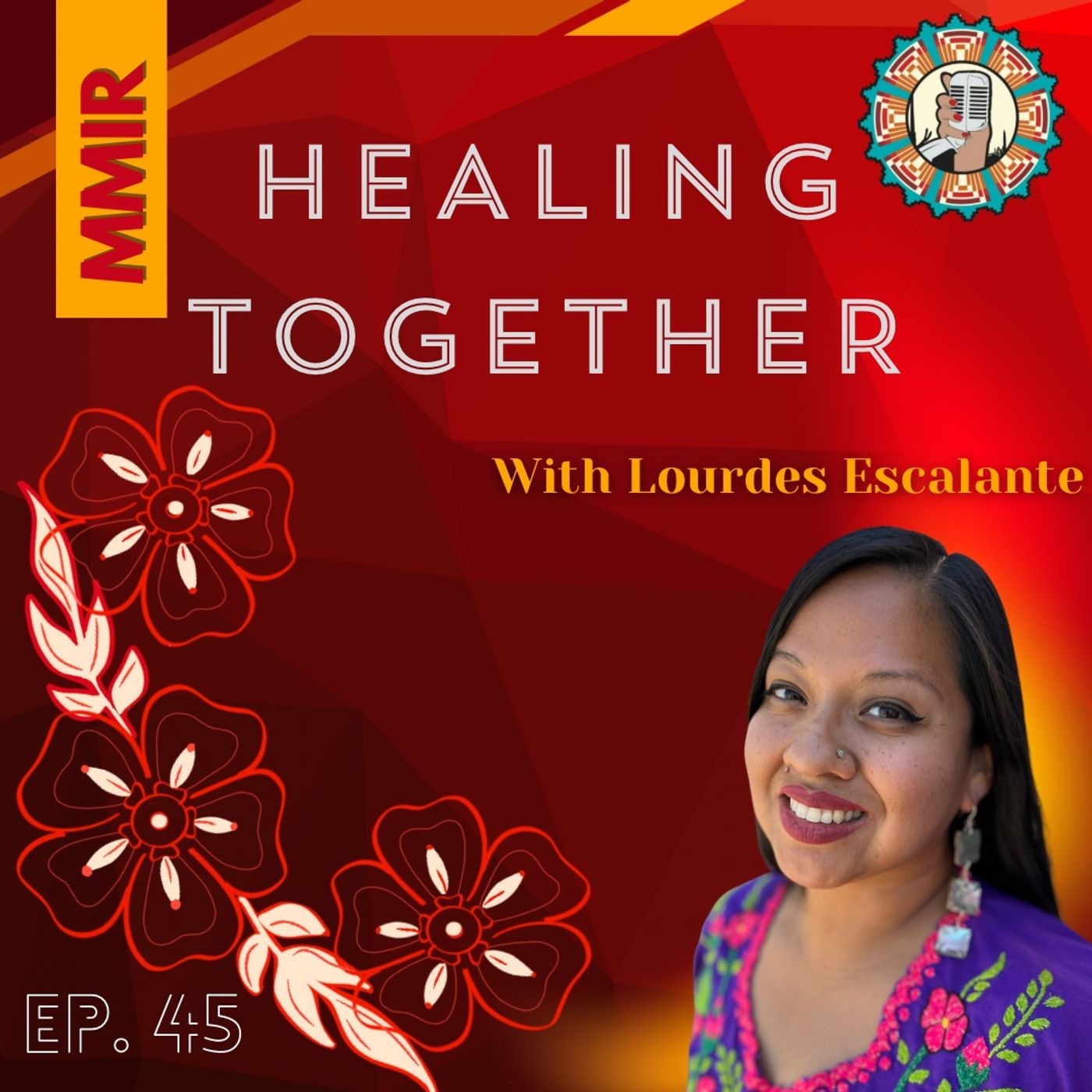
This episode features Lourdes Escalante, Executive Director of https://indigenousalliance.org/ (Indigenous Alliance Without Borders), who is heavily involved in the Tucson community and is a member of the Yoeme (Pascua Yaqui) tribe. The episode starts...


This episode features Lourdes Escalante, Executive Director of Alianza Indigena Sin Fronteras (Indigenous Alliance Without Borders), who is heavily involved in the Tucson community and is a member of the Yoeme (Pascua Yaqui) tribe. The episode starts off with a content warning to address the discussions that include accounts of domestic violence and death which could be traumatic and potentially triggering to some listeners. This thoughtful in-depth conversation addresses the culture of silence, lateral violence, femicide/feminicidio, toxic masculinity, and other factors that contribute to Missing and Murdered Indigneous Relations. Lourdes also gave an overview of the data and statistics from the Arizona Statewide Study in Partnership with HB2570 Legislative Study Committee. The conversation leads into spreading awareness about MMIR and best practices to begin to heal as a community, while supporting those directly impacted who have lost a loved one.
If you or someone you know is dealing with domestic violence, sexual assault, stalking etc. please see the helpful links below.
Helpful resources:
Emerge Center Against Domestic Violence
Missing and Murdered Indigenous People
Tohono O'odham Nation Komckud Ki: Domestic and Sexual Violence Prevention Program
Voices Unheard
Southwest Indigenous Women's Coalition
Stalking
Related stories:
Missing and Murdered Indigenous Cases That Deserve More Attention
Feminicidio Close to Home: Remembering Dr. Raquel Padilla Ramos
0:00 For full disclosure. The information discussed in this podcast is based on the views and experiences of the guests and the hosts. The content here is for general educational purposes only. The content in this episode contain discussions of accounts of domestic violence and even death, which could be traumatic and potentially triggering to some listeners. We care about your wellbeing, so take time before delving into this episode to light some sugly take a break, and if you need support, we will include resource links in the episode description. Please take care while listening. This is Tina Andrew here with you all them Young Voice this podcast. We are now in episode forty five, and if you've been listening closely to the past episodes, we finished off season eight and we talked about what is season nine going to look like or sound like, and we did say, you know, it's kind to get pretty heavy because we wanted to focus on certain stories surrounding missing and murdered indigenous people's indigenous relations. We kick started the season nine with Raymond Mattia Senior Bot and we're going to continue following history
1:33 as well and continue to support the family, but we also wanted to just continue the conversation you know it's important to keep these conversations going so that folks can continue to learn, especially when it's so close to home. And here we are in southern Arizona, whether it's on the Thauna Autam Nation or right here in Strukstron. I have a very special guest with us today who's been involved in the work of m I are.
2:15 Leo sent Mannavo Ineos Escalante deac Ne Ujuli di deak. Hello. My name is Lord Escalante. I'm also known as Ujuli in my community, which is translated to precious. Professionally, I'm the current executive director of the Indigenous Alliance Without Borders also known as the Al Sin Fronterras. I am also a member of the Honor Collective, which Honor stands for Healing our Nations, offering Resilience. I have done some of this work related to missing and murdered Indigenous peoples or missing and murdered Indigenous relatives since about two thousand nineteen.
3:01 You know, I've known and been following your work for some time, and I've gotten to know you a little bit more and more the more we do work together and to learn of your involvement in this type of work. Can you share a little bit of the history of missing and murdered Indigenous How did we get here? It starts with colonization, with the dehumanization of indigenous peoples upon arrival with Christopher Columbus, for example, that's when it started. That's when things were being documented, and that's when the land was also being affected, because we believe that the women are connected to the land, and if you are raping the land, if you are extorting the land, exploiting it, you also exploit the women as a result. With that in mind, m MIIW m MIP MMR, the roots go as far as back as colonization because it's still seen.
4:03 The effects of it are still seen and there are efforts of decolonizing and reindigenizing, but that can't be done if the women aren't addressed. And if the women and their families, whether that's two spirit folks, bisexual, you know, LGBTQ, two s, two spirit folks are also directly impacted in a positive way because they're also victimized as well. They're also part of those statistics. It all started off with MMIW, which is missing and murder Indigenous women, but then we started collecting data, and then you hear from other tribes. You know an elder male passed away or an elder male is now missing. Over time, it's grown from MMIW the women part, and now it's seen more as missing and murdered Indigenous peoples or the way honor collective, the way we use it. We say MMR because missing and murder indigenous relations puts a responsibility on us. And once we say this is our relation, it's showing the interconnectivity between all of us and how we need to look out for that uncle, how we need to look out for that cousin. It makes things more relational. It goes beyond personifying the people, because we are the kind of peoples who are always in community and we need to do something about our relatives who are being impacted by MMIW or MMR.
5:35 Over the years, I've learned a lot about the movement and supporting it in all the ways that I can listening to countless stories, and I can't help but think. When I'm driving through the streets late at night or any time of day, I can't help but think and wonder about other people locally right here in the Tucson area. Getting back to your work Lord of this, Can you explain the work that you do and how it relates to the movement of missing and murdered Indigenous women, girls people, so that that is. A layered answer because it's a journey. The work that I started off with was back in two twenty nineteen, early twenty nineteen, there was an event that was being coordinated with a bunch of Indigenous folks that were brought in and the event was called Take Back the Night.
6:34 That specific event, there was a lot of internal stuff that happened with the coordination of that event. What came out of it was a very intentional mmiw m MIR event that happened at San Javier. It happened at the Sanhavier co Op and as a result, a lot of the people involved, such as Melody Lopez, Leilani Clark, Summer Aguilera, and a few other Indigenous women. You know, we didn't want to stop there. I wasn't a part of the founding of Honor Collective, but Honor Collective was birthed out of Take Back the Night, out of being in community with each other because a lot of us women notice that we need healing around mmiw MMR and how do we do that That in and of itself was a journey.
7:28 So as far as kind of these tools that we all started picking up along the way, we started sharing with each other. And one of the things that helped us bind each other in community were the four rs. So the four rs are respect, reciprocity, relationship, and responsibility. So when you think of those four rs, it makes you think about how you relate to other people. Am I respecting this person? Am I giving them reciprocity where reciprocity is deserved? Am I treating them responsibly? Am I fostering this relationship? Am I considering it a relationship? From there, the Honor Collective has existed since then, and they do bring a lot of different modalities of healing in community as well. And it just doesn't stop there, right Because your question was you know the work I do. Another layer is what's happened to me since then? That take back the night event. It happened in April of twenty nineteen.
8:37 Later that year, in September, I was getting some clothes ready for you know, the hand me downs for my oldest son. I was getting his clothes ready for my nephew, who one of my first cousins had recently adopted. I had the bag of clothes in my closet ready to go. I was going to coordinate, you know, meeting her on the res at the New boss Qua Reservation. And on September twenty sixth, that's when I found out he was murdered. He wasn't just murdered by anybody. He was murdered by his stepdad. He was drowned. And whatever was going through stepdad's head it had to do with religion, It had to do with trying to cleanse the child.
9:22 Right. That's when I started realizing that the statistics do exist. Knowing that Tucson is the fourth highest city in the United States FORIW or MMR. It was heavy realizing that I'm impacted by those statistics. And when you look at the data that has been gathered related to m MIIW, because people are like, well, who's causing it? Right? Who are the perpetrators that are kidnapping our people, who are the people that are harming our peace people? And then who are the people that are eventually killing our people?
10:05 Right? But the key word is harm. There is harm being done. And at what point do we realize that some patterns of behavior are harmful. With that in mind. Once this study from ASU came out in twenty twenty, which was a year after my nephew was murdered, airs in a state university came out with a reducing Missing and Murder Indigenous Women and Girls. It's a state white study for Arizona, and it really broke it down, you know, as to who are the perpetrators. As much as people want to claim that it's non Indigenous peoples that are perpetrators, it's also in the community. It's also problematic people in the community who are upholding those behaviors, the toxic behaviors, the domestic violence, the issues with normalizing abuse in the household, and with honor collective, it's like, how do what do we do with that? Because that's also looking at ourselves and that's looking at how we were raised and realizing some of these things aren't normal and how are we going to unlearn that? Because unlearning behaviors is very hard most of the time. With these behaviors, you have to look at yourself and you have to see how you have perpetuated them. That's the multi layer response to that question, because, like I said, it's been a journey and it's crazy
11:37 connecting all of these things together. It's important for me on this journey to do that self reflection because with unlearning behaviors, you have to really look at yourself and how you connect with people. Then once you start implementing the four ours, the respect, relationship, reciprocity, and responsibility, then you can start healing other people, right, because hurt people hurt people, but then there's also healed people can heal people. Yeah, you're right, These same situations are from our own community members, people that we know, people that we're probably close with. Unfortunately, those things do happen, and that's hard to acknowledge sometimes, but it's the truth. It's part of these things and why they've happened. And thank you for being open and sharing about how that connection, that personal connection and what made you think about getting more involved.
12:42 When we talk about the movement and how when it first started or how long it has been around, there have been different things that have come about of it that has helped to symbolize or recognize MMIW. What's the importance of the red dress and the red hand for those who may not be familiar because even in on the res they'll ask what does this mean? I wasn't sure about what this red dress means. The Red Dress Project it goes far back to a metist artist based out of Canada and their name is Janie Black and what they did it was kind of like an artwork display and it was a direct representation of the clothing that these people wore. It was called the Red Dress Project. I can read this part. It positions the Indigenous female body as a target of colonial violence while reclaiming space for an Indigenous female presence honor. Collective, we've used this to help spread awareness. It speaked to us in all collective because from my point of view, because I'm Yaki, I'm a Yaki woman, the way our culture sees the color red is it helps the spirits see you. And it sounds like a lot of other
14:13 tribes share that same belief. Whereas when you see the red dress that's commemorating the person that was murdered or the person that's missing. It's definitely a tool to help raise awareness. Although a lot of people kind of question it. It's also going back to what I just read. It positions the Indigenous female body as a target of colonial violence. While reclaiming space for an indigenous female presence, because that female presence has been directly impacted. That's why MMIW exists. Also, going back to Yaki culture, the color red on our flag, our tribal flag, it's a representation also of the lives that have been lost historically with the Yaki people when we were dealing with our her own genocide under the Portfitgio Diaz dictatorship. He had the plan of killing off the women and children, and that's why many Yankee families fled and they ended up living here in the southern Arizona area. So MMIW isn't foreign to us, but we don't talk about it enough because those are our ancestors and the women have been disempowered in a very very specific and strategic way. MMIW does exist, or MMR does exist on both sides of the border as well. In Mexico, it's called femicide or femicidio. It's the strategic killing of the woman. And another personal example, and this I want
15:45 to say, this also happened in twenty nineteen. There was this lady. She was a historian. Her name was doctor Raquel Badri Ramos. She had a partner who was a Yankee man, and she was murdered on November seventh of twenty nineteen. Madraque is specific background. She was an anthropologist and a historian, specifically an ethno historian of the Yankee people of so not a Mexico She did deal with intimate partner abuse. That's what led to her murder, essentially, because her work wasn't easy, it was stressful. She helped advocate for a lot of what the Yankee tribe needed in Mexico, and she did defend, you know, the indigenous ways of life very unapologetically and very fiercely. In November when she was murdered. Essentially, she she had this way of coping with her stress, which was running. There's a lot of autum runners, you know, there's a lot of Yankee runners. That's how we traditionally cope with stress. You know, running is healing. Running is something we used to relieve our stress. So that's what Raquel did. Her partner didn't want her to go running, and he shot her point blank in the face. This is another statistic that happened in twenty nineteen, and that happened amongst the Yaqui folks in Mexico. So coping with this, first my nephew and
17:17 then doctor Ramos Rakos, it really opened my eyes to what are we going to do about this? How are these behaviors going to change? Because part of what people are figuring out in Mexico is it's a feminist side. That's what they call it. They don't call it and thenw but it is a strategic way and it's a mentality of misogyny. It's a hate towards women that has created this violence that ended the life of racket. People need to realize that you need to unlearn your own internalized misogyny. You need to unlearn your internalized lateral violence as well. And just to explain those a little bit more because I have learned so much about it, about lateral violence and how misogyny can really exist in our communities as indigenous peoples. But lateral violence, it's its own form of bullying and it's done within your community or it's also seen in the workplace. But lateral violence, it's strategic.
18:29 It's like organized harmful behaviors. The key word is harmful. Is what I'm doing to this other person, this cousin, this sister in my trying to harm them. So it's organized harmful behaviors that we do to each other, knowing already that we're already an oppressed group as indigenous peoples historically oppressed, knowing that we create this harm within each other. It's like that crabs in a bucket mentality. You put crabs in a bucket and once one of them starts kind of improving their life and try to get out the rest of them bring them back down. That's the comic book way of seeing lateral violence and in their like microaggressions and it's like always making fun of somebody.
19:15 It's a very harmful behavior and it's little sometimes it could be little, but those little things do snowball into something and it does affect people's mental health. Knowing what lateral violence is and then understanding, you know, misogyny is an internalized hate towards women, towards making fun of their body parts, how they look, how they smell, all of that. That's also a form of misogyny because we are not looking at the bigger picture that the feminine body embodies all of this. Were an ever changing species in the you know, in the human race, where women who go through our moon cycles. You know, we go through our menopause, We go through all these changes, We change in size all the time. And to me make fun of that and to make fun of our big emotions and our ever changing hormones, that is misogyny because we don't take the time to understand that we are beings who embody all of these different things. Unlike men, Men are a little more simpler. They don't carry as many hormones as we do. Their bodies aren't changing like us. So, knowing lateral violence, knowing misogyny, what are the opposites? What is the opposite of that? There's lateral kindness and how can you practice lateral kindness? And if you think of the four rs I mentioned earlier, the relationship, reciprocity, responsibility, and respect, those are the first stepping stones to practice lateral kindness
20:48 with each other. And it also helps you taper off that internalized misogyny because now, as an indigenous person, as a person who wants to be a healthy relative with each other, then you can start unlearning your internalized misogyny as well, and you can form more healthier bonds. Right, you can form a healthier community. Thank you so much, I mean, it's just like, the more we can inform the community on different terminologies or different ways of thinking or things to consider that can contribute to these types of situations, these you know, unfortunate situations, I think the better community can be. So thank you for sharing that information. And I also within the Autumn community.
21:37 Some years back, I can't remember what year, but during our rodeo Unfair the THECA Tournament, there was a whole display of missing a murder Indigenous women and girls. It was sad to see how many were there, and I'm sure that's not even all of them, but that was just like a handful of their pictures to see them, to know who they were, their names, where they were from, and on that display, I knew two of them. One of them was my nephew's grandmother, who unfortunately was killed, and another one was a close friend. We went to college together. She was doing so well. Her name is Kimberly Myers Bought and we did some great things in college.
22:26 You know, we were a part of student Senate, we were part of creating change, bringing aces Chapter to DOCC and it's still in existence today. But it's just sad to know that she's no longer here because you know, in life, she backtracked and she went back to her old ways of like drinking and drugs and well I'm not sure about the drugs, but drinking if anything. And she got her life taken by a group of people who are part of a gang who rolled up on her in their vehicle and shot her in the face.
23:10 And she had children, she left behind children. So yeah, it's just important to talk about ways where we can define what like getting to the root of those issues and those problems, and also looking within our own communities to create a healthy community. And I like what you said there being a healthy relative toward others. So thank you for explaining that. I know you touched a little bit about this, but can you talk about more of like what are some of the statistics. So I do want to read this quote first because it helps set the tone for the statistics and it helps bring it into context. And this quote is directly from the report I mentioned earlier. It's titled Reducing Missing and Murdered Indigenous Women and Girls. It is the asu Arizona State University Statewide Study in partnership with the HB two five seventy Legislative Study Committee. So this quote, it says, our matriarchs in our communities are disempowered. They are the voices and the community builders in our community. They oftentimes are voiceless because the community that are expected to speak for the community are the men. Those are the voices that are not speaking. How do we encourage them to speak? Right? So, going back to this report, there's a ton of statistics
24:44 and one that I can never stop saying out loud is Tucson is number four. We are the number four city in the United States that has significant numbers, you know, in missing and murdered Indigenous relatives. There's let me see this is this is going to get heavy because there's statistics related to is it urban? And people do ask this and during presentations like does it happen on the reservation? Does it happen off the reservation? I can give you these statistics. For example, fifty seven percent of these incidents in Arizona are urban, twenty three percent are rural. And rural can look like it can look kind of different every now and then, and then there are statistics that tell you, you know, how they were murdered. Was it by a knife of firearm or any other weapon. According to this study, twenty six percent are done by knives, and it looks like thirty three percent is done by firearms and then sixteen percent is other weapons. But that's the physical murder, right, But what about the spiritual murder before the life is taken? How are the behaviors being documented?
26:02 Because when we are spiraling and we go back into our former harmful behaviors, whether that harmful behavior is to yourself, whether that's drinking or doing substances, or getting depressed or cutting yourself or you're harming other people, that means your spirit is already struggling. Right. There is a direct correlation between that. That's spiritual suffering and then the actual abduction or the missing part or getting murdered, those are directly connected. So this specific study from ASU, it's pretty upfront about the actual murders and all of that, but it doesn't necessarily talk beyond that, right, because there are community members that have told me countless times over the years they're jaded, right, and they say, well, you don't start caring about Indigenous women until we're killed or until we're missing. When are you going to start caring about us? And it's true.
27:05 This is why I go back to with honor collective what we do in the community and how we're also healing ourselves and we're owning up to I'm speaking for myself, you know, owning up to these behaviors that have caused harm, because our behaviors don't only impact other people, but it could impact their spirits. Going back to my friend doctor Adraka Badia Ramos in relation to her femicide, knowing how much was her spirit already impacted leading up to her being killed. Her spirit was directly impacted by the intimate partner violence. At what point were men supposed to speak up and hold her her partner accountable? Who was a Yankee man? And then this is full circle going back to the quote I just read, because women are already feeling dismp powered, our voices are already silenced, and we are meant to be the community builders in our community.
28:07 As a result, we do feel voiceless. And the ones that are supposed to speak for us are the men. What are they doing? This isn't to hate on men, but it's also we need to stop and think, as a woman, how do we hold our men accountable in the first place, or do we enable their behaviors and put them on a pedestal where they can do no harm right, And unfortunately, that is another form of internalized misogyny because we're not holding our sons, our nephews, our brothers accountable for the harms that they do towards their women, towards the women that they choose to be around, and towards the women that love them, that want them in their lives. But how are they being loved properly? And that is something that I grew up with being a survivor of sexual assault, of child sexual assault, My voice was already diminished. It was silenced, and it wasn't until I was in my thirties that's when I started speaking up about it because I started learning how to navigate these conversations without so much anger. And it's natural to feel that anger as a woman and it's fine to express it. And a lot of us women are silenced because we make men feel uncomfortable when we voice our rage, our anger, our disappointment. And men need to stop and realize that they need to hold space for us. They
29:37 need to listen to us, acknowledge us, and validate us. Because traditionally, a lot of the men are the ones that speak for the community in the first place. How can you heal your community if you're ignoring our voices, if you're telling us that we're too much, if you're telling us that we're troublemakers, if you're telling us that we deserve to just be in the kitchen cooking for you and serving you. That doesn't address the abuse, that doesn't address the misogyny, and that doesn't address the toxic masculinity that exists in the communities. And those hard conversations need to be had. It's very uncomfortable for a lot of men who were raised in households where they can do no wrong, where they are seen as men who are coddled, who are made excuses for. You know, these mothers, these aunties make excuses like, oh, he was just having a bad day. But that's not right to commit domestic violence against your partner, right, don't make excuses for him.
30:45 Hold him accountable. And unfortunately, that's a hard conversation a lot of us and older women need to have with our men, because these men get away with these things. And it's not just indigenous men. You know, the toxic masculinity exists everywhere. It is a byproduct of colonialism and those attitudes of we must own women, we must hate women, we must control women, we must make sure these women look like X, Y and Z for our comfort. And there's a lot of movement in relation to unsettling that subtler behavior, right, that colonial settler behavior. It's the women's voices that need to speak up. And that's why, for myself, I wanted to do this interview because it's been a journey and I see the patterns. I see where movement can be made and people can heal.
31:39 Thank you so much for sharing that, and I think, yeah, you're right, those types of things I'm sure many people think about, but it's never really said out loud, it's never really really brought up in the household. But yeah, it's important. And thank you so much for bringing that up and talking about it, because it is so true. It is absolutely true, and I've heard I've heard many stories similar to just all the things that you've mentioned and brought up about it, and yeah, it is. It can be discomforting, it can be uncomfortable, but they're important conversations to have in the households or wherever in the community.
32:22 And thank you so much for sharing on the statistics. And that's why I wanted to focus on specifically locally here, so that people can just be more aware and you know, they can wake up and realize like where they're at, where they're living, and the impacts and how close to home it really really is, and to just take into consideration to be more careful, to be more aware, to look out for one another more often, to check in with one another as well, sharing your whereabouts with other folks as well, checking in with our own relatives, our friends who may be on the streets, you know, checking in with them and making sure they're okay. Yeah, So thank you for sharing that. So what are some of the top contributing factors to this situation?
33:22 One of the top contributing factors is the culture of silence. Silencing women's voices is disempowering them. It is taking away their agency. It is also gaslighting them. It is telling them that what they went through should be normalized, that it's okay, Silencing even the voices of young boys who were molested, Silencing the voices of elders who are being abused by their family, Silencing the voices of rape victims and saying, oh, he would never do that. Going back to this quote from the report, the last part of this quote says, to empower these women means creating safer communities and enabling that safety means allowing them to speak, allowing us to express as ugly and as uncomfortable it looks.
34:21 And I'm sure you've heard, like on social media this analogy that's been going around the US, and that's women choosing to be out in the woods with the bear over a man. That's a lot to unpack because being alone in the woods with the bear. Women are choosing that because it's more believable to tell everybody that you were attacked by a bear instead of a man. And the reason why it's harder to believe that you were attacked by a man is because there's always going to be somebody that says, oh, he would never do that. He volunteers here, or he does this with his family. He's a great he's a great uncle. You know, he does ceremony, he's a roadman. People always bring these things up, and that is a that is a perpetuation and continuation of the silence culture, and by some people also claiming that the Poscal Yaki tribe of Arizona does not have any MMIW m MIR statistics. That is also silencing us women who see it. I just gave you two examples.
35:29 If you look at the Yaki nation on both sides of the border, it exists on both sides of the border. My nephew, Guyan Baumeya, was murdered on the reservation by another community member. He was non Yaki, the perpetrator, the murderer is non Yaki, but this little boy still belonged to us, to our community. There was another account about a couple months ago, this young girl was dragged by a truck on the New Poscal reservation and she was killed. She needs to be considered in these statistics of missing and murdered Indigenous relations because it's not your cliche example of MMIW. But what can we do to prevent these things as a community. There's other statistics. There's a lot of statistics relating to Pasco Yankee tribe of Arizona. We do have community in the Yankee tribe that say, oh no, MMIW doesn't exist. Now you really need to stand back, and you really got to think about it because by saying that, you're also silencing those of us who are speaking out against it, who are trying to solve this problem, and who are trying to be a better relative with you.
36:42 So for me, that is a big factor is the silence culture. And I would recommend you know, community, like you know, listen to us. Listen to us when we start telling you that we have dealt with domestic violence, that we are survivors of childhood rape, that we did get victimized by this family member. Listen to us, because if you're not listening to us, that's when we feel invalidated, disempowered, and statistically, that's when drinking starts, that's when drug abuse starts, That's when risky behaviors start because we are not feeling supported or some women they decide to go into sex trafficking.
37:25 And statistically, at the casinos, sex trafficking does exist. It exists. Going back to not listening to us, not creating a safe space for us to speak, it will continue this vicious cycle and then the numbers of mmiw M MIR are going to increase. Yeah, I've heard you talk about that before, about how you know different ways or examples of like missing and murdered, And you've mentioned before that, yeah, sex trafficking is also a part of missing and murdered because many also that does tend to happen in that type of situation. And yeah, it exists right in our front doors, right here in front doors, back doors on the side, all around us here in Tucson locally as well. And you know, even for myself, I know those things. I know that information exists.
38:22 I know that it's close to home, so, you know, even for myself, when I'm out by myself, if I'm out shopping, I always check the backseat before I get in my car if it's at night time. You know, I always make sure, you know, when you open your car door and your indoor lights come on before like getting in, just just double checking, you know, making always looking at my surroundings because I am aware and I know that these things do happen. So the more you're aware you are, the more careful you can be as well in just keeping an eye out on yourself and your surroundings. Especially because I have a lot of friends who you know, we don't have kids yet, we're just grown women living our lives and doing work in the community, and we want to go have a day out, so we're out alone a lot too, So it's just just taking those extra precautions while you're out and about doing your thing and taking care of whatever you need to take care of those things just to kind of consider and just knowing the facts as well. And thank you for burning the sweet grass that we have going on especially you know, yeah, we are talking about some heavy topics, so burning burning something that will help us to heal, cleanse the area, cleanse the room. Thank you for doing that.
39:48 And what are some actions folks are taking for change? I know for me, I shared with you that we recently went to an event at the new Pasqua at their new health center, I believe, and it was just really cool to see what the folks there how they're addressing this. And it was good because a lot of community members actually spoke up, asking questions and confronting the leadership that we're there about how they felt about certain things. But it was you know, how they're taking action and raising that awareness, putting up billboards throughout the city of Tucson bus stops, bus stop benches, and putting on actual like the sun Trend buses as well. So maybe you've seen it in the area. But yeah, that's just kind of an example of how some people are taking action and spreading awareness. But what are some of those actions for change?
40:50 Yes, I can speak on behalf of my journey first, and that for example, is picking and choosing how I want to bring awareness and figuring out my triggers. Right because knowing that this culture of silence is very much alive, it's thriving, you know, it's like okay and the misogyny it exists, it is perpetuated on social media. Women are very much that topic of objectification and we're the topic of mental illness or we're crazy, and you know, as a result, we're silence for me. Over time, over the past few years, I created this Empowerment Project and this was birthed out of these conversations, these hard conversations and honor collective because it's so easy to call people out right, so easy to spread that energy. But how do you call people in and how do you change that narrative?
41:54 Because you can spew all this negative, negative, negative, but what can you do to reverse that and to normalize healthier behaviors. So one little tiny project I started is called Project semalu lugut and sem lu lugut. It means hummingbird in the Yaki language. Whenever you see a hummingbird out in you know, out in the public, out in the open, what are your feelings? Right? You feel excited? You're like, oh, that gets right there, Like it makes you feel happy instantly. So this project on my social media platform is meant to spark that. It's meant to spark that excitement, the positivity and not the negative. It's supposed to help inspire people, help them think, and it's supposed to bring healing. Part of it has been sharing, Okay.
42:46 One example is I made this meme with a background image by another Yankee community member, Selena Martinez. In the meme, it says, ceremony isn't the only time you are supposed to carry yourself in a sacred way. It is supposed to remind you that you are sacred and to carry yourself in that way every day. So that's one positive affirmation that I put together just to share on social media, so that that way you know, it's not just negative. And there's another example that I have where I used another content creator's language, but I made it applicable to Yaki people's and let me pull that one up. I forgot the name of that content creator though, like it was something that was shared some time ago. One of them is one of these affirmations is you are not any less Yaki because you are not fluent in the Yaki language, so that's a positive affirmation. Or you are not any less Yaki because you live off the reservation.
43:51 Another one is you are not any less Yaki because you are mixed race. That's been part of my process. It's related to m miiw right because I'm trying to reverse these behaviors. That way people can feel empowered and feel that they are not less than in the community. And it's to uplift the spirit and to grow the spirit. Other awareness efforts that I've helped to make change is I've helped with the Missing and Murdered Indigenous People's five k run walk with in Digit well Being and if you look up in Digit Wellbeing they are on Facebook and on Instagram. We help coordinate this run in community with each other and other partnerships, and we help bring awareness.
44:41 You know, like I mentioned earlier, running running is good to us. It helps us boost that serotonin in our bodies. For a lot of cultures, it helps us meditate. I've helped with coordinating that run for the past four years. It's been quite some time. And other actions that I help with to take change is you know, I try to support Honor Collective as much as I can. My capacity is always changing, being that I completed my first year as executive director with the AAC Infrontidas, but I try my best to at least support Honor Collective in their efforts because they do partner with Comchiki on the Altamnation, so they do that and and AC Infrondetas I posed that question right, women are silenced, women are victimized, Women are being impacted. The misogyny is impacting women. What are we going to do about the men? Where are they in this equation? There is obviously some kind of imbalance with their own empowerment and masculinity and their disempowerment in displaying healthy masculinity. Right, what is healthy masculinity? Because society teaches unhealthy, toxic masculine behaviors. The Alianza, we are hoping to start an indigenous centered healthy masculinity curriculum this year
46:14 and that is meant for men, Indigenous men and Chicano men who want to show up healthy for their family, who want to show up healthy for their partner, who want to show up healthy for their kids. Because when it comes to little boys, little girls, they see what these men are doing and they see what these men aren't doing. So that's another effort that we're making that way, and it's not just for us, but that way the men of the Allianza I can show up in a healthy way in community, and that way it's prevention, right, it's prevention of domestic violence, and it's prevention of MMIW. Because we've spent all these years bringing awareness, bringing awareness, bringing awareness, but what are we going to do about them men? And we do have men that show up that want to be of service, that see the bigger picture.
47:06 So in a way, bringing this curriculum, this healthy masculinity curriculum is going to help amplify them, help empower them in a healthy way. Because we are always in community out here in South Tucson and Yaqui and than Atam nation because we as the Alianza, we have Indigenous People's Day and that's a big event. We invite everybody and how is How are the men in the Aliansa going to show up for the community on that day? How are the men of the Alianza going to show up for this MMP run that we help collaborate with every year, and how are they also going to show up in their community and in their families because the behaviors need to be changed and unlearned and healed on all levels.
47:51 Because the men are always here, They're always willing to serve, they're always willing to help us. So that's another way that we're trying to make change in the audiance. Thank you so much. So with that being said, what are ways people can help raise awareness or contribute and support the movement of missing and murdered Indigenous relations. Going back to the curriculum, the Indigenous Men's Healthy Masculinity Curriculum, I think helping fund programs like those because it's prevention of domestic violence, its prevention of these unhealthy behaviors. It also helps bring in young boys. Part of this curriculum, the adult men will be taken at first, but the intention is for it to then go teach young middle and high school boys and going back to the men that are going to be participating in this curriculum, how many men go out of their way to volunteer. A lot of men they work out in the heat, they work in the service industry, or they work in some kind of trade. It's valuable work. But at the same time, are they going to have the energy are they going to be willing to use their time to participate in this curriculum. So for me, the way I see it is, you know, men are providers. Men are natural providers. They are protectors, and we need to feed them. They deserve
49:24 to at least be fed. It would be nice if we can offer a stipend for their time because we are taking them away from their families. Usually these men are also caretakers for their elderly mom, their elderly grandma, whoever it's. You know, incentivizing them helps a lot because this is also going to be uncomfortable, emotional unloading for them. People can help contribute by either offering a meal, offering some kind of donation because we are able to do like that tax deductible kind of donation through our fiscal spon. Sir, also have those hard conversations at home, because the more you start talking about it about people's victimization, about your own victimization, about your experiences and how you felt uncomfortable and how you felt unsafe, and how your experiences need to be validated. Keep speaking out and keep speaking up about it, because that's the only way we're going to start healing and moving past these harms, and that's the only way we can grow as healthy relatives in community.
50:34 Those are my two cents about how to raise awareness and how to contribute and support. As we're going to be closing out this interview, I want to thank you so much, Lord of this for taking the time and really going in depth conversation about the different questions and examples and statistics all surrounding the topic of missing and murdered Indigenous women, girls, people relations. And thank you so much for the work that you do, for the time that you take to be involved and to spread this awareness and create opportunity for a community to come together. So thank you for the work and the part that you do in all this. With that being said, is there any least comments shout out things that you want to add as we end this conversation.
51:29 My shout out is to the women and the men who need to speak up more there are men who are silenced because of the culture the way. Oh you know, it wasn't that bad. Oh you're just being this way, you know, for the men that we really need to hold those conversations with them and their victimizition and validate what they've been through so we can heal. But most importantly, I do this work about raising aware and healing from MMR because I'm raising two boys. I'm raising two sons. I have a twelve year old and a two and a half year old soon to be three. But I want them to show up in this world in a healthier way so that women can feel safe with them and so that they could leave that legacy of being a healthy male in the community is even if it's just the Yacke community, you know, like you got to start somewhere. So that's my shout out for my boys, you know, because they're one day they're going to listen to this, and I hope that they could appreciate the work that myself and many other Indigenous women have done.
52:40 Who see my boys, like the women from Honor Collective, the women from the Audianza, we're all in community. So that's my shout out. Well, thank you so much for being a guest on the podcast, and thank you to the listener for listening in. I'm sure you learn plenty and for all of those who want to learn more, be sure to check out the description will have links that you can check out and learn more about this topic specifically. And thank you so much you are listening to the on Autum Young Voices