 Apple Podcasts
 Spotify
 Castro
 RSS Feed
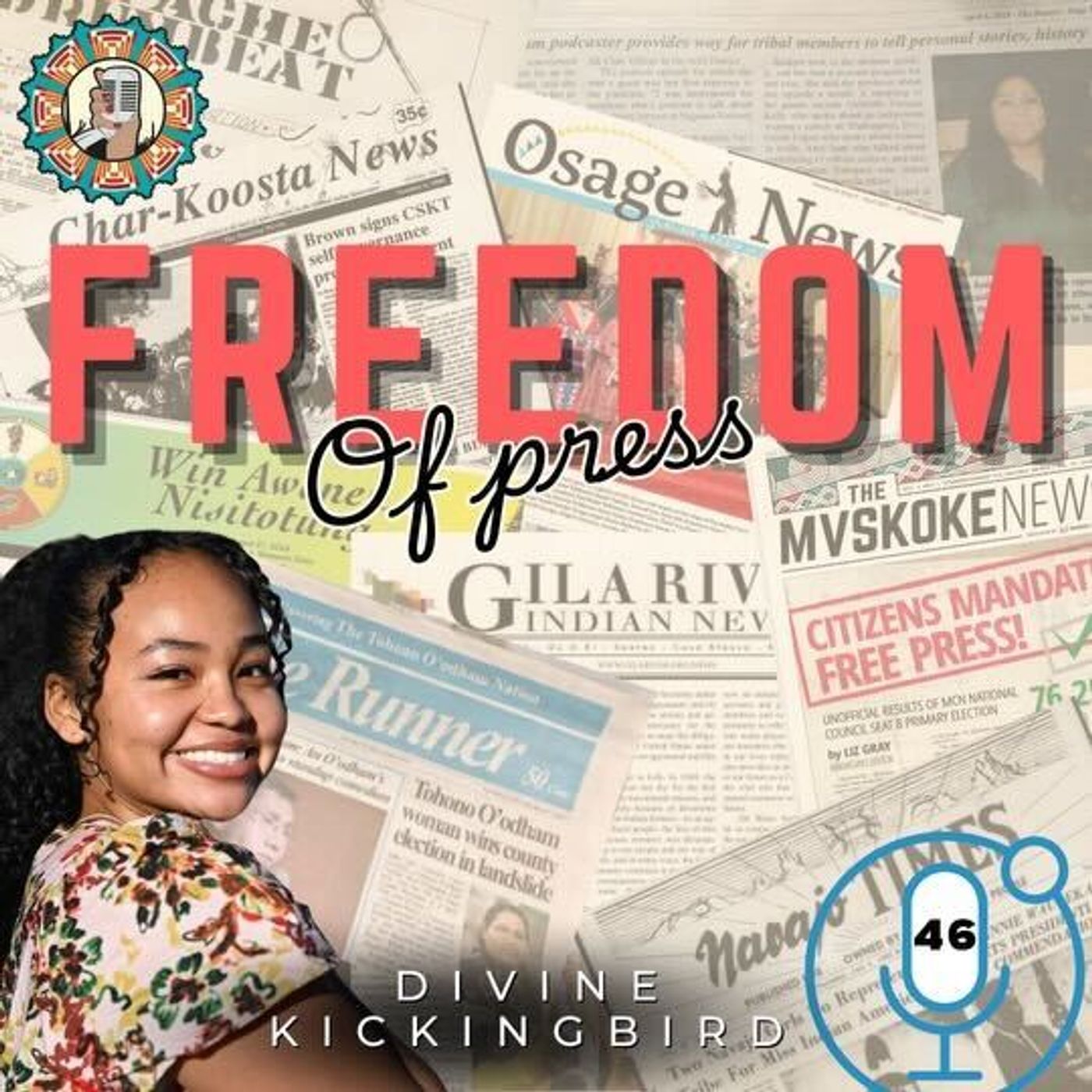
In this episode we collaborated with University of Arizona Diné law student Divine Kickingbird. Hosted by Bre and Divine, both law students at the University of Arizona, this conversation gives a foundation of the history of the Indian Civil Rights...


In this episode we collaborated with University of Arizona Diné law student Divine Kickingbird. Hosted by Bre and Divine, both law students at the University of Arizona, this conversation gives a foundation of the history of the Indian Civil Rights Act (ICRA). They also shed light on how ICRA intertwines with indigenous journalism, news organizations, and the potential challenges they may face in their quest to provide unbiased, transparent reporting to Native communities. As you tune in you will hear both Bre and Divine lead the conversation while host & producer of Tohono O'odham Young Voices, Tina, sits on the other end of the mic. Tina shares with us the importance of indigenous journalism and how Tohono O'odham Young Voices began. We also include a discussion about the Indian Civil Rights Act of 1968 as we delve into specifically how freedom of press is affected for native news outlets.
As podcasting has become a growing and popular industry to share content and have dialogue about different topics, many Native/Indigenous individuals and groups are using the platform to share information that is important to them and their communities. For those same reseaons Tina shares her journey into journalism and how ICRA and other legal challenges have shaped her approach to honest and uncensored news reporting. Moreover, the importance that Native voices are in the media.
About the co-host: Divine Kickingbird (she/her) is a law student who describes their upbringing on the Navajo Nation with teachings of the fundamental principles of conservation from their family, elders, and community members as core to their identities and values. Divine Kickingbird is
Hashtl'ishnii and born for Nahiłii. With this podcast episode she hopes to continue to educate others on important indigenous topics.
Sources
Indian Civil Rights Act
Bad Press (Collective Eye Films 2023)
Indian Self-Determination and Education Assistance Act
Intersecting Laws: The Tribal Law and Order Act and the Indian Civil Rights Act
0:00 For full disclosure. The information discussed in this podcast is based on the views and experiences of the guests and the hosts. The content here is for general educational purposes only. This is Bria, a podcast team member for Two Young Voices, and it's been a while since we've made an episode, but I'm very excited to be here today with a Hello, Native law student from the University of Arizona. So I'm in a positive words of Divine now to introduce herself and tell us a little bit more about our collaboration today.
0:49 I'm Divine and I'm a third year law student at the University of Arizona. This podcast is a part of my final project that I'm doing for my media law class system. I'm incredibly excited to have this opportunity to talk about this subject today. So today we're going to talk about the Indian Civil Rights Act of nineteen sixty eight, also known as AKRA, and its impact on Indigenous journalism. This includes a brief explanation of AKRA and its impact on the freedom of speech and press, as well as the obstacles that Native American journalists and Native run news organizations face. And today we have a guest to join us on this journey today.
1:31 Yeah, so this episode is a little bit different. Maybe wondering why I'm introed and Tina's not spoken, But today Tina's actually going to be our guest, and we wanted to include her for her perspective and background on this conversation because she's a long time advocate for Native voices. So I will past to Tina. Now that is my intro. Thank you about so much, and just excited that I, you know, to be a part of this conversation and this type of dialogue. And I want to thank Divine for reaching out to us and including us as part of her work as a student. All right, So to start off today, I wanted to give just a quick overview of AKRA. This is going to be a very focused topic about freedom of press and speech, and I know there's a lot to say about AKER in itself. So the Indian Civil Rights or AKRA, became federal law in nineteen sixty eight. It was passed by Congress as a result of hearings on the Authority of Native American Tribes which discovered abuses from tribal governments.
2:36 Sections of the lamrror the United States Constitutions full of rights, and it offers some but not all of the same protections. And ACRA came about because it was Congress's attempt to balance the complicated issue of protecting the civil rights of American Indians while also recognizing the authority of tribal governments. And we also again want a preference that there could be more said about acre itself, but we want to keep this so focused conversation and maybe in the future we had more conversations about it, But go ahead to mind okay. So, like Breed wonderfully explained, Ikira was an act passed by Congress in nineteen sixty eight. This is one of the many acts passed during the time that led tribal nations and communities out of the determination era and into the self determination era. The termination era was an era between nineteen fifty three and nineteen sixty eight where federal governments attempted to terminate their federal obligations to tribes, as well as institute programs that terminated the official tribal statuses of some tribal nations. They created assimilation programs and extended the state's jurisdictions into tribal nations with public law to eighty with IKRA was a new era, the self determination era with Native American movements like the American Indian Movement or AIM began and several acts like IKRA and the Self Determination Act were passed. The essence of this era was tribal autonomy and sovereignty. This leads us to IKRO, which is similar to the Bill of Rights, which is why it's also called the Indian Bill of Rights. It afforded tribal nations and their members similar rights that we see in the Constitution. And to quote the first part,
4:09 no Indian tribe, in exercising powers of self government, shall one make or enforce any law prohibiting the free exercise of religion, or abridging the freedom of speech or of the press, or the right of the people peacefully to assemble and to petition for a redress of grievances. This means that when a tribe tribal nation, in their power to self govern, their tribal members cannot inhibit the freedom of religion, speech, press, assembly, and redress of grievances like the ones we see in the United States Constitution. The portion we will focus on today is the first one, the freedom of press and the freedom of speech. So with that, we are going to start with our questions Satina and I know we've spoken about Tina's background a little bit, but for those who don't know, or maybe this will provide more contacts, we just want to start with, how did you start this podcast and what were your goals in doing so?
5:04 How I started the podcast came in twenty sixteen, and it was during the presidential election, and at the time, there was just a lot of things happening, you know, being a community member from the Borderlands region here in southern Arizona, there was a lot happening and circulating around migration and immigration and tribal members, and there was just a lot of misinformation and labeling of tribal members that we were all involved in illegal activity. We were just in the media, even in local news online articles. There was just a lot being said in regards to this region and the international Boarder And at the time, I just felt that we needed a platform to reach outside of the boundaries of our tribal nation, and I discovered podcasting and utilized this platform to have conversations and share our truths and share our stories, share our perspectives about who we truly are as a people, and you know, the misconceptions and stereotypes of what people assumed that we were.
6:25 And I feel like it's definitely done what I said out to do. It's done that, it's doing that, and I'm super happy and proud of that. And I'm just excited that we're at where we're at now considering where we started and why we started, and that's always going to be the foundation and the roots of this podcast, and I'm just really happy that it's just something that people a source resource that folks trust. So we asked you, how did you start your podcast? Were there any initial goals you had that you had in mind other than the ones you've already accomplished. Were there ones that you for sure really wanted to hit.
7:09 The first thing was to get information out about the integrated fixed towers. Back then they were it was just being proposed, and so talking about the environmental impact statement and just really reaching out to the community to let folks know about this information. So that was the first initial goal. And then of course later on in the years as the podcast grew, I always had a dream that I wanted to have a podcast team, and I always told myself if I ever get any funding, this what I want to do. And in mid twenty twenty, during the pandemic, I got my first grant funding and in the grand it was ran in to hire a group of team members different roles and responsibilities, as well as creating a website. So developing a website, so those who are a part of my go so again utilizing this platform to quote, tell our own stories, build a podcast, dream team, develop a website, and not only engaging listeners through various conversations, but being a resource in the community as well as being an online resource for educational purposes.
8:28 That's really awesome. So with that, we're kind of being a transition to why Aqua is important. We've heard how you've started this, what your goals were, and what you've accomplished, which I think is really amazing. The team you have crafted. I mean, Brie is here another Indigenous Team podcast member. Why is it grew important? Well, it affords tribal members with rights that have not necessarily been written in their own tribal constitutions. Some Native Americans have felt that it allowed the federal government to extend more of their jurisdiction into tribal land. For example, federal judges can overrule some tribal court decisions and some laws, but others have felt that it has given tribal citizens a way to hold tribal officials accountable when they abuse their authority, and in some ways it is a sword in a shield for Native Americans.
9:19 Yes, I think that's such a great point. And so while IGOR guarantees freedom of speech and press, there are still many instances where tribal governments have used authority to limit or suppressed truthful media reporting that may bring to light issues within tribal governments. And I just wanted to think to Vine for bringing this topic to us, because I hadn't really heard much about it or dumped into the issue myself. But she recommended a documentary titled Bad Press. It's a twenty twenty three sentence winning documentary showing the effects of the Muscoge Nation's decision to repeal the Free Press Act just ahead of an election, which eliminated the only independent media outlet that had been reporting on tribal issues. The documentary FA follow journalist Angel Ellis as she fought against her tribal government's attempts to censor the media. Their travel government was using its control over the press to hide corruption, and this put the entire community at a disadvantage because they no longer had reliable information about what was really happening in their own government. And the film also highlights how indigenous nations have the sovereignty to create their own laws, yet many to support freedom of press due to historical trauma and pressure to present a favorable image of travel governments. And it was very shocking to me that in the documentary they mentioned that out of five hundred and seventy four fatually recognized tribes, Misgogie Nation was one of only five to establish a free and independent press. This was until the nation's leglary branch abruptly
10:49 repealed it. Just some other important things to know. I think I could make a wholder episode just about what this documentary talks about and what it touches on, but I just wanted to inclut some it's from the documentary itself. Something I wanted to point out is that for tribes there can be an imbalance of power, and so when the governments are corrupt or doing things not in the best intentions for their people, sometimes the only defense that people have is to speak out and inform their people or communities about the issues within their government, and that is with freedom of press. And I think the documentary does a really great job of emphasizing the importance of freedom of press and journalism and especially truthful journalism, especially through voter censorship. And it also just reminds us that we need honest journalism, even though it may not always be in the best light, because it shows us that we're moving forward and we're addressing things that need to be worked on. And that's okay. I think one cult he is kind of funny in it. I'm not exactly sure what she said, but she said sometimes you need to put your dirty chonies out on the line and look the air out. I was like that. But yeah, really want to emphasize that the media play an indispensable role in how the community interacts with the government and how they view it, and especially during the election, by giving voters access information that will allow them to make informed decisions. Yeah, and just to end the constitutional amendment guaranteeing free press did pass, so that's really good. But yeah,
12:22 if you haven't watched it, definitely do. And yeah, I'm in a perspective Divino. So this is an obstacle in a way for journalism that has led to organizations like A Flow's Fire, which is an independent Native news source. These issues have led to journalists being fired or even may lead to a fear of reporting important news information to their communities. As pre explained, the freedom of speech and press is important for tribal members to be informed on the government initiatives. That affect them. And I have a quote from Jodi Rave Spottedbear, who is the founder of A Flow's Fire, and she says, the first Amendment to who the US Constitution has served this nation well right now, no such constitutional press freedoms exists for most of Native America. I imagine the social and economic state of our tribal communities would be faring much better if we had an informed citizen jury. So it is important to make educated decisions when it comes to voting for laws that are passed on tribal lands and to vote for people who represent you. And to continue on this topic of independent news sources, we will continue this conversation with Tina. So have there been any challenges you've experienced when you've reported news as an Indigenous news reporter in the past, any obstacles in connection to ECUA or obstacles that tribal nations may have.
13:44 Caused, do you know. To be honest, thankfully, there hasn't been much from tribal entities or even individuals or groups or organizations. No one has ever come forward and said, you know, you need to stop doing this, which has been really, really good, and I'm really grateful and thankful for that. There are times where I felt like I expected it and was wondering if I put this episode out, is this going to bring any backlash? And most of the time I know I'm taking a chance, but that's okay. I'm willing to risk and take those chances for freedom of speech and freedom of expression.
14:30 Not just me. It's not about me. It's about individuals and telling the stories of community members and sharing our truths and perspectives of the challenges and the barriers and things that interfere with our daily lives. But also at the same time, things that are important to us, things that are being carried on, whether it's traditionally, culturally or even in a more contemporary light, bringing that to light, as well as sharing information and in a more contemporary way, which is super important. But I think IKRA I learned with my own research learning that IKRA, the Indian Civil Rights Act, supports the right to free speech, allowing tribal Native podcasters to discuss cultural, social, and political issues without fear of retribution from tribal authorities. And of course there's just so many different elements, whether it's cultural representation, community engagement, and one big thing too is activism and advocacy is a big part of why this is important.
15:39 So I just wanted to cut into a click because that reminded me just to go back to that press again, like following what Tina said about how important transparency accountability is for tribal communities. One of the quotes from Angels, the journalists the documentary said that tribal citizens need reliable information about their governments just as all citizens do. And this transparency and accountability that I just mentioned is essential for any government to thrive as which they emphasize on. But I think it's also important for the community to thrive just as a whole. With that, Yeah, And I think this type of platform, as a podcaster, it provides or it enables discussions about our identity, our rights, and our community issues, and it helps just foster a better understanding of Native and tribal perspectives.
16:38 You know, growing up, a lot of the traditional values and lessons, including the language I learned, was oral, taught by someone speaking to you, telling you their experience, teaching you things through their voice. Do you see that like being able to advocate with your voice with the podcast isn't in line with your traditional values as an Indigenous person and in line with the laws in place with IKRA and the freedom of press and the freedom of speech. I feel like it does. As much as I can try to integrate who I am and who we are as autum, whether it's talking about traditional harvesting or different times of events or different seasons and times of the year, sharing that information for educational purposes, but also knowing the boundary of culturally sensitive information.
17:37 I'm very very careful of that. Like most of the time, I see it as like we're just sharing information that's already out there that other autumn have done throughout the years. When it comes to putting out a YouTube video of how to pick this, how to harvest that, how to you know, but we're just putting our own spin on that information, but I've always been very careful and protective of things that could be culturally sensitive. Okay, that's awesome. You told us that you you did some research on AKRA, and in doing that research, have you seen how your past experiences or your past podcast has kind of interacted in ways with your goals with your podcast, your news reporting.
18:27 Learning about ECRA and the freedom of speech, it was really good information and good to know information because. I guess I just never thought of that. I never thought. Of like not having this type of platform to share accessible information to the masses pretty much. But this was a really good learning experience for me to have a better understanding and idea of what things that we have in place in Indian country, the protections that we have in regards to freedom of expression. So that was really good information to know.
19:10 Yeah, No, I totally agree. I think I think I said it earlier, but I'm very grateful that, you know, Divine brought this topic to our attention because I've learned so much in this little time about our protections and i just can't shake the fact that only five tribes have you know, freedom of press laws, which you know, being a lawsuit into something I'm going to hold in my heart and my mind as I continue as school and you know, keep its something maybe that I want to, you know, be an advocate for work towards supporting in the future. But just to continue, we had a couple more questions for you, Tina. So do you feel like tribes that are funded by their tribal governments can truly release unbiased and up to date news to their communities?
19:54 Hard questions. Yeah, that is a hard question. I want to believe that it's not by you know, and that people have the freedom to share whatever that information is without a tribal government entity hovering over them and making sure that they're sharing information that they want them to share. Yeah, that's hard. Yeah, no, I agree. I think when you know, I was watching the documentary and I was researching a little bit. It really reminded me of my undergrad and public health and learning about research about indigenous peoples and indigenous data sovereignty and how CRUEC shield is in information that we release because of the way that outsiders, especially the government, will view it and or skew it, and you know, they could use it against us, which is really scary.
20:49 So I think that I also agree. I wish and hope that everything isn't biased and up to date for the sake of the communities, but you know, to keep ourselves in checks, balance and balances. But it is scary. I think that's something that I think why governments or communities may be pushing back against freedom of press, which is kind of what was going on in the documentary. But yeah, hopefully, you know, as more tribes begin to adopt it and other tribes can be more comfortable with the idea, then as we go forward, this can be more of a confident answer. But yeah, so next question, how do you report news in an unbiased manner? To give me any communities to information they need to make informed decisions.
21:35 Bring in guests that have experience or expertise in various topics, because I don't know everything, and I don't claim to be an expert in knowing all these different things. But I do like to do my own research when it comes to a specific conversation that we're going to bring to an episode. But I mostly want to rely on individuals who have experience in whatever the topic is, or expertise or an educational background, or who've been doing this work for years. I want to rely on the individual on these guests, So I feel like that's a way of going of like being unbiased in certain conversations and topics.
22:18 So I think that that's definitely a way that I've learned to bring in all voices and perspectives. Yeah, No, I definitely agree. I think I'm also very appreciative of you and how you work and how you've created this energy and kind of community of the podcast and through you, I've met so many amazing different people with different skills, and I think it's really cool that you bring in people to highlight, you know, all the different backgrounds of people within you know, different tribes, specifically your tribe. I think it's really important to give people like this access to this information where they otherwise wouldn't have access to it, which I think is the beauty of podcasting and just really amazing to be a part of.
23:05 Yay I'm gonna pass it back you to buy. Yeah, I agree. The first part of the question, the one about do you feel like you can be unbiased when you're fund about child communities? I think that is a hard question to ask, but I think one thing about being a journalist is that there are code of ethics that journalists followed. So I think that at the end of the day, it's up to the journalist's discretion to make that choice to report something unbiased and to be open to whatever happens to them when they tell the truth. Just looking at the Society of Professional Journalists and they have a code of ethics and their first thing that they say is. Seek the truth and report it.
23:46 So do you think that that is something you do with your podcast every day, that you step inside the booth and talk to experts on whatever they are willing to share. Yes, I absolutely agree with that, and I love that. I feel like it's you know, as podcasts, we serve as a medium for community engagement and dialogue, promoting awareness and education about Native Indigenous issues, whether it's within our own communities or outside of our communities, and it increases visibility for us, especially with podcasting and how it's grown, because in twenty sixteen, nobody knew what a podcast was, and here we are in twenty twenty four and it's everywhere.
24:33 It's just grown. This industry has grown so much, but it's been beneficial for us for me, So yes. That's so awesome. And with that, what do you see as like the future of news in terms of Native communities, the future of podcasting. I mean, like twenty years ago, there was no podcasting, you know, So what do you think the future is going to be for Native communities? And I guess another question on top of that is what do you believe your impact is on Native youths when they engage in these communities such as this one and become inspired to do the same. I think what the future looks like for news reporting and sharing of information in Indian country is I feel like podcasting is definitely the starting point as far as like accessibility wise with a younger generation because I see and I'm gonna use the Autumn Land Defenders podcast as an example, because they are two young Autumn individuals who came to me and wanted to start a podcast to talk about different topics in regards to the land in Sanavir, which is pretty close by here in Tucson, and they were able to get a podcast up and running and it's really it's a really good podcast and it shares really good information. Yeah, it's definitely to see more of that, I feel like. But also I feel like We're going
26:04 to see more natives and indigenous people in news outlets. I know for a long time there has been more of a national news I don't know remember the name of it, but I feel like that that could happen more. And I'm gonna use also with Hillo River. Helo River Broadcasting Corporate. Yes, yes, I'm going to use them as an example as well, because they don't have any ties to their tribal community. Yeah, they're independent. So I see more of that happen. And even in the hospitals when you go to the Indian Health Center and you see the TV screen and they're sharing this information about your health and it's kind of got little skits and things like that, and it's an ongoing thing. And of course social media.
26:51 Social media is definitely a big part of sharing of information, but of course you always have to be careful because what's accurate, what's not accurate. But as long as you as an individual do your own research instead of just like truly trusting somebody's what they're saying, I think that's also a big part of sharing of the truth and also educating yourselves. That's awesome. Yeah, Well, thank you guys, both so much for this conversation. I love being a part of it, and thank you Devine so much for reaching out to collaborate with us and thinking about us for your project. It's very much appreciated. Any last thoughts from anybody.
27:33 I want to tell both of you guys thank you so much, because you guys could have, you know, said no, but you guys were just ready to go and talk about this amazing subject. And I think that me and re learning about this it kind of opened the door in a way because I realized that there's so much to talk about, and I was like, you know, maybe this is the first time a podcast is talked about AKRA and how a podcast and other news sources like this are important and maybe it can lead to a more feature series now these types of topics when it comes to like law, native law and how we're affected as indigenous people, and maybe it can do what we have talked about this whole time of making educated decisions in the future.
28:21 Yeah, you could talk about this all day, but yeah, I think what we've done for each other in the least a couple of few days, I think would be amazing to do for you know, the wider public. Because being a native student in law. Very rare, and so before this, I don't think I had anybody to reach out to or to get you know, quick, fast, reliable information that directly applied to me, or I could hear from you know, people of our age and our backgrounds. So yeah, I think I'm very excited about the future from you guys. Should start a podcast, I agree, I heapily agree. I actually we need more of these conversations, especially locally. And that's the thing too, is like there are not enough local podcasts happening here. But yeah, thank you Divine for reaching out and share with the masses of the Indian Civil Rights Act. So if you're more curious about it, I'm sure they're going to share some links in the description so that you can look more into and learn more about what it is. And also one thing I know you mentioned a little bit about like all the different parts of EKRA. There is a lot that can be included in all this, but hopefully you the listener took something away. And of course, if you ever have any questions want to reach out, the fastest way to contact us is either through email, our website, or our social media, So please feel free to reach out or
29:53 even if you have any questions or want to reach out to Divine, I think that you know you can hit us as well. I just one final thought. I just wanted to note, you know, from everything I learned from today, I think it's important to know that the fight for a free press and Indigenous nations is far from over. But documentaries like Bad Press and stories likewise remind us that the importance of journalism, honest journalism, holding each other accountable is very crucial. And so hopefully this is a see too many other conversations, you know, for the listeners and for us as well. Yeah, and as a listener, if you're wondering what can I do, you simply listening and educating yourself on these subjects and engaging with indigenous news sources like this one, is you doing your part.
30:44 And with that, I just want to thank you all for listening in. Hopefully you enjoyed it. I know I definitely did. Don't forget to check out our social media's, our website, listen to us on almost every platform. Thank you, Thank you listeners for tuning into today's episode. On to your young voices. Make sure to go check out the other episodes. You can find us on Spotify, iHeartRadio, Apple Podcasts, or wherever you listen to your podcast