
 Apple Podcasts
 Spotify
 Castro
 RSS Feed
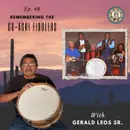


In this episode, we’re remembering the Gu-Achi Fiddlers with Gerald Leos Sr., the last living member of the group. What made their music so unique is the way it blends traditions from multiple worlds. The Gu-Achi Fiddlers played lively Southwest fiddle tunes that carry clear traces of Mexican folk music—alongside influences from Central European traditions, like polkas and waltzes brought by German and Czech settlers. Over generations, the O’odham hemajkam adopted these imported styles, adding their own rhythms, ornamentation, and community-focused energy. The result is music that is instantly recognizable yet uniquely O’odham—a bridge between cultures, history, and generations.
Gerald shares stories from his life as a musician, reflecting on his time with the Gu-Achi Fiddlers and his experiences playing with other bands, including his own, the Red Feather Band. Also, joined in parts of the conversation is Gerald's wife, Gerry, who is the daughter of Elliot Johnson (baḍ), who played first fiddle and was lead of the Gu-Achi Fiddlers.
This story hits very close to home for me, because my grandfather Lester Vavages (baḍ) played second fiddle in the group. I have so many good memories of hearing the music and time spent with him and my grandmother Annie Vavages (baḍ).
Tune in to the conversation as we take a look back at the music, the memories, and the journey that shaped Gerald's life, where the music is not just entertaining—it’s a living connection to the culture, history, and the O’odham community.
Recorded Feburary 2025
EPISODE CREDITS:
Produced, edited, and mixed by Tina Andrew
Graphic designed by Tina Andrew
LINKS:
Be sure to follow and tag the podcast on Instagram, Facebook, and TikTok!
0:00 This podcast is for educational purposes only. The views and experiences expressed are those of the host and guests. The content shared here is based on research, personal experience, and publicly available information. There are moments when history isn't found in books or recordings, but in the voice of someone who lived it. Some music fades and some music survives because people carry it forward. I was honored to sit down with the last living band member of the Gatchi Fiddlers, a group that carried the sound of old time autum fiddle music across generations. This music wasn't displayed, it was lived, passed down from generation to generation, story to story, and it was a band that annuosc Lester Ravagess Buck was a part of. He played second fiddle in the Gaachi Fiddlers.
1:21 In this conversation, we're listening to history through the voice of someone who was there, preserving a tradition that still echoes today. The legacy of the Gachi Fiddlers music lives on not just through the opt them houmach Gum, but to all walks of life internationally. Here to share his life experiences as a musician and as a member of the Gachi Fiddlers. Is Gerald also known as Jerry.
2:02 Oh Yeah, Gerald Leos, senior ukimer Atum from Saxophone Flats, got introduced to the music with the Goatchy Fiddlers. I think it was around eighty eight eighty nine. Elliott asked me if I could play the snare for them. I don't know anything about the how to play without a bass drum and you know the whole drum set up, Yeah, just a snare until they all kind of instructed me how to play. So I just followed what they were telling me, and yeah, that's how I got introduced or got with the Fiddler band. And when you first got introduced with the band and you started playing, what was that experience like for you coming in? And how old were you then?
2:52 I guess my late forties or mid forties. When they had asked me to play the snare for them, and we did gig out in Teo quite a bit, I mean kind of all over we were asked to play. It was kind of strange because I'm used to the amplified music. Yeah, playing my bass guitar and the drum, I mean, singing the vocals for Red Feather, it was kind of awkward. Just to do the snare, but listening to them as they were going and what they were telling me followed followed the guitar on this one. Listen, when the spittle is changing and the bass drums, you gotta do like a little role or something to to match the bass drum when he's boom boom boom. Then it goes doom doom, doom doom.
3:45 You know. So that's what they were telling you. Wow. So they were pretty much telling you the old style of how it was back then before all these other instruments were introduced. Yeah, Uncle Tommy was kind of really instrumental on that one because he was sitting right next to me. You know, I would look at him and he would shake his head and yes or no, you know, no not that way.
4:33 So we you know, do you rehearse, rehearse, and you do them over again. So that's what he did. He was telling me, and this is how you do and have a certain role when it changes, and yeah, that's how you do it. It's kind of funny, but you know I learned it. Wow, that's so cool. So before gotcha for the Lurs, you were in other bands? Uh, yeah, started out in the early eighties. I guess my sister and her husband, my brother in law. They had a band, family band in Blackwater and my brother in law, his sister husband played the accordion and they were looking for a guitar player and then they said, but we need a bass player too, So I said, okay, I'll do the bass. And one of the sons, my sister sons, my nephew, he started playing the guitar and we couldn't think of a name at that time. Everybody was saying Ray Chili Peppers, Hot Chili Peppers. And we did parties in the backyard at Lester Antone's place. Then people heard us and then started the bar in Coolidge out Main Street. They hired us and we owned that place for like two years. I think, oh wow, Yeah, every weekend we were there, and they just kind of
6:06 evolved and evolving. But when we did get kind of situated on everything, Jerry came up with the name of my wife. Oh okay, she said, well, why don't you guys say Redfeather. Yeah, and then they just stuck. Then, so as the years went on, everybody started dropping out for different reasons. Yeah, and so I took over Red Feather and had all these different players, including our boys, our sons, Mark and Rick. Yeah, and new drummer Irvin Lopez.
6:57 Auction initiated Carl Kandia into the band because we had a gig in San Carlos who were gonna do and we're looking for an accordion player because Lester he quit And I asked Carl said he ready to play? Yeah, I don't know, and he said, I only know four songs. And I said, well, you know four songs, mix them up. Do one song, but play a chaude two step massoutka and cumbia. Out of that one song, you'll get four songs. And he thought about it for a while and he said, oh yeah, okay, okay. So that's when Carl came into the Red Feather Band and we just kept going and then he kept learning and getting new songs or different songs, and we just kept going that way and did a lot of traveling, played for a lot of places. Yeah, and in the beginning too, going back trying to squeeze the fiddlers and playing with the Red Feather. It was kind of real busy.
8:02 Yeah. Yeah, as a musician yourself, you have to fit your schedule and you know, yeah, tiring. I'm learning. This is this is probably just the beginning for me learning trying to make time for practice and especially when we do get like gigs and making sure we're practicing for those gigs and what songs are we going to play? Yeah, it was an experience for me and thankful that I did get that they did ask me thinking about it after when Elliott and Lester passed on, and I thought about it and said, wow, yeah, yeah, I won't get that back, and but I had that privilege to play with the fiddlers.
8:53 So can you name the members of Gotcha Fiddlers and what they played? My father, Elliott Johnson, he was a fiddler, I believe it was a lead fiddler. Leicester Ravage's uncle Lester he played second fiddle. Uncle Wilferd Mendoza he played the guitar. At the beginning, Uncle Tommy Lopez from Auction played the bass drum, and then after Tommy, then Mike Francisco from Nordick he played the bass drum, came in, and then our son Mark Leos he played the snare on a couple of gigs because I couldn't make it. Then after that, well, uh permanently. After that, I took over Gerald Leo Senior as a snare player. Yeah, we're all from well Elliott, Lester Wilfert. They're all from Gauchi District, Mike Francisco I believe it Cels District, and myself from Hilly River Saxotone Flats.
10:05 You know the information that is out there right now, most of it they'll say that the members are from Goachi Village, but Goatchi is actually one of the eleven districts of the Thorn the nation, and in each district lies multiple villages with different names. So before, in your younger years, before, what was that like, Like, when did you decide that you wanted to be a musician. Oh, way back in the sixties, nineteen sixties, that's when I started playing the picked up the guitar. I don't know anything about it. I just see things on TV. Oh, black and white TV. And one of the home bands back then, you know, Sacktone Flat. They were a rock band starting out, and I would hear playing practicing and I kept thinking to myself, you know, oh man, they can do it, I can do it. I was trying to tell my cousins, but they were. They didn't want to.
11:12 They made fun of me or laughed at me and stuff, but I didn't care. Then my other cousins they started picking it up. Then we started playing and we had it. We formed a little three man band. We played a gig in Coolidge one time at a bar and we were just kids, but they hired us. So we went there and played. We had this on the stage. We had a black light, well they had a black light that was set up in there. We played anyway, and we were all wearing T shirts, white T shirts and you know, with the black light. They call themselves the t shirts. But that was only one gig. My aunt owned the bar and that's why we got in.
12:00 So what kind of music did you guys play? Rock and roll? Cool? Yeah, sixties rock played that? Did you sing even then? Yeah? Started there, then went on to high school and about my sophomore year, this fellow from Sells his name is Milford, Milford Thomas, but well he passed away and he was starting a band and he was asking me, you know, can you play? Can you play? So yeah, And this other fellow, his name was Justin Garcia. We knew him ass Freddy. I think it was from Mahoe. Huh, yeah, from Mahoe. And this one Apache guy was it Manuel or I can't remember his name. And this one other boy from santan Hilo River here his name was Aaron, Aaron Pratt. And then we started playing, and well, I don't know what happened to Freddy. He was our lead singer.
13:04 The guy could sing, but I don't know what happened. And he just didn't want to do it anymore. So we would play for the school dances at the auditorium at PI. Everybody said, oh, Phoenix Indian School. Okay, the old Phoenix Indian School. Everybody said, come on, Gerald, you can do it. Do it sing? So I always sang from there on. Yeah, I played the played the bass. Then it just kept going after that, and well I left school. We got married in seventy three, seventy three, yeah, and then started working and I didn't play for guys eight or nine years. I think my sister when, like I said, when they were starting their band. Yeah, that's when they asked me to play back in eighty eighty one, somewhere in there, nobody to sing. Some pushed me out there again. There I was.
14:06 And then that's at that point you were read it was Red Feather Band. Yeah, after it became Red Feather Band. Isn't Red Feather Band still together? Or when was the last time? When did that? Kind of gosh, you've been about eleven years? Oh yeah, longer longer. Here it did eleven so maybe like. Fifteen, yeah, about fifteen years. It was just getting harder to practice practice, so we just kind of all decided, well, it's time to move on. So we did, and then Carl formed his band, Carl and Buddies, and Urban was his drummer, and yeah, picked up people from there. Oh okay, I see, yeah.
14:46 Well were it's nothing bad. We didn't go out that way. It was yeah, time for different inn era. Yeah, everybody wanted their own thing, and our boys, Mark and Rick have their own band, and Carl got his. Yeah what's what are your boys's ben? A smokestack lightning? Oh yeah, okay, oh yeah. But you know, it's been a it's been a long ride and a long trip for both of us, Me and Jerry. She always went with me, we traveled him. She didn't get to go to Alaska with us. So because uh Helo river, I forgot what kind of conference they were having, and they tried to get the fiddlers from here from Healo River to go play, but for some reason they they didn't want to go. So Lester Antone from Blackwater, he was our recording player at the time.
15:44 They asked him, you know, well, will Red Feather go? So he asked us, and let's go. And they paid for everything, car rental, flight, hotel, everything got to me, equip meant for us and did the whole setup. All we had to do was tune up, plug in. And wow, that's nice. Yeah, when you have everything set up for you already. Yeah, And they had the sound crew and everything. So there's some achi fiddlers. And then I know there's been other fiddle bands. Do you know any of those other fiddle band names? I remember one from here from I think it's Leonardstone.
16:28 He had a fiddle group. I remember if they had a name or but they used to play, but now they're all believe they're all gone. I don't know. Yeah, And I believe there was the Senevir Fiddle fiddle band. And then I remember hearing about something that Wilson's fiddle combo maybe yeah, yeah, yeah, from so during your time, you know, being a musician. I know, like when we first crossed paths. I remember you as the bus driver. How long did you do bus driving.
17:09 At the boarding school Center Rose Boarding School? Nine years? Okay, nine years yeah. Or nine seasons because we got furloughed during the summertime. Yeah. I met a lot of kids, they all growing up and parents. Now, yeah, some of. Them, I remember some of my dog. It was pretty good. I had a lot of fun with the kids everybody. I used to drive all over. Plus I coached oh yeah, yeah, coach baseball with coach Lopez, basketball, softball, baseball, softball. Yeah. Oh we had football too, go football. That was pretty good.
17:50 Got to travel when it was a boarding school, when they had the dorm, they would always request me to drive them on field trips. Eighth grade class. He went to Disneyland I think four times. I think, oh, got to take Jerry and Rick went with us. The first time our son Rick and j R. Drove down there with the lay Deloitte Lopez. He was the other bus driver. That was fun. Was that that the last time you were at Disneyland? Yeah? Way backward. So you say you guys traveled to Alaska and then for traveling to Port Townsend. Tell us that story. How did that happen? When who made contact and what year and all that stuff. What was that experience?
18:40 Like? The year was ninety or ninety one somewhere in there. Pete McCracken, Peter McCracken. Yeah, he contacted Elliott and I guess they worked it out somehow or however the thing came about. So he asked if we wanted to go. So we did, and so we all went. They flew us out there, paid for everything to uh was it Spokene, Washington and there then we met a group of people that were from the fiddling festival that they were having. Then they picked us up there and drove us across this floating breach really yeah, into Port Townshend. Because it's a little place, we didn't know anything about it. And then they started telling us it was an old Navy base.
19:29 Then they started telling us that an Officer and a Gentleman was filmed in that location where we were at. Then we start, oh, yeah, we've seen it in the movie. See this place in this place? Oh yeah. Then we were there for about a week. We had while the fiddlers they had classes every day for different students that wanted to learn the music and all everything behind the music. And so Elliott and Vester were pretty busy. And then we did hunt two. Three concerts I did hear what's two? Yeah? Two concerts we did that was open to the public. That final concert, what was a big concert. A lot of people had a big, big top buff there and what was his name, Dave David? Yeah, I don't remember his last name, but he was the MC for that last concert that we.
20:21 Did Southwestern Arizona. These people have been known in English. The word that described these people was pobbed the girl. Now, before we get into this part of the story, I have a story of my own that I want to share about the audio you are about to hear, which is a piece of Gaachi fiddler history that is a very rare video recording of their live performance at the nineteen ninety Festival of American Fiddle Tunes in Port Townsend, Washington. This recording took me years to finally track down, even though I have a close family member who has a VHS copy of this live performance. But because it is a rare recording, I could say why they would be hesitant of lending it out. Well, this video recording is something that I grew up watching with my whole family during the holidays or maybe even random times. My eldest uncle would pop in this VHS and we would all watch it. As I got older and began doing DIY archive work on my own, collecting old census documents, finding online articles, and ote photos of my own family history, I began to have the desire to track down this recording, so I asked my family about it, and there is
21:53 only one family member who owns this copy, but it's been stored away for so long, who knows where it really is. And when I wasn't having any lug with even just finding it and wanting to watch the video, I put it on the back burner for a few years. Then, as I began to think about the idea of featuring the story of the Gotchy Fiddlers on the podcast, I began to think about possible other archived content I maybe could find online. So in doing my research, I came across a podcast called Kraken the Vault, hosted by this mehreta gun man named Peter McCracken. The episode featured a short story of the time members of the band were invited to perform at the Fiddle Festival in nineteen ninety at Port Townsend, Washington. Peter was actually there and got to meet all the members of Gotchy Fiddlers In the segment Peter titled it but So thirty five the Gatchi Fiddlers and Man may Leckey, where he also features snippets of the audio from the VHS recording of their performance.
23:13 After I listened to it, I thought to myself, I have to track this man down. This person could be the only way I ever get to see this long lost video. And you know, by this time it was the year twenty twenty one. When I first made contact and found his email. I immediately sent him an email and hope to get a reply back. Thankfully, he did reply, and he quickly wanted to chat on the phone. So we got to talk, and he was happy to learn about who I was. Hello, Hey Peter, good morning, and told me his story about the time he and his friends invited the Fiddlers out to perform at the Fiddlefest.
24:03 Okay, now I know we've taken a little detour, but I'll be back to finish up the story. After this rare audio clip from nineteen ninety. Enjoy southwestern Arizona. These people have been known in English. The word that described these people was papago. But papago is a word that came from the Spanish language, a word given by Spanish people who first came into the New World. And it's of course a bastardization, a deformation. Of the word in the people's language. I was really interested to learn that, you know more and more in America, people are learning that maybe you can go ahead and call the group by the name too oh them, which they call themselves that I'm mispronouncing.
24:51 But I learned later that a lot of the music they're going to play for us tonight, which was originally introduced by Spanish priests. Specifically, one of the early Arizona was Father Keno. You may have heard of Father Keno. He was a very prominent priest in the eighteenth century in southern Arizona. And the music was played for masses in the church and has continued to be played that way, but has also spread out and has played for weddings or community celebrations parties. And I was talking to some of the members of the band who told me that the music is played quite often at what's called piast. Is that correct? Piast? Which can you guess what word that is? Where that came from? Yeah, Marla, yes, Spanish, what's the word fiesta?
25:44 So it's very charming that even the Tona Odon people have managed to deform a Spanish word into a word they can use for the names of these parties. I should tell you about the band. Over here. On the bass drum, the big bass drum, and this may be your only chance to actually see the player of this bass drum. This is Mike Francisco. On the bass drum, and on the snare drum is Gerald Leos. I've I've had the great good fortune to spend a fair amount of time with Jerry and his family. His wife and child is up here, and if you see them, it's really easy to talk to them because his name is Jerry, and his wife's name is Jerry, and their son is Jerry Junior. That's that's because it's it's hard for us to remember exotic names. So and on the guitar is Wilfrid Mendoza, and on the fiddle here the smilingest man you'll ever meet.
27:01 Leicster Vavages. And right here next to me on the fiddle, Elliott Johnson, please give a big round of applause for the Guaci Fiddlers. Okay, my first number is uh. Louis is a Spanish name. I don't know what that means, but I just know the name is.
28:17 Now you're probably wondering where, how, and when did I finally get a copy of this videotape. Well, fast forward another four years. I ran into Gerald Leo Senior, who, as you heard during this interview, was the snare drum player for the Gaachi Fiddlers. It was at the beginning of this year, in January twenty twenty five, that I got to talk to him in person while helping prepare for a family member's week service in off Chin Village. Another thing I forgot to mention is that during my time of thinking of how and who I could talk to in regards to helping me tell the story of the Gauchi Fiddlers, I didn't really know who I could turn to. At the time, I was so fixed on tracking down this VHS that I hadn't really thought of that part of well, who's going to tell the Gotchi Fiddler story, it has to come from a close source.
29:29 But as fate would have it, there I was exchanging contact information with Jerry in regards to setting up some time to do an interview with him on this very topic, and it was actually Jerry that loaned me his copy of the VHS tape of their performance and even his VCR. To make a digital copy of the video, I used what is called a a VHS to digital converter that connects a VHS to a laptop and uses software to digitize videotapes, cassettes and video recorders to make NP four FiOS.
30:13 So yes, mission accomplished. I was so thankful to Jerry and his wife Jerry for their hospitality in their home and for sharing photos of the band members. They definitely helped with the missing pieces of the story. Now back to the interview. And there was surprisingly there was some people from a three point oh really yeah, because we played some songs and Elliott was describing, Yeah, this music very popular down on the reservation, close to and then somebody from the audience, yeah, close to three points and then always said, I don't say that, you're making me thirsty.
31:06 And then we were all laughing about it, but some of them didn't understand because they're not from Three Points. The stories behind Three Points. Well, that was pretty cool that we did our encore performance. Yeah, so I was pretty pretty good. Experience got mixed up on the day so and oh. Yeah, the time difference, yeah, m hmm. Because we were Ellio has said, you know, practice this evening, go practice. So we all got together fiddlers went to go practice and going out and playing and everything. Finally started getting tired and said, well what time is it almost midnight and it was still daylight?
31:49 Oh really? Whoa where did they go? Just ran away? So what were's people's reaction to learn about this group of natives playing fiddle music and the types of song even the way that even how they describe it online, I've seen them describe it as just like something a mix of different things that it's just so unique. Yeah. I think they were pretty interested in it because the one group from New Mexico, well they're kind of scattered New Mexico, Nevada in California called Bioseco. Oh yeah, and they really picked up on the music they wanted to learn. Just listening to Lester and Elliott and playing and I don't know how to really describe it. How they were following. One was a high, one was a low, one was a lead, one was a follow. They were pretty interested in it, and they wanted to form a band over there, and they're asking, uh, oh, we had a cookout I think it was, and uh they wanted to play some of the fiddler songs that they had learned.
33:11 And then they said, yeah, and here these guys or who was cooking. Vomitch Oh, we were myself and uh uh uncle Mike's wife Josephine. They cooked some walwiches and they were asking, you know what it was, and then they said, yeah, we're gonna name her band yea, oh getting into it. Yeah, what it was. Like was that when they got there, they were like they had classes and like my dad and uh Leicester were the fiddle part, and then they had the guitar part, and then the snare and the bass, so they had their each they had students like and they would learn different songs like that, I mean, the different tunes and stuff.
34:08 So then when they at the end, then they all like more or less like a talent show, oh together and they they played, Wow, they played and yeah, there's there was quite a few, take about almost ten of them all together from California and some up there from Seattle, yeah. And New Mexico. Wow, that all got together that what they were their students. Wow. So they were just they really like, brought you guys to do more than just perform on the stage. Yeah. I also read online that it's like an annual thing, annual Wednesday night and they call it Gachi Night where they still get together at this fiddle festival and they play gotcha for the little music.
35:03 That's probably by your cycle. And they were the ones that just kind of kept it going. Can Ken and Jeannie one was O'Leary, wasn't it Oh. Jeannie o'liary and Ken. Knuppler yeah a Knoppler, Yeah. Yeah, they were still in contact. Well, they were all still in contact with them. And they won't come and visit up there at Kai. Oh yeah, I'm. From California to New Mexico and the one lady from Seattle, Washington, and they won't camp out over there, just sit out there and start playing. Oh really it didn't matter, just grably going at it.
35:44 Wow. They came here a couple of times, and that's what they said, asked me play the guitar, hero, We're gonna play some songs, and here I was. But some of the their tunes too that they were doing was Cajun music kind of sounded the same in there, you know somehow the beat, So they did a lot of that. That group by your Second kind of like it was easy, but they were still saying it was something different with the yeah mm hmmm hm, the autumn side of it.
36:27 Yeah. Yeah, I just want to remember Stevie. Uh he sent a text, I think to Jerry or a video. He thought he heard this man on the street he was playing the gatchy Fiddlers. Really, I don't know where. Oh wow. I don't remember the whole deal behind it or what he said, but he said it kind of just blew them away that the guy went on the sidewalk playing. That's so cool. Yeah, man, And they've been well Biocycle, they go overseas European countries and they played Godler. Yeah.
37:08 So they're really continuing the keeping the music going and alive. Yeah. They live in Silver City. Uh huh. Do you know how and maybe Jerry, you know how did Lester and your dad connect and like how when did that? When do you know the story of like when Gachi Fiddlers kind of became a band. I think it. Started from when I'll call them late Uncle Augustine love Us from Chuca had this mariatric group or like something like a Mariachick group, and he would ask being that Lester was from Chucca, so you know, they know each others.
37:57 And then and then somehow they got a hold of my dad and then my dad started playing with them too, and they would perform here and there and test grand and stuff. And then after that kind of went down and then and then I think it was when they were when that Walk Festival was gonna happen. Oh, then they heard that there was gonna be a fiddle band contest. So that's when I guess Uncle Leicester wanted to go. He was asking my dad, you know it's over and try it. So that's when they that's when they started and they came together. And then from there then they just people started how it goes, People start hiring them or asking them to play, and yeah, invites started coming from the church feast that they have and stuff celebrate its.
38:51 Yeah. Then that that's where it just kept going. Well, do you know about what years that might have been in the beginning, like during the then into the. Well the late seventies. I think it would be probably. In the late late seventies, yeah, or the late sixties, cause I think I was kind but I was still in high school m oh Okay when my mom would say. That that they went to go practice. So my dad played with a lot of uh other scratch bands, but he did the guitar, yeah, with the Cisco band and those guys from Ajo Mattias. And he. People would ask him to play, so he would do the scratch band music, I guess scratch music. But it was then when these guys STU. I can't remember the the name of that group, but I know Augustine, Uncle Augustine was in there and his name was Leonard. I think Leonard Lopez. He's fuh from the the Lopez family on se Rosa on the on all in the on the east side. He was part of it too, So I think it was in the late sixties side.
40:09 Wow, So now you know now that you're we're at where we're at today. I know you talked about how you were glad that you got to be a part of something with Gatcha Fiddlers and the music part. When you think back, what do you what do you think that you miss most about the group or being with them? And yeah, kind of kind of just sometimes I didn't listen too well, you know, to the music, or I didn't get really involved in it. I could feel it, but I couldn't really absorb it until sometimes when I play my cassettes or my CD, I missed there that they're not here nomore. Yeah, Yeah, because I could talk to them and joke with them, and they would say things about, you know, a certain song, what they remembered about somebody, what they were doing at that time, and we'd be all laughing because it was funny just being around they were older men. I did pick it up, but it was just at that time it was kind of hard to really experience it, I guess, but I I feel I felt it after when they left left us. Yeah, and Uncle Tommy would say, play that song, play that song,
41:39 un Lester, and ELI would look at him, say what song that one song about that old man Gabby Hayes. Gabby Hayes song, Play that Gabby hay song, and hey could quit it and we start laughing because Gabby Hayes, I don't know, if you know, he's an old western back from the fifties. Oh yeah, movie star and he had a beard and an old guy, and he's always the clown of the movie. Okay, And that's what they would be laughing about. Was that song? What was the song?
42:20 Gosh, it's a it's a scratch, I mean a two step. Oh okay, but I don't remember. How do you know where they picked up the songs or where they learned the songs? So because some of the songs are pretty unique, even like there's my favorite song off of the recorded one, like you never heard that song anywhere else. I always I'm curious just to know, like what is that song go? Even that one, because it's like different and I've never heard anybody else, or I don't know, it's just caught a two step, but it's that one that goes how does it start? It's kind of like slow, like it almost sounds like a waltz. Yeah, yeah, excuse me.
43:46 I think on that part it just a lot of it. I'm not sure on Uncle Lestra's part of it side of it, but my dad was I guess our family was into the fiddle all from a grandpa, his dad and all these uh brothers and cousins that were there. The Johnson's from Kababbi. They had a band at that time. They would play the music like that, uh fiddle music. Don't like that. Noh yeah, Johnson's from uh like those. I don't know if you're a you know those Gloria Johnson and Marion Johnson, Rose Rose Johnson. They think it's just Marion and Gloria that's left right up and Kabobby Mary Johnson my aunt.
44:35 But those guys, they were all piddl fiddle players. I guess, oh wow. And that's where it came from dad's site. You will be. He was always been in fiddle player. Yeah, but he would do like that guitar also on the side, and we grew up with that and that's where they count him sometimes when we were up there, when we were just kids, said Kababbi would we would go up there or the feasts and everybody get all excited. Who's gonna go after the generator? Cause that's. Get mad at each other. Make sure you get enough gas. And that's how they used to just play like that. These like what do you call it not no electric guitars are no drum, big old drum.
45:20 Set, all acoustics right here. Uh, I mean it will go. I mean that's how how I remember the bands. And it was always like that, you know, some once in Hawaii it all will be in the most of the time I was guitar came from that side of it. But on my dad's side, that's how I remember. But m other ones I'm not sure. Like I was surprised Alcotomy played. I didn't even know the uncle Wilfrid. Yeah he he uh participated with the church groups and he will play the guitar choirs, I guess and stuff and he will play and yeah, yeah, I never knew Uncle Lester don't I mean played violin until they started playing. Yeah, so it's so quiet, I know, say anything. So the price when they all got together and they asked him to play, and Mark and our our son mm hmm, because he's he's always been into rock and roll and everything and never played. I never thought he would get into fiddle. I'm glad he did, mm hmm. Say the same way with Mark.
46:31 Yes, Like when they introduced us at Port Townshend when we did the concert that MC. His name's David, but I remember his last name. He was introducing the guys in the banding and this man over here, the most smilingest man that you'll ever see, he said, Lester, that was pretty cool. But a lot of the songs were some of the songs that I remember that Elliott had composed on his by himself, and he just Lester her followed him and picked it up from there, like memories in Kobobbi and Libby Bird's.
47:13 Song, Oh really wow. Yeah, Libby was our one of my my nieces and my older sisters. M my, my dad was saying out and she was practicing that one song, and I guess he she was just a little girl. Then she said he was out there playing and he was practice practicing, and then forty soon all these little blackbirds started coming around when she was sitting there. I guess I don't know if she was eating or what she was doing, but they all came around and they were around her when she was sitting there. After that, he that's when he just called that song, named it Levy Blackbird. Wow, that's so cool that.
47:53 There was another one to I don't know where that came from that was peanut Shoes. Yeah, I guess it's just things that happened while they're playing it. Uh, they just pick it up after that. Yeah, like a lot of the scratch songs that are you know that all the bands play, they have this different styles of playing. Like I hear when the fiddlers were playing, they will play the song. Then I hear these other bands playing them. They said, oh wow, they changed it because everybody changes it. Yeah, a lot of Mexican music is like that. Yeah, they changed. There will be one the original one will be there, then another band will pick it up and change it all the way around. Just like when Red Beetter when we did Made in Japan, we played it one way. Then after that everybody started following and they played the song. Yeah, and a lot of the songs that we played at that time with Red Fetter, they some of the bands picked it up and they started doing their own versions of songs. And yeah, the same way with the fiddlers, you know. That's uh, the scratch bands in.
49:04 Ality play the song those songs. Just different style. Yeah. Yeah, but yeah, Elliott did do original some originals and the bands picked it up. Yeah, that's cool. I don't remember if uh, I know they recorded it was uh and then if they called it don, it was called don and there was always uh always the that was the last song time or I guess my grandpa's and those guys so my grandpa my his name, so they Johnson, my dad's dad, and then the other other ones that h his his brothers too that uh they made that song. They put put that song together.
49:48 It would play the feasting coabab com in the beast day and kababi and uh when they just one if the son was coming out. There, uh play that song and they just called it. I don't remember b if they called it, say are they yeah yea or something like that. But anyway, I just named. It dog oh okay or one of our our songs like the Thompson's family. But it was too bad. There was no recording things done at that time where they couldn't record. I don't think it would have been either for the fiddlers, but I your daughter's kind of bright them into going into Kenyon to record.
50:29 When what's his name? The old man uh Foley? Uh No, the old man no Ray. Not Ray Bowley was there, but there was another one to the owner. I forgot they just went blank. You said his name Robert Robert. Robert Robert was there later on. But yeah, but anyway, I guess cause they they they didn't wanna go. I guess they kind of like didn't wanna share their songs or the Uh. Yeah, I forgot what my dad said or how he had put it. So they finally they finally went in and that's when they did their person. That's good that they did, though. Because this one says Robert Doyle, Ray Bowley, Steven Butler, Jack Miller.
51:15 Ray Bowley said, the old man, Yeah, I guess that was him. He's passed on though he worked. With him, kind of be sneaky about it. But after one day then he he fed us to that day when we went over. There miss some restaurant and fed us lunch. The Ray Bowley and then he said, and I'd like to thank Ricardo for thank you for bringing the bringing the fiddlers in. Busted him a long ways too badly staying out. I guess nobody's really doing that. And it's like you're saying.
51:58 You guys are So I started start playing the accordingon in twenty eighteen, and I've just been learning through YouTube. That's how I learned. And then, you know, once I learned the song, then I talked to Steve, and I talked to Uncle Isaac and Uncle Lusha's and I was wanting to bring the music together again with the new generation and not be the Express but just Vavage's family band. And so just when Uncle Lou came back around just last year, it was me, him and LeHo and nephew Emilio, and we started playing together. And then we now we're just going to cheat you and playing there with Isaac and Steve. When he's back home, he'll come and he'll play with us.
52:47 But you guys are going to be doing different you just a regular like fiddle music and scratch music. Like yeah, yeah, that's kind of what we're doing. I don't jam the fiddlers too much, but when I do it, you know, I still feel it. Yeah, So do you still play? I mean, so you don't play with any bands anymore, you're just you know, yeah. I helped out a couple of bands before, just a gig and that's about it, they asked me. And here, we're busy with our food business. I don't know these fienders can move anymore.
53:31 To me. I just want to go play, but then they put me up front again. Oh yeah, that's true. I mean I get to do that, but I haven't for a while now, a few years now, a couple of years. Yeah, played for a retirement party. Yeah it's the number one made in Japan. Everyone's request m Terror's ABC's Oh yeah, I wrote that one for her. Oh cool. Yeah. I used to play that a lot too. It cagen the other one. Pretty girl wrote that one for Terror too, Oh cool. With just Baby. We went to go see her at the hospital. She was laying in there. That's when it just came came on.
54:22 Yeah, and just recent before Thanksgiving, somebody had wonderful and lost. That's when I tried to ask him to do a gospel tea. Not ready yet, Yeah, I don't know. I'm not ready to play gospel music yet, I guess. Yeah. So is there any any last thing that you want to add, or any last thing that you want to say, any shout outs or comments or message that you want to share with a younger generation. Well, most of all, just thankful that I did get to play the music that I did play, be part of of the music fiddlers and the scratch music, the singing.
55:07 I've enjoyed all that. Had a lot of fun, met a lot of people, and the interview whatever you know you're gonna write or print. I don't mean to offend anybody or give them the idea that it's wrong to play this way or that way, because everybody has their own style. Everybody hears it different. You know, it might sound like a can rolling around and somebody's gonna like it, but maybe that's the music to them. I do miss it sometimes to jam, but I'm good all the experiences and travels that we did since I started playing, and the younger kids, you know, they have their own styles.
55:58 Just keep on, keep on playing the music because you never can tell them you're gonna miss it. Just enjoy your time there, especially you know you're coming up. You want to express yourself into the music and people are gonna hear you and they'll they'll appreciate it. And I still sell Red Feather ceds even though we haven't played for a long time, people asking me for them. I'm thankful for the fans out there, you know that are still there. The families, all the families that were directly involved with the band, putting up with our late nights and all this other stuff that went on. And I know a lot of the groups are like that, and the families go through it too, and so you know, they stick with them though. And thank thank you for asking to do this interview. Trying to remember the best we can. But you know, I appreciate that you are picking up the fiddle music. M keep going well with Tina.
57:05 It's something you'll trigger. Yeah, yeah, yeah, thank you. Thank you and everybody that came before us who picked up this type of music or any music and and and put it out there and recorded it and in some way whatever form of recording that is, and was able to tell their story because it's important, you know me. Even now, there's not a lot of information out there, at least from autumn. You know, this is being told from autumn on autumn perspective. So yeah, thank you for taking the time to share your story and for you know, just inviting me into your home to capture it.
57:50 Yeah, thank you, appreciate it. Well, I thank you. Fuck I am going on me. I helped to see that. Thank you very much. I already go at the country on Jerry. It's very beautiful. We're there now, I'm gonna feel the hot oil on again starting I let it go, check on the three points, because somebody imagine it's. Just what do you think you wanted to play another one? Elliott, Jerry, you may as well not wheel it away, Come on back out.
58:55 Let me. Let me just tell you one more thing, Jerry. I was asking Jerry about the music and asking him if he could describe the kind of feeling and the context in which it was played down in southwestern Arizona, and he was trying to tell me some of the things it meant to people who play it and to listen to it, and he said, you know, for me, the music is lively, relaxing and spiritual. And somehow that was such a magical description of it for me. I don't do many things that are lively and relaxing, and nor are many of the things that I do in terms of this kind of music things that I would consider spiritual experiences. But I have a lot of feeling from talking to them about that, and I think I understand something. Let's hear one more tune, Okay, then.
1:03:28 Thanks, Well, it's great. Dacchi Fiddler's the autumnation. Supple. That's it for this episode. Thanks for listening and for helping the podcast grow. I really do appreciate it. To support the podcast and to hear more episodes, you can go to t Oyong Voices dot com