 Apple Podcasts
 Spotify
 Castro
 RSS Feed
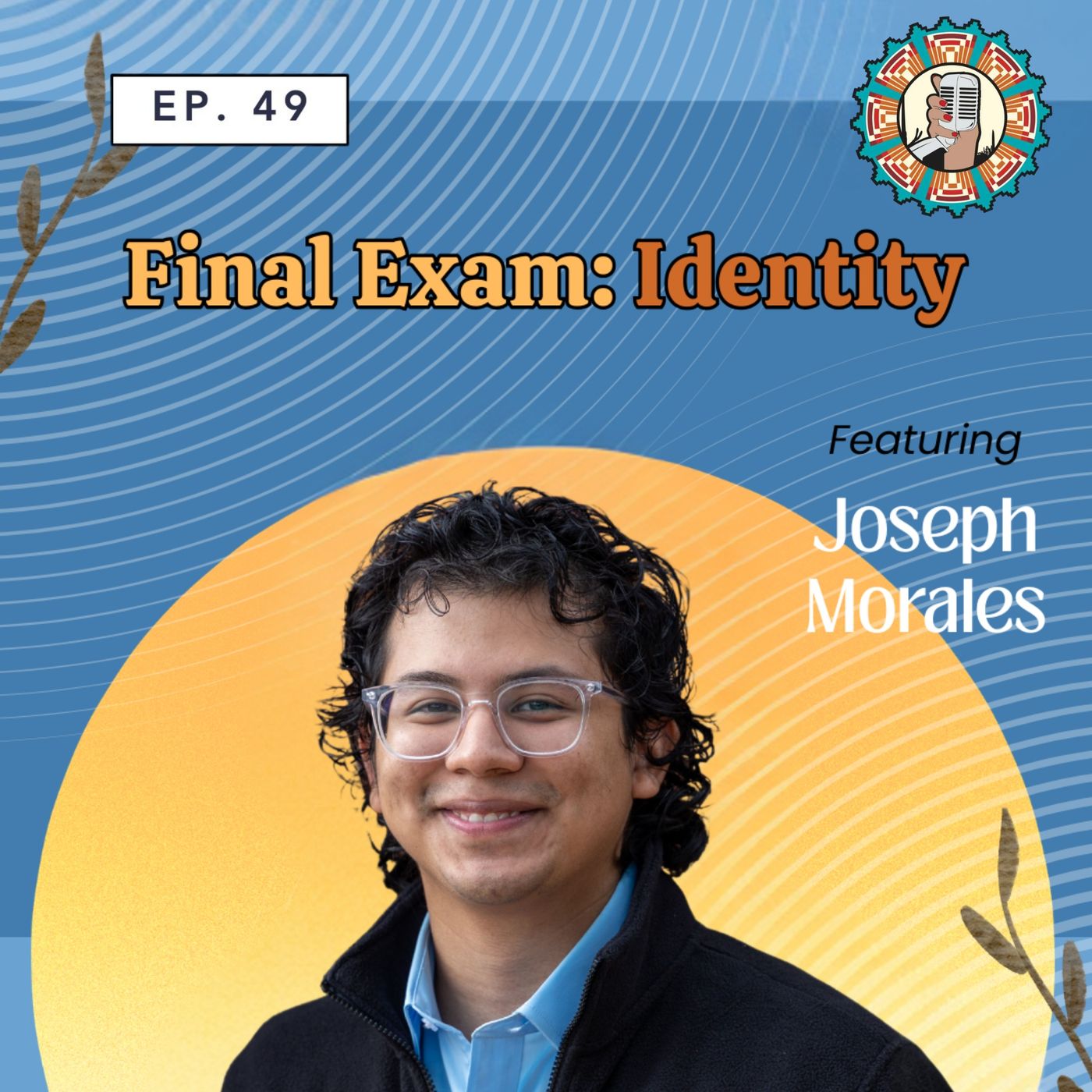


In this episode, we explore the journey of finding cultural identity through education, resilience, and community. Joseph Morales is an enrolled member of the Tohono O’odham Nation and is a current student at Arizona State University (ASU).
Our guest shares what it was like growing up mixed — navigating questions of belonging, identity, and connection to culture. Facing moments of disconnection, he found a turning point at tribal college (Tohono O'odham Community College), where he began reconnecting with his roots, his community, and himself. Through the support of Indigenous mentors, peers, and culturally grounded education, he discovered a renewed sense of purpose and pride. That path led him to continue his academic journey at ASU, where he is committed to building Indigenous excellence through higher education and tribal journalism.
This conversation is about more than academics — it’s about reclaiming identity, honoring heritage, and using storytelling as a tool for representation and change. It’s a powerful reminder that reconnecting with culture is a lifelong journey, and education can be a bridge back to who we truly are.
Helpful links:
Joseph Morales journalism portfolio: https://josephmorales.journoportfolio.com
Gila River Indian Community Newspaper /News:https://www.gricnews.org
Optional- American Indian College Fund https://collegefund.org
EPISODE CREDITS:
Produced, edited, and mixed by Tina Andrew
Graphic designed by Breanne Harvey
AUDIO:
Music licensed via Epidemic Sound
LINKS:
Be sure to follow and tag the podcast on Instagram, Facebook, and TikTok!
0:00 This podcast is for educational purposes only. The views and experiences expressed are those of the host and guests. The content shared here is based on research, personal experience, and publicly available information. In college, we spend years preparing for exams. We memorize, we study, we rehearse answers, but identity doesn't come with a study guide. For many students, discovering who you are can feel just as challenging as any final.
0:49 The conversation you are about to hear reminds us that reconnecting with culture isn't about having all the answers. It's about asking the question sometimes for the first time. College students are constantly being tested, midterms, finals, deadlines. But what happens when the hardest exam isn't in the classroom. Maybe identity isn't something you pass or fail. Maybe it's something you keep learning. You are tuned into Dawn Autumn Young Voices, and I'm calling this episode Final Exam Identity, featuring Joseph Morales Thawn Autum. I'm your host, Tina Andrew. Today I have a young person who is wanting to share their story and their educational journey as a young person, as a student and the work that they do and what are their future plans, and also to bring some inspiration to any other young people out there that are listening.
2:07 So I'm going to hand the mic over to him and give him an opportunity to introduce himself. Awesome, it's great to be here. I'm Joseph Morales, a member of the Otam Nation San Luci District. I grew up off the reservation and kind of an urban while my town is rule, but compared to the reservation, it's definitely urban. Went to high school. All my schooling was done in this kind of urban setting, and now I'm studying English and pursuing kind of that setting in tribal journalism. That's the work that I do with the Hillover Indian community, just to try and help promote indigenous stories for Indian country.
2:52 So when did your journey began as far as wanting to tell stories or be in journalism work. It happened fairly recently. When I was in high school, I wanted to go to like a big university, like the University of Arizona was my dream school. Oh wow, it's kind of. Funny because now I'm at the rival, which is Arisota State but that was my dream school, the U of A, and I actually wanted to do psychology. I wanted to work in tribal health. But I graduated during COVID and there was a lot of other conflicts within me and you know, personal things. So I kind of took a year off and found my way to out them community college.
3:35 Took the introduction courses there, and one of my English professors was kind of praising how good I am at writing, and I always had an interest in it, And since then I kind of slowly started building an education and found my way in journalism and especially tribal journalism. And that was about probably three four years ago, so okay, yeah, fairly recently. Yeah. So when we first kind of talked on the phone, I know, you talked about reconnecting with your roots on your autumn side. So it's something that maybe you didn't quite grow up learning or knowing, and it wasn't until you went to the autumn community college. So when did you decide I want to go to a college out there.
4:21 Right, I grew up in a small town, but it's very urban compared to the reservation. I just understood that I had a lot of things at my disposal compared to some of my friends, I had to travel thirty minutes to the grocery store. But I always grew up not knowing my autumn culture and history. I had glimpses knowing at least like I'm an a old member of the nation, but that's really all I knew. And I think I even like growing up in school, I even like said our nation's name wrong. I'd say like Tahona Odom, which is a little but I wouldn't change that experience.
5:02 But yeah, schooling, especially here, it was very diverse, but I would get picked on a little bit. I'd call like being mixed of Hispanic and Native American. I'd get called, like jokingly with my friends half breed or your mix, kind of you're not Native enough, you're not Hispanic enough. And I would just laugh it off, because you know, we're just joking around. But I would hold on to that shame. I think it really hurt me, but I just didn't know how to deal with it at that time, and it got worse in high school. But I'm grateful that I graduated when COVID struck because it kind of slowed down the world and I really had to address a lot of emotions that I was holding on inside, my anger, my frustration because I knew a lot of my peers were right secretly that Yeah, I didn't know my culture, my language, the history and of that. And I addressed it and I came content with it and started to regain confidence. But I wanted to just run away because the time, you know, COVID twenty twenty was uncertain. Yeah, so I wanted to list in the Air Force. But when I went through that process, I felt like I was just a number, just a quota for my recruiter. Yeah, and each recruitment process is different, of course, but that's how I felt. And I stumbled across tocc on aut Them Community College. They made it known to me that I was important and I wasn't just a number or a student. I was, you know, an Indigenous person that could build on their education. I went there and I
6:34 had to take the language course, the history course. I always tell people that autumn, even though it was Autum elementary, that was probably the hardest course I've ever taken. But that's kind of my story and how I regained my culture and it came from the school. And you know, now I could pronounce some things an autumn, I know how to say our nation's name, right, So I'm grateful for that school. Yeah, that's amazing that you in twenty twenty. For a lot of people, it brought out a lot of things internally, physically, emotionally. And so that's interesting that you had that type of experience during COVID and what it did for you, but also coming to this realization of your own identity. So thank you for sharing that. And you know, TOCC seems like it's a foundation for a lot of people who've attended and have similar experience as you. Even though I grew up on the Nation all my well most of my childhood, and it's it's home, it's a place I still go back to. Going to TOCC was also an awakening for me to realize that, yes, this is our way of life, this is him Duck, and this is what I've been living all my life. But as an adult, it was there that I really learned to value the way that I grew up and not take it for granted and really apply the cultural aspects in my personal life, right,
8:04 And so I started to grow an appreciation for that. And you know, when my mom was still around. After coming to that, my own realization took advantage of hearing her stories, listening to our family's history, digging a little deeper understanding what did the bite that ceremony look like when you were a kid, which is completely different from what we see today, which is really interesting. But that is where I really learned that I need to practice these cultural things to fulfill whatever was missing inside of myself as well. Right. Yeah, so when you came to that realization, you attended TOCCED.
8:46 Were you there in person? No? I was not. I was online. Figured it is better to do online. Yeah. Even then being online that they still have a strong foundation and make you feel connected as if you were in person, which is just great to be a part of. They do amazing work there and not like my student email that I still have with eocc it's like every day I'm getting some newsletter, some event where it's made me drive out there a couple of times to check out the school and be a part of some events there. So they have strong communication and making every student, whether they're from the community or an indigenous relative elsewhere, that there were all the same family there. So they do a really good.
9:31 Job yeah, awesome. So when you were learning more about your identity, I'm sure you have talked about it with your own family. If it's something that you didn't grow up doing, what is how are their feelings about. You learning more? And then maybe you're also teaching your own family about it. Right. They're super supportive because I'm the youngest of my family. My family history is it's pretty crazy. Not to go too much in depth because I feel like it's not necessarily my story. But my grandfather, Lawrence Morales Bad, he's passed on now, but he's where we gain our our Native American history and culture from. But history was crazy, and I believe he was given up to like adoption in California. So just from that point on, we never really been too evolved in our culture and history because we've kind of always been away from the nation. But like I said, going to TOCC helped me regain that identity.
10:38 And my siblings, my older brother, my two older sisters, they're really supportive of me, and I try to teach them and they're very open to wanting to learn. They asked me questions sometimes even some words. I try to say that this is how you're supposed to say it, but yeah, it's it's a complex thing with my family because we are western urban, but I kind of take that knowledge and regaining my identity mix them together. So hopefully, you know, if I choose to have a family, my children will have all the knowledge that I've gained and they could build on that, which was my knowledge as a children was zero. So my family super supportive about it.
11:22 That's amazing that you have that, just that support and they're able to listen and to just learn. And I'm glad that you're kind of, you know, initiating that for them. And I think that one thing that was also with TOCC I think we had and assign Yeah, it was we had an assignment and it was an not them language class and we had to Our final project was we worked on our emach our family tree, and that helped me to dig in deeper online and I was able to find like old census papers and also I revealed the name of my great grandmother on my dad's side.
12:05 My dad passed a long time ago as well, but all my aunts and uncle were just my one aunt and all my uncles. None of them. Really remembered or knew the name of their grandmother, who was their dad's mom. All they knew about her was that she died at a young age in her like twenties. That was all they knew. And their grandfather, Jonas is who raised my grandfather. And the census revealed that, oh man, I can't even remember her name now, but we. Found her name. We found how old she was when she did past She was twenty seven years old, and we also found out that it was from tuberculosis in the forties, early forties, I believe, And so I was able to take that information back to my family and building our family tree.
12:58 But it's just amazing that you don't realize your own family history like you think you know, but. You really don't. You really don't. Especially for me being like the youngest, I didn't really know anything because a lot of my my family members are older than me. So when I was able to finally like understand complex and deep stuff, everyone was already past that, and I was like, okay, so, well, it's kind of a little funny that you don't know you like you think you know, really, but it's just like the surface level of what's to your family legacies. Yeah, until you start digging.
13:40 Find not some interesting things. I'm sure, yeah, for sure. And it's funny. It's like sometimes that's just how it is with families. You know, your grandparents, even your grandparents, you know, they're not going to tell you everything. And a lot of the times you just have to go and ask these questions. And it doesn't even have to be something or complex. It could just be as simple as like what was life like when you grew up? You know, what was your transportation? Like, you know, did you guys have a TV growing up? Or anything like right, And then they'll just open up and you'll learn something new about your grandparents or your elders. That's like with my one of my grandma's on my dad's side, I always look at it like because she's an elder, I'm just like, dang, she really got to witness like a lot of history that I learned about in books. She is a first first hand witness like seeing computers coming about phones, TV. And so sometimes I just kind of throw out a topic out there to get her going and talking, Like she saw Elvis perform.
14:48 In person what I believe in person perform and that's amazing. I always still stuff out there to really get her going and talking, and then I'm like, sit back and listen. Just you don't you tend to not think of that, especially being young, you just want to go over to your grandparents and just maybe they'll buy your food and toys. But as you get older, you're like, they really they got a lot of wisdom to them. So yeah, it's pretty cool. Whenever I get her going and talking, she usually shares some some pretty big things. I'm just grateful to learn through her experience and her you know, her telling me that's awesome.
15:30 Yeah, it's funny. I when I before my grandmother died, I asked her that same question, who is it that she would that she liked to listen to as a young teenage and Elvis was one of the people. It's kind of a full circle moment because recently he got that movie. They released the Elvis movie and I want to go watch it. Kind of a full circle moment where now like I listen to Elvis sometimes. So yeah, yeah, it seems like an Indian country, he's had a lot of fans. Yeah, well, well, you know, thanks again for being so open and wanting to share your story. And did you always know that you wanted to go and get a higher education after high school?
16:15 I did. I always knew that education just came natural to me, Like I enjoyed going to school and learn where some of my peers they didn't really care about it. They kind of wanted to just play sports or hang out friends. Yeah, but for me, I always knew like I wanted to pursue education, go to college, and yeah, that led me to look in a lot of big universities, like I said, U of a ASU. It wasn't until I started to really look at regaining my identity that I found that. I found that tribal colleges and universities were a thing, and that was Yeah. I found that out when I was nineteen, so eighteen years of my life, I had no idea that those existed.
17:06 So how did you find TOCC? My family members we kind of, I don't know how. Honestly, we just knew that the nation had their community college and it was offered, I believe, like free tuition. They had a lot of free waivers for being a member. And I just started to explore. I googled it. It popped up and I started to see what they offered, how accessible it was compared to even other community colleges where you kind of still have to pay. Just started doing research and called one of the advisors there and they got me scheduled like within a week, and I was ready to start in the spring of twenty twenty one.
17:53 I believe. Yeah, it just happened by chance, but I'm glad it did. So. So you went there, you did your two years. What did you What did you graduate with? I graduated with an Associate of Arts and Liberal Arts with high honors. Oh no, I got like a little it was like a ribbon or something that showcase. I had high honors there. But that was amazing. I never thought that I would walk across that stage. Yeah, A lot of my visions and of me walking across a kind of a college stage. Again, it was like big universities like I've been mentioning. I never thought that my path would lead me to t OCC but I'm glad it did. And a lot of my journey, especially like I said COVID, was uncertain. That really helped me develop a mind where I would kind of plan out a lot of my journey. I'm gonna go here, I'm gonna do this. I realized life tends not to be that way. Yeah, so I kind of just take it in the moment instead of focusing on what I'm going to be in five years or three years. I have it in the back of my mind, but I kind of just want to focus on in this moment, what's going to happen tomorrow. Yeah, it's going to happen, you know, next week. That's's kind of my approach.
19:21 That's really good that you're already at a young age. I'm in soul, I have an old soul, but some people around me, I'll take it. I guess, well, that's amazing that you've been able to go back and you know, as part of autumn humdug and way of life, we're taught to whatever it is that you learn in life, whatever skills you have. If giving back eventually giving back to the community, how in what ways do you see yourself, whether it's now or in the future, that you kind of see yourself giving back to the commune unity? What other ways or what ways are those do you think?
20:04 I think right now, it's just representing at them nation. Any chance I get, even with school, if like I have to write a report on any topic, I'm doing something that relates to you know, autumn people and you know, the nation. I think it's important. You know, I would love to at some point work in the tribal government there, but like I said, you don't really know where your journey will take you. A good speaker at my graduation for TWOCC, she said, sometimes when you're ready to want to come back and work in your community, that the community and nation may not be ready for you. Yeah, and you got to you just have to accept that.
20:48 And that was some good insight because you may not always. You know, as much as I would like to work within the tribal government for people right now, you know that time just isn't it. But as long as I'm able to just represent the people I'm helping out nearby the Hiller River, any community, their sister trib to us Stockham at Otums, I'm still representing indigenous people. Yeah. And so moving forward into you know, after TOCC, you're now a student at Arizona State University watching college football, waiting for your team.
21:32 I think I'm bringing the bad luck because all my teams don't do well. Hopefully this isn't the case. So what's what's that like that transition from a two year community college going to a big university. Yeah, it's eye opening for sure, going from a tribal college to a mainstream university. I'm still online, but at SEE they're pretty intimate where it's about thirty twenty people in a class, and you tend to recognize people like, oh, I had you in this class last semester, and you build a relationship. Now I'm in an online class of about one hundred plus people and I'm usually the only one that is openly Native American and talks about topics any chance I get. So it's just eye opening kind of Even online you lose that community. I can only imagine how it is for in person students. But I'm glad I went to a travel college because it gives me the confidence to represent my people and where I come from.
22:40 Yeah, I think that it definitely probably helps lay the foundation of that, not just with a higher education, but with cultural identity and how you choose to move forward is up to you, and it's great to hear that this is how you're choosing to move forward, right. Yeah. I just always following like the student on Native American student clubs there because it's when I try to go to that campus. I just know where kind of friendly spaces are that could relate to me right away. So hopefully in the near future I could go on campus when I have free time and connect with some students there.
23:22 Yeah, definitely. So you said that you're wanting to get more into journalism. Can you talk a little bit more about that? Right? Like I said, it came from my time at TOCC. I took an Introduction to Writing course, and a lot of the curriculum the education topics at TOCC relate to Indian country, like authors, movies, history, all of that ties back to the nation or just Indian country in general. So I wrote a paper and one of my professors met with me to revise it and he was just talking about my approach to it was kind of philosophical in a way, and I always had an interest in writing, but I kind of lost my mindset and wanting to do something I love because when I first wanted to TOCC, I wanted to do like computers or business, something where I know there's going to be money. And I think that was a mistake because I wasn't doing it for the right reason. So when I talked to my professor.
24:33 He reintroduced that interest that I forgotten about, and that led me to take multiple English courses and transitioning my bachelors, my Bachelors of English at ASU to tribal journalism and now I'm interning with Hillar River Indi community in their newspaper doing journalism and it's been it's been amazing gaining the experience writing about and agenous events promoting indigenous communities. Cool. So when it comes to journalism work for somebody who's not familiar with, well, what does all that entail? What is the day a day and life of a journalist's intern look like as far as like, how do you find your stories? Do you need any specific equipment? Do you go to the events or do you do a phone call? Can you share a little bit what that process is like for you as a a journalist intern? Right?
25:31 Right? So a typical day, Well, I guess before I really I tend events, but before that, I do a lot of research in the community chats or just people in general who call our office space that want coverage, finding events that may be of importance. You can attend all of them, so you kind of really have to make a priority list of maybe what you think is best suited for the upcoming issue, and then from there it's seeing what date the event lands on, getting your equipment ready, which is for me, a camera and my phone in case I have to record an interview with somebody, making sure I have like a piece of paper and a pen to take notes, go through the event. And that's kind of the surface level. When I do an event, I tend to walk around the room or whatever space it is to kind of get the angles of maybe what would look good on the camera, which eye sights are better than others. And then once the event kicks off, I'm usually running around taking pictures of anything I can, making notes of any statements, interviewing any people I can, and all that data gets collected by me, and then I start writing. Started gathering all these pieces of information to an article. If there's any time where I need more,
27:02 I make sure to get contact information, call people, email them, set up zoom interviews. Yeah, that's usually a lot of what I do to make an article that people could read. Yeah. I actually highlighted a TOCC student. He's from Hillar River Indian Community and he was part of a recent roundtable discussion at the school where he talked to a Congress representative. Her name is Adelita. Yeah, she was there at TOCC he was there, he got to talk to her. So I'm kind of highlighting.
27:43 So where can people find this information if they wanted to read anything with the Hillar River Indian Community. Yeah, the website should be Hillary River Indian Community News or GRIN for short. Yeah, that's the web page where they have tons of archives of past issues, past articles, like dating back a few years. So if anyone wants to go check out my work or just see read up on what's happening in hell Inning Community News, I can for sure check out that website. Cool. Yeah, So is this something with the journalism work? Is it strictly just what you're doing now or do is there other skills that you want to learn as far as like getting stories or recording or you know, what is the next step after this phase? I guess right.
28:40 I've been interning for about two years now, roughly two years, and in this time I'd really just been honing my skills on writing taking photos, because the writing skills I knew were always there, but taking photos with something new to me, editing them with something new to me, and I feel like I've become more confident in that. So now it's it would be good to learn graphics, kind of more social media, recording, recording audio, recording videos. I feel like that's the next step that could be vital. SOE just like on staying on that path of what you want to do. And it's good that you're doing what you want to do because then you're able to enjoy it as well.
29:23 Right, Yeah, a lot of people tend to I heard a lot of time that a lot of people do something they don't necessarily really enjoy your love, And I had tons of mentors say do what you love because it won't be a. Job to you. Yeah. And when I first started doing this internship, I covered a community run event taking photos and I started to smile and feel like warm inside again. I knew I really enjoyed this and it wasn't work or daunting task. Yeah. I found enjoyment in doing it, and then I stay consistent with it and I'm just enjoying the moment.
30:05 Awesome. Yeah, it's a it's a great feeling when you know that all your hard work is paying off. You know, you dedicate a lot of time to your craft, and you stay focused and you discipline yourself and you pursue through whatever challenges that you faced along the way, and then you're you know, you're kind of going in that path that you want to go. And yeah, it's a great feeling. And you know, for me right now, my day job is my dream job. And I tell people that all the time because working in radio, still doing podcasting in radio as well. So I work at kCi Community Radio station and I do Cultivating Indigenous Voices there, which is actually a sister podcast of to Young Voices, and it's a show that also gets broadcasted on air.
31:01 And I've been in tribal radio since twenty nineteen. So I was in the stemfield working for many years after COCC. I graduated within Associates in Science in Life Sciences and then transferred to the JOVE never finished, but I dedicated a lot of my career in STEM, working for Swar National Park, and I even did some research work at Biosphere two and working in the lab doing root analysis. But then in twenty nineteen or in twenty sixteen, I started doing the podcasting stuff. And then in twenty nineteen I decided you know, I'm just gonna go for it.
31:44 I'm gonna leave and go into radio and do podcasting. And so that's where my radio journey really began. I had been doing radio prior, but very little little time I'm doing it. But then I started working in tribal radio and really started to fill up myself as a radio personality, a radio person being on air, going as Lady T and so I had a lot of success, especially working on the Nation and during the pandemic twenty twenty. At the end of twenty twenty, they brought me in to work and then I got offered a position at kCi as a production coordinator. So now I'm behind the scenes producing many programs and shows and doing audio sound engineering or assisting with the audio engineering sounds and so a lot of that. So all these skills, these DIY skills, right that I did over the years is paid off.
32:50 Yeah, And it goes to the point I've kind of made where you don't know where your journey will take you. Like you said, you're in STEM and transition to podcasting in radio, even you kind of had some knowledge, Yeah, you just don't know where life will take you. Yeah, I just gotta enjoy it. Like I believe Bruce Lee said, be water. That's kind of my mot just go with the flow, because absolutely you can't swim upstream, it's going to keep going one direction. So it's kind of I love that water. Yes, I have to add some water sound effects later.
33:33 Isn't water? Should I? Yeah? Should? I reconnecting to my identity for. You, I mean so amazing that you've been able to apply your skills as a young person. Now you're going to. Be doing more things and working. So I'm looking forward to following, continuing to follow your work and to learn and maybe in the future we could do some kind of collaboration for sure. Yeah, I'm always looking to collabse more outside of the hiler of Inning community. Yeah, I know that it's important the work I do there. A lot of individuals expressed and are happy when I cover events, and I love covering the community there because it's promoting Indigenous excellency and what's happening everyday life that a lot of big media outlets don't cover. But I do want to explore kind of more personal projects cool an Indian country because there's a lot of stories across the country that don't get shared as much as they should.
34:34 Yeah, So as far as enjoying your time as a student, is there anything else that you want to share with the listeners about your story and who you are, or share words of encouragement to any other young person out there who may have had similar experiences as you have, being coming from two different indigenous communities and just as far as your journey. Right, just some words of encouragement to anyone who feels like they connect with my story being mixed or maybe just not having as much knowledge in their history of their culture. Looking too, I'd say look into tribal colleges and universities, whether it's even one in your own community or not. They know what it means to be an Indigenous person, especially navigating higher education, and you'd be surprised on what you could do with education and wanting to learn something that impacts you. I've gone to do some pretty amazing things going to the American Indian Higher Education Conference.
35:43 It was in Minneapolis, Minnesota, representing TOCC but also the nation with my student internship doing tribal journalism. I've gone to take photos of former President Joe Biden when he addressed his apology for the boarding square eras I got a recent ambassador. I got to be an ambassador with the American Indian College Fund, which is a big organization that promotes Indigenous higher education. They offer tons of scholarships. So just take a chance in wanting to learn. It's going to be scary, but you could do anything you want. Don't let American society or history or anyone tell you what you can and can do. You gotta shoot for the stars and you'll achieve it. You may fall fail, cry, I know I have, but the journey is something that you should enjoy and you'll get to the light at the end of the tunnel for sure.
36:43 Well, thank you so much, Joseph for taking the time to share your story and share words of encouragement and talk about your experiences that you had as a person who knew little to nothing about your own cultural identity to now feeling accept and feeling confident and comfortable to acknowledge your autumn side, but also just embracing it as well. That's amazing, right. Oh, the pleasure. Thank you for having me on here. It's been amazing. I never thought i'd be in the spaces I've been, especially being on like a podcast. I never thought in a million years you'd see me doing these things, but it's important. You know, we're Indigenous people.
37:27 We've always been here, We're always going to be here. And education, I think is the future for us. And instead of looking at it as scary kind of uncertained, we could look at it to make our communities and our people better. Yeah. So we just got to shoot for the stars, like I. Said, yes, and move like water. Yeah, be watered. Don't fight that that stream, it's always going to go in one direction. Just navigate the journey. Yes. So well, thank you so much, thank youppreciate having you on as a guest. Thank you, thank you for listening to this episode titled Final Exam Identity featuring Joseph Morales Down Autumn. I'm Tina Andrew and this has been Dawn Autumn.
38:19 Young Voices